
How to Identify the Tokelau Silver Series
A collector's guide to Tokelau's rotating silver bullion designs, covering typical obverse and reverse layouts, specifications, and telltale mint features.
Read the full Tokelau Silver Series encyclopedia entry →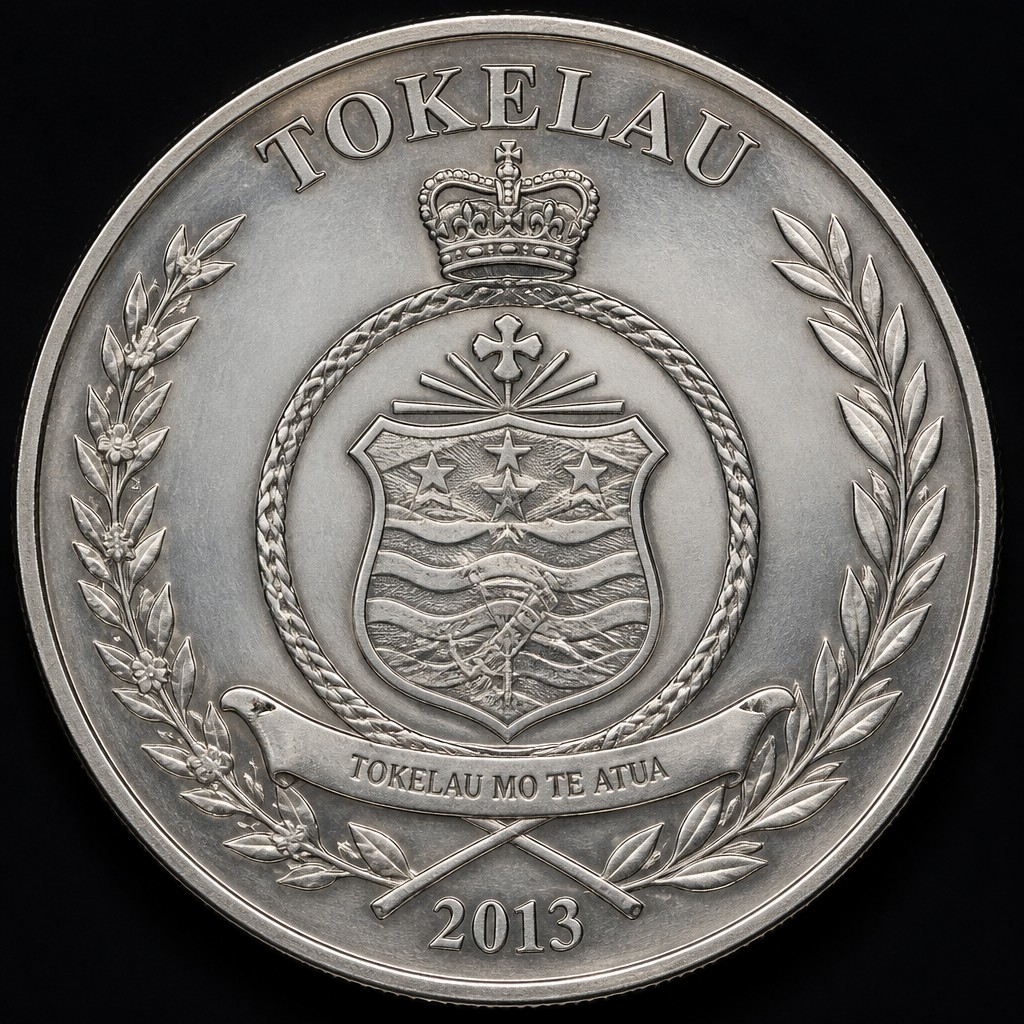
What This Coin Is
The Tokelau Silver Series refers to a family of one-ounce silver bullion coins issued as legal tender of Tokelau, a small Pacific territory associated with New Zealand. Unlike a single fixed design, Tokelau has authorized multiple thematic sub-series over the years, including marine life and wildlife subjects, all struck under contract by commercial mints rather than a national mint of its own.
Obverse Design
Most Tokelau silver issues carry a simple coat-of-arms or crest-style obverse along with the country name "TOKELAU" and the face value, commonly $5. Some releases substitute a design element related to the coin's theme instead of a monarch portrait, which sets Tokelau apart from many other Commonwealth-linked bullion issuers.
Reverse Design
The reverse varies by sub-series but generally showcases a large central image, such as a marine animal, bird, or other wildlife subject, rendered with fine detail against a textured or matte field. The year of issue and fineness statement, typically "1 OZ FINE SILVER 999" or "9999," appear along the rim.
Size, Weight, and Metal
Standard coins are one troy ounce of .999 or .9999 fine silver, roughly 38.6 to 40mm in diameter depending on the specific series, with a reeded edge typical of bullion coinage. Fractional and larger formats have appeared for select releases.
Mint Marks and Inscriptions
Look for the fineness and weight text on the reverse, along with the date. Because Tokelau contracts multiple mints over time, small differences in font style, edge treatment, or finish (proof-like versus matte bullion) can appear between series, so comparing the specific sub-series artwork is more reliable than searching for a fixed mint mark.
Telling It Apart From Similar Coins
Tokelau issues are often confused with other small-nation Pacific bullion coins, such as Niue, Fiji, or Cook Islands releases, since all use similar one-ounce silver formats and wildlife themes. The clearest identifier is the "TOKELAU" country name in the obverse or reverse legend; always confirm this text rather than relying on the theme alone, since many nations use overlapping wildlife subjects.
Judging Condition at a Glance
Bullion-grade coins should show bright, even luster with crisp definition in the main design's fine details, such as feathers, scales, or fur texture. Light bag marks and minor handling marks are normal; a hazy or dull surface, flattened high points, or noticeably soft strike quality suggest lower condition or excessive circulation as a collectible.
Authenticity Red Flags
Confirm weight and diameter against the one-ounce standard using a scale and calipers, since generic or counterfeit silver rounds are sometimes passed off with altered or invented Tokelau-style designs. Blurry lettering, incorrect or missing fineness stamps, and an unusually light or hollow-sounding coin all indicate a possible fake or base-metal substitute.
Frequently asked questions
Is there one single design for the Tokelau Silver Series?
No, Tokelau has issued several distinct thematic sub-series over time, so the design varies by release rather than following one fixed template.
What is the typical face value?
Most one-ounce Tokelau silver coins carry a $5 legal tender denomination, though bullion value greatly exceeds this.
Who mints Tokelau's coins?
Tokelau does not operate its own mint, so its coins are struck under contract by commercial mints on its behalf.
How can I confirm a coin is genuinely from Tokelau?
Check for the word "TOKELAU" in the coin's legend along with the correct fineness and weight markings for that specific release.
What silver purity should I expect?
Most issues are .999 or .9999 fine silver at one troy ounce, though exact fineness can vary slightly by series.