
How to Identify the Titus Denarius
A small silver denarius of Emperor Titus, identifiable by his youthful laureate portrait, Flavian-era titulature, and varied reverses often referencing his priestly office.
Read the full Titus Denarius encyclopedia entry →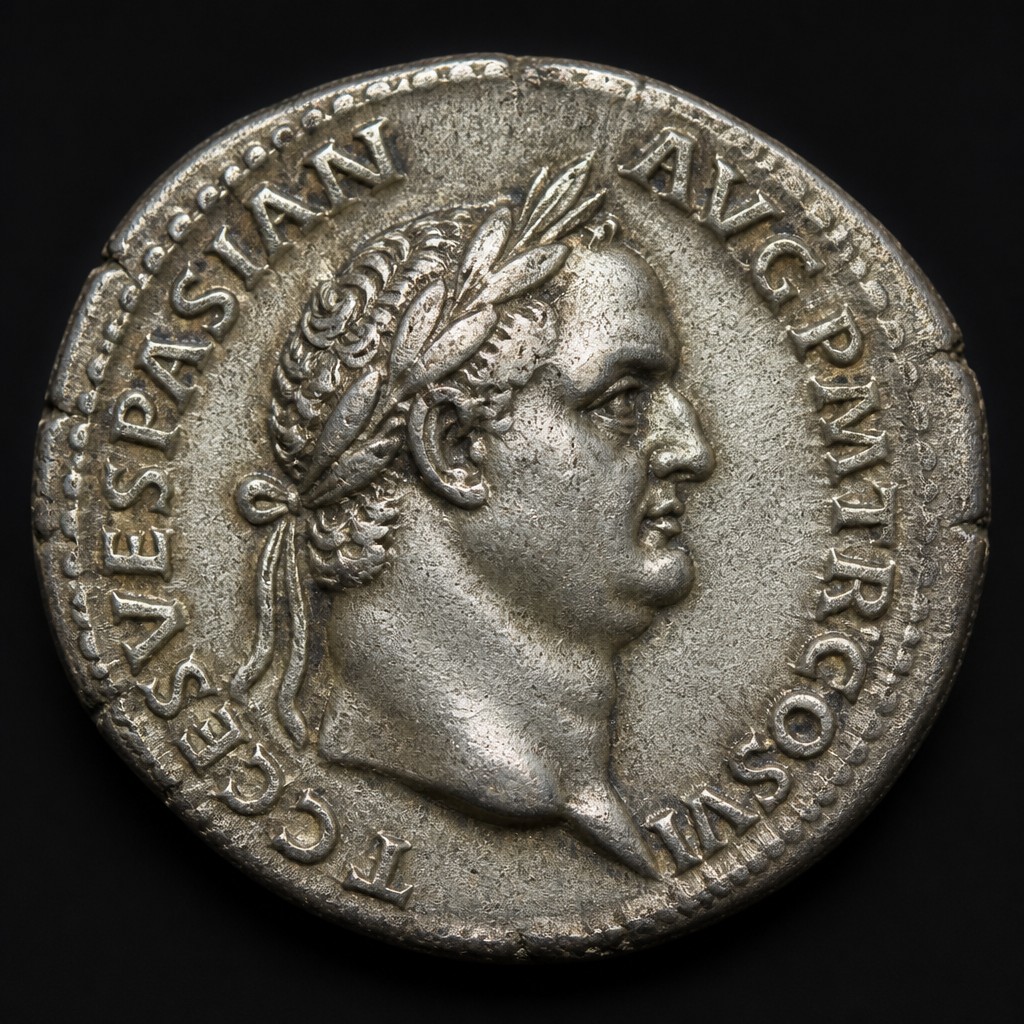
What the Coin Is
Titus ruled as sole Augustus from AD 79 to 81, after serving as his father Vespasian's designated heir and military commander. His denarius is a small silver coin struck at Rome, continuing the Flavian dynasty's coinage program and often reusing die themes established under his father.
Obverse Design & Inscriptions
The obverse shows a laureate head of Titus facing right, generally a rounder, fuller-faced portrait than his father's. As Caesar under Vespasian the legend typically reads IMP TITVS CAES VESPASIAN, while coins struck after he became sole Augustus carry his own imperial titles including TR P (tribunicia potestate) and COS (consul) numerals that help narrow the striking year.
Reverse Design & Inscriptions
Reverse types are varied. Many feature religious and priestly implements such as a simpulum (ladle), aspergillum (sprinkler), guttus (vessel), and lituus (augur's staff), reflecting Titus's role in the college of priests. Other reverses include a curule chair, an eagle standing on a globe, or seated personifications such as Pax or Vesta, often surrounded by his tribunician and consular title abbreviations.
Size, Weight, Metal & Edge
The denarius measures about 18-19mm across and weighs roughly 3.0-3.5 grams in decent surviving condition, though the original Flavian standard aimed closer to 3.4-3.9 grams before wear and circulation loss. The silver alloy was already mildly debased from earlier imperial standards. The edge is plain, without reeding.
Mint Marks & Where to Find Them
Titus's denarii were struck almost exclusively at the Rome mint, and there is no letter or symbol mint-mark system on coins of this period; attribution relies entirely on the portrait and legend.
Telling It Apart from Similar Coins
Because Titus's portrait and many reverse types closely echo his father's, the obverse legend is the most reliable identifier: look specifically for TITVS in the name rather than VESPASIAN. Compared to Domitian's later denarii, Titus's coins lack the GERM (Germanicus) title that Domitian added after his Germanic campaigns, and Titus's face is generally rounder and less heavy-set than his younger brother's mature portraits.
Judging Condition & Grade at a Glance
Look at the hair curls above the forehead, the ear, and the jawline for wear, since these are the first high points to flatten. On the reverse, check whether the priestly implements or standing figures retain crisp outlines or have become a blurred silhouette, which indicates significant circulation.
Authenticity Red Flags
Silver-plated copper forgeries ("fourrées") are common for Flavian denarii; any coin that looks silver on the surface but shows a reddish or coppery color at a nick, scratch, or high point of wear should be treated with suspicion. A weight noticeably under 3 grams, together with an unusually light feel or dull tone under a bright light, can also point to a plated or debased fake.
Frequently asked questions
How do I know a denarius is Titus's and not Vespasian's?
Read the obverse legend carefully; it should include TITVS, not VESPASIAN, even though Titus's early coins as Caesar also mention his father's name in the fuller titulature.
Why do so many reverses show ladles, staffs, and vessels?
These are priestly implements referencing Titus's membership in Rome's religious colleges, a common way for Flavian coinage to advertise the emperor's religious authority.
What is a normal weight for this coin?
Well-preserved examples typically weigh close to 3.4 grams, though wear and old cleaning can reduce this somewhat.
How can I spot a plated fake?
Look for any spot where the silver surface has worn through or been nicked; a coppery color underneath indicates a fourrée rather than a solid silver coin.
Are Titus's coins rarer than Vespasian's?
Because his sole reign lasted only about two years, his coinage is somewhat less abundant than his father's longer 10-year output, though it is still regularly available to collectors.