
How to Identify the Tibetan Silver Tangka
A traditional Tibetan silver coin used from roughly the 18th through early 20th centuries, recognizable by its thin, often irregular flan, Tibetan or bilingual script, and floral or symbolic central designs.
Read the full Tibetan Silver Tangka encyclopedia entry →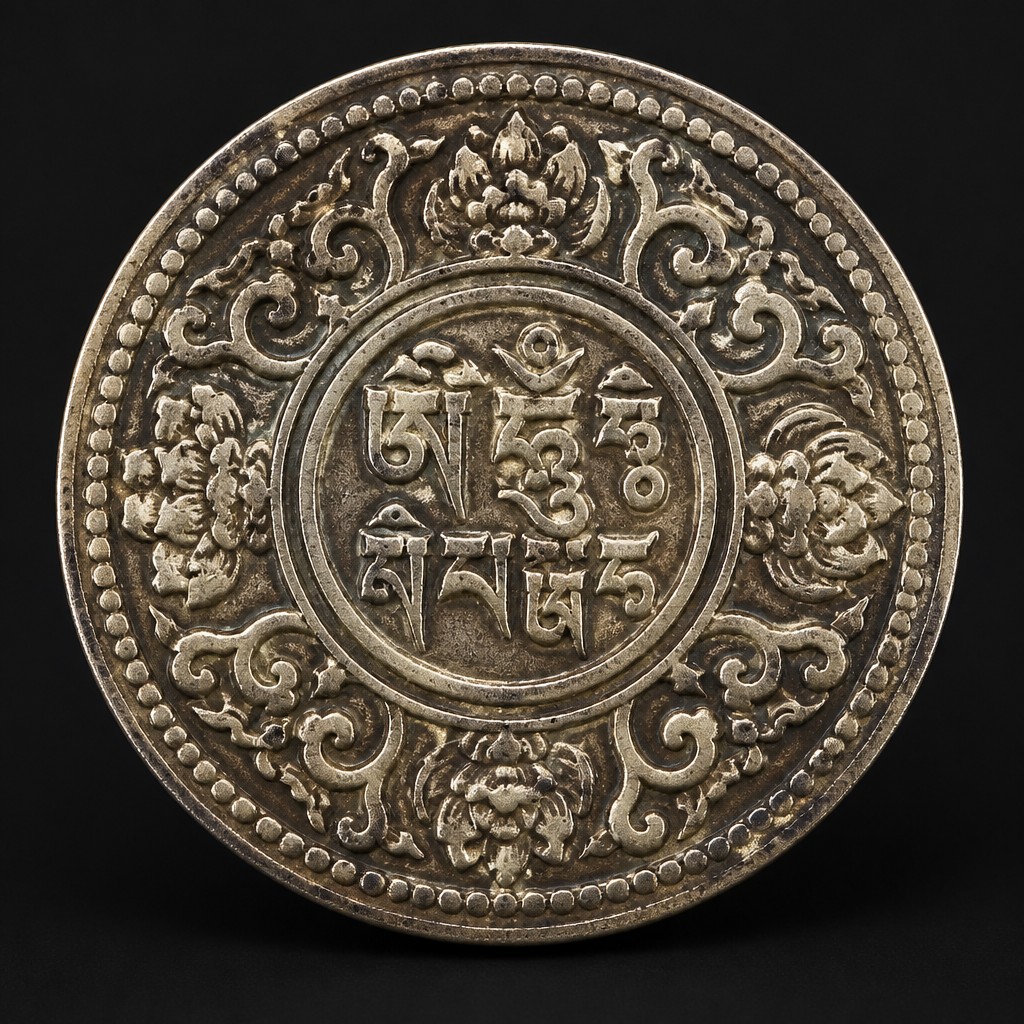
What It Is
The tangka was the traditional silver coin denomination used in Tibet and the wider Himalayan trade region for several centuries, spanning issues minted locally in Tibet, coins produced in the Kathmandu Valley for the Tibetan market, and later Sino-Tibetan pieces reflecting periods of Chinese administrative influence. As a long-running denomination, tangka designs vary considerably by period and origin.
Obverse Design & Inscriptions
Depending on the specific type, the obverse may show Tibetan script inscriptions, a central floral rosette or symbolic emblem, or in the case of Sino-Tibetan tangkas, Chinese reign-era inscriptions (such as reference to a Qing emperor's era name) alongside Tibetan lettering, reflecting the coin's mixed political context.
Reverse Design & Inscriptions
The reverse typically mirrors or complements the obverse with additional script, a floral or geometric border design, or symbolic motifs; older, more locally produced tangkas often show simpler, less uniform designs compared to later, more standardized issues.
Size, Weight & Metal
Tangkas are small, thin silver coins, generally lighter and less uniformly struck than later modernized Tibetan srang coinage. Because many were hand-struck with simple dies over a long period and across different mints, weight and diameter can vary noticeably between individual examples even within the same broad type.
Mint Marks & Where to Find Them
Given the coin's long production history across multiple political contexts (purely Tibetan mints, Nepalese Kathmandu Valley mints producing for Tibet, and Sino-Tibetan joint issues), identifying the specific origin generally relies on close comparison of script style, inscription content, and design details against specialist reference catalogs rather than a single dedicated mint mark.
Telling It Apart from Similar Coins
Distinguishing between the various tangka subtypes requires close attention to the specific inscriptions present — purely Tibetan script points to a locally Tibetan issue, while the presence of Chinese reign-era characters points to a Sino-Tibetan issue from a period of stronger Qing administrative involvement, and certain design and fabric characteristics point to Nepalese-struck examples intended for the Tibetan market.
Judging Condition at a Glance
Because tangkas were often hand-struck with simple equipment, even higher-grade examples can show some natural die misalignment, weak spots, or an irregular flan shape; collectors generally judge quality by how clearly the central design and inscriptions read despite these inherent production characteristics, rather than expecting the mechanical uniformity seen in later machine-struck coinage.
Authenticity Red Flags
Watch for coins that are unnaturally uniform, thick, or mechanically perfect in a way inconsistent with the hand-struck character of genuine tangkas, as well as incorrect weight or an inconsistent mix of script styles that does not match any known genuine subtype. Comparing against specialist references for the specific tangka variant in question is the most reliable way to confirm authenticity given the wide design variation across this long-running series.
Frequently asked questions
Why do tangkas look so different from one another?
The tangka was produced over several centuries across different mints — purely Tibetan, Nepalese Kathmandu Valley, and Sino-Tibetan joint issues — so design, script, and fabric vary significantly by specific type and period.
What does the presence of Chinese characters on a tangka indicate?
Chinese reign-era inscriptions alongside Tibetan script point to a Sino-Tibetan issue from a period of stronger Qing administrative involvement in Tibetan affairs.
Is an irregular, slightly off-center strike a sign of a fake?
No, many genuine tangkas were hand-struck with simple dies and naturally show some die misalignment or an irregular flan shape.
How can I identify the specific subtype of my tangka?
Closely compare the inscriptions, script style, and design details against specialist reference catalogs covering Tibetan, Nepalese, and Sino-Tibetan tangka varieties.