
How to Identify the Tibetan Silver Srang (Ganden Tangka type)
An early 20th-century Tibetan silver coin issued by the Ganden Phodrang government, identified by Tibetan script inscriptions, a snow lion motif, and symbolic sun-and-moon or auspicious emblems.
Read the full Tibetan Silver Srang (Ganden Tangka type) encyclopedia entry →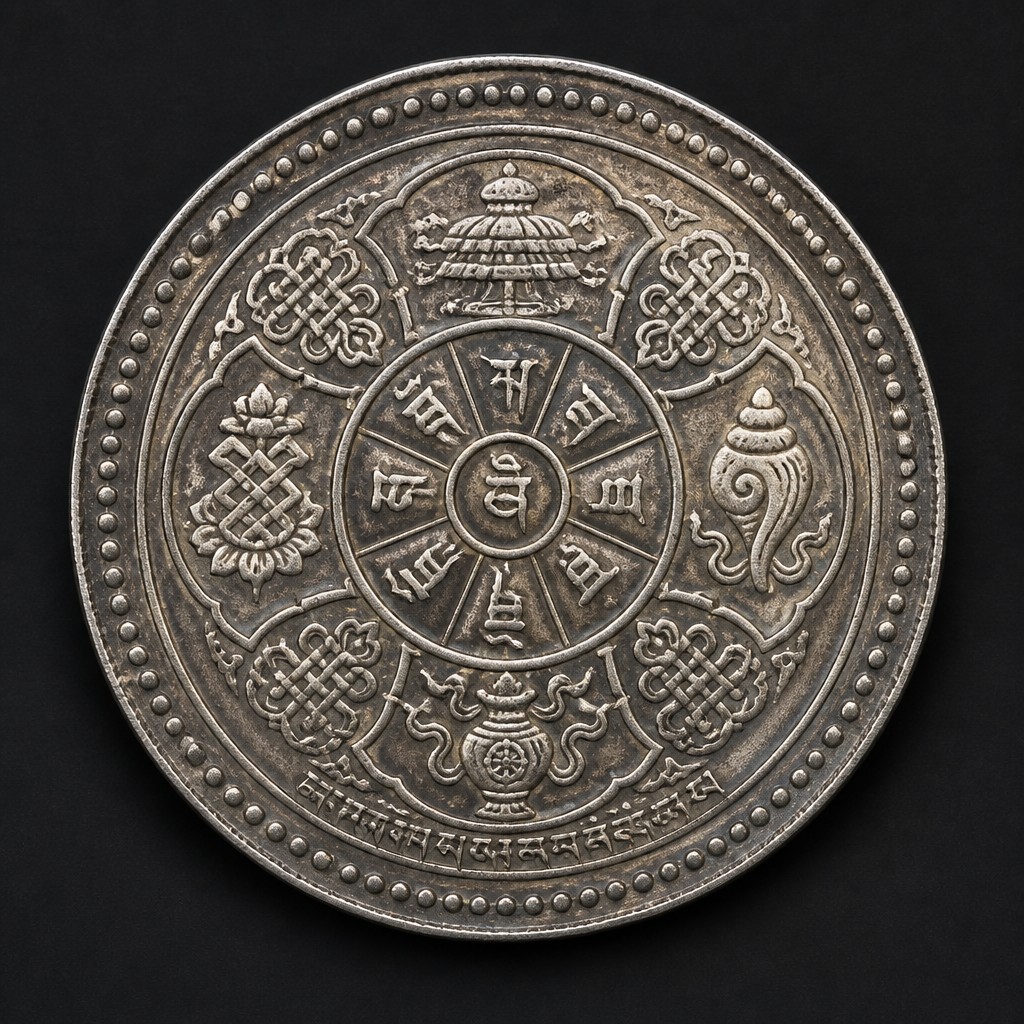
What It Is
This coin belongs to the silver srang and related tangka denominations issued by Tibet's Ganden Phodrang government in the early 20th century, part of a broader modernization of Tibetan coinage that moved toward more standardized, machine-produced pieces while retaining traditional Tibetan design language and script.
Obverse Design & Inscriptions
The obverse typically features Tibetan script inscriptions identifying the issuing authority and denomination, often arranged around a central motif. Traditional Tibetan numismatic symbolism such as auspicious emblems, floral borders, or a sun-and-moon pairing frequently frames the central design, reflecting Tibetan Buddhist visual conventions.
Reverse Design & Inscriptions
The reverse commonly features a snow lion, a traditional Tibetan national and Buddhist symbol, often shown in a naturalistic or stylized pose, with the value denomination rendered in Tibetan script and numerals nearby.
Size, Weight & Metal
These coins were struck in silver, with size and weight varying according to the specific denomination within the srang/tangka system (a srang generally representing a larger unit made up of smaller tangka-based fractions). Compared to older, more crudely struck Tibetan coinage, these early 20th-century issues tend to show more regular, mechanically consistent striking.
Mint Marks & Where to Find Them
Tibetan coinage of this period was produced at government mints such as the Trapchi mint near Lhasa; specific mint identification is generally inferred from design details, inscription style, and known issue dates cataloged by specialist references rather than from a separate small mint-mark symbol.
Telling It Apart from Similar Coins
The clearest way to identify this type is the combination of Tibetan script, the snow lion motif, and the specific srang/tangka denomination system, which differs from neighboring Chinese, Nepalese, or Indian coinages that circulated in the same broader Himalayan trade region. Comparing the specific inscriptions and central motifs against reference catalogs of Tibetan government issues helps pin down the exact type and date.
Judging Condition at a Glance
On well-preserved examples, the snow lion's mane and facial detail remain sharp, and the Tibetan script strokes are clean and fully separated. Circulated coins show smoothing across the lion's raised body and blurred, less distinct script strokes, along with a generally duller silver surface from handling.
Authenticity Red Flags
Given the specialized and relatively niche collector market for Tibetan coinage, reproductions and later restrikes do exist; look for correct weight and diameter for the specific denomination, along with crisp original striking detail in the Tibetan script and snow lion motif rather than soft, indistinct, or unevenly struck features that suggest a modern copy.
Frequently asked questions
What does the snow lion on this coin represent?
The snow lion is a traditional Tibetan national and Buddhist symbol commonly used on Tibetan government coinage of this period.
What is the relationship between a srang and a tangka?
The srang and tangka are related denominations within Tibet's traditional currency system, with the srang generally representing a larger unit built from smaller tangka-based fractions.
Where were these coins minted?
Coins of this type were produced at Tibetan government mints such as the Trapchi mint near Lhasa in the early 20th century.
How can I confirm the exact type and date of my coin?
Compare the specific Tibetan script inscriptions and central design motifs against specialist reference catalogs of Tibetan government coinage, since dedicated mint marks are limited on this series.