
How to Identify the Thurium (Thurii) Athena and Bull Nomos
A South Italian silver nomos (didrachm) from the Greek colony of Thurii, showing a helmeted Athena head on the obverse and a charging or butting bull on the reverse.
Read the full Thurium (Thurii) Athena and Bull Nomos encyclopedia entry →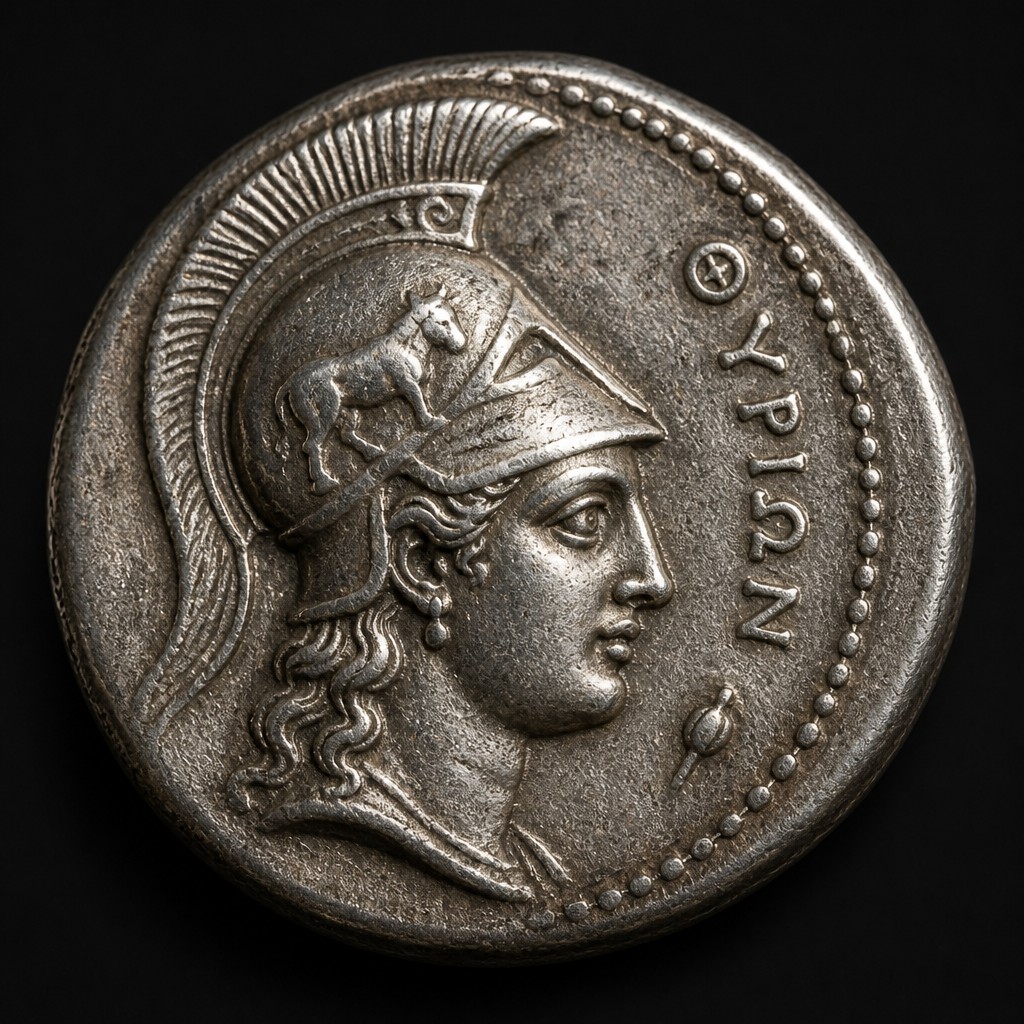
What This Coin Is
This coin is a silver nomos, essentially a didrachm on the local South Italian weight standard, struck by the Greek city of Thurii (also spelled Thurium) in southern Italy from the later fifth century BC through the fourth century BC. Thurii was founded near the site of the older colony of Sybaris, and its coinage reflects the artistic influences of both mainland Greece and other wealthy South Italian mints of the period.
Obverse Design
The obverse shows the head of Athena facing right, wearing a crested Attic helmet that is frequently decorated with a wreath of olive or laurel leaves and sometimes a small figure such as a Skylla (sea monster) on the helmet bowl in more elaborate later issues. The portrait style is refined and closely related to contemporary Athenian and other South Italian Athena types, with careful attention to hair strands escaping beneath the helmet.
Reverse Design
The reverse depicts a bull, usually shown butting or charging with head lowered, standing or moving to the right or left depending on the specific issue. Below the bull, in the exergue, the ethnic ΘΟΥΡΙΩΝ (of the Thurians) is inscribed, sometimes abbreviated in earlier issues. Small symbols, such as a fish, murex shell, or letter, may also appear in the exergue as a control mark.
Size, Weight, and Metal
This is a silver coin on the South Italian didrachm/nomos standard, typically weighing around 7.5 to 8 grams and measuring roughly 20 to 24 millimeters in diameter. The edge is plain and hand-struck.
Mint Marks and Where to Find Them
Look in the exergue beneath the bull for the city ethnic ΘΟΥΡΙΩΝ, and check the same area or the field around the bull for small accessory symbols that served as control marks distinguishing different issues or officials. Helmet decoration on the obverse can also shift over time and is a useful secondary dating clue.
Telling It Apart From Similar Coins
Several South Italian and Sicilian cities used a bull reverse, so the specific ethnic ΘΟΥΡΙΩΝ is the clearest way to confirm a Thurii attribution rather than a coin of Sybaris, Poseidonia, or other regional mints. The Athena-and-butting-bull combination is distinctive to Thurii, whereas man-headed bulls (river-god types) found on Sicilian coins like those of Gela have a bearded human face rather than a plain bovine head, providing another easy visual distinction.
Judging Condition at a Glance
On the obverse, check Athena's helmet crest, any decorative figure on the helmet bowl, and facial features for wear. On the reverse, the bull's horns, head, and leg musculature are the first areas to flatten with circulation. A well-struck coin will show the exergue legend clearly, while worn or off-center examples may lose part or all of the ethnic.
Authenticity Red Flags
Cast reproductions typically show a slightly soft, rounded quality to the design and a seam line around the edge, unlike the sharp, crisp relief of a genuine die-struck coin. Watch for incorrect or garbled Greek lettering in the ethnic, an unusually light weight, or overly uniform, artificial-looking surfaces, all of which suggest a modern imitation rather than an ancient original.
Frequently asked questions
How do I know this is from Thurii and not another South Italian city?
Check the exergue beneath the bull for the ethnic ΘΟΥΡΙΩΝ; other cities that used bull types, such as Sybaris or Poseidonia, carry different city names in the same location.
What distinguishes this bull from the man-headed river-god bulls on Sicilian coins?
The Thurii bull has an ordinary bovine head with no human features, while Sicilian river-god types such as those from Gela show a bull with a bearded human face.
What is the typical weight of this coin?
It generally weighs around 7.5 to 8 grams, consistent with the South Italian nomos or didrachm weight standard used by Thurii and its neighboring mints.
Does the helmet decoration change between issues?
Yes, some issues show a plain crested helmet while others add a wreath or a small figure on the helmet bowl, and these variations can help place a coin within the broader chronological sequence.