
How to Identify the Third Guinea
The Third Guinea is a small gold coin worth seven shillings, struck under George III from 1797 to 1813 during a period of gold coin shortages.
Read the full Third Guinea encyclopedia entry →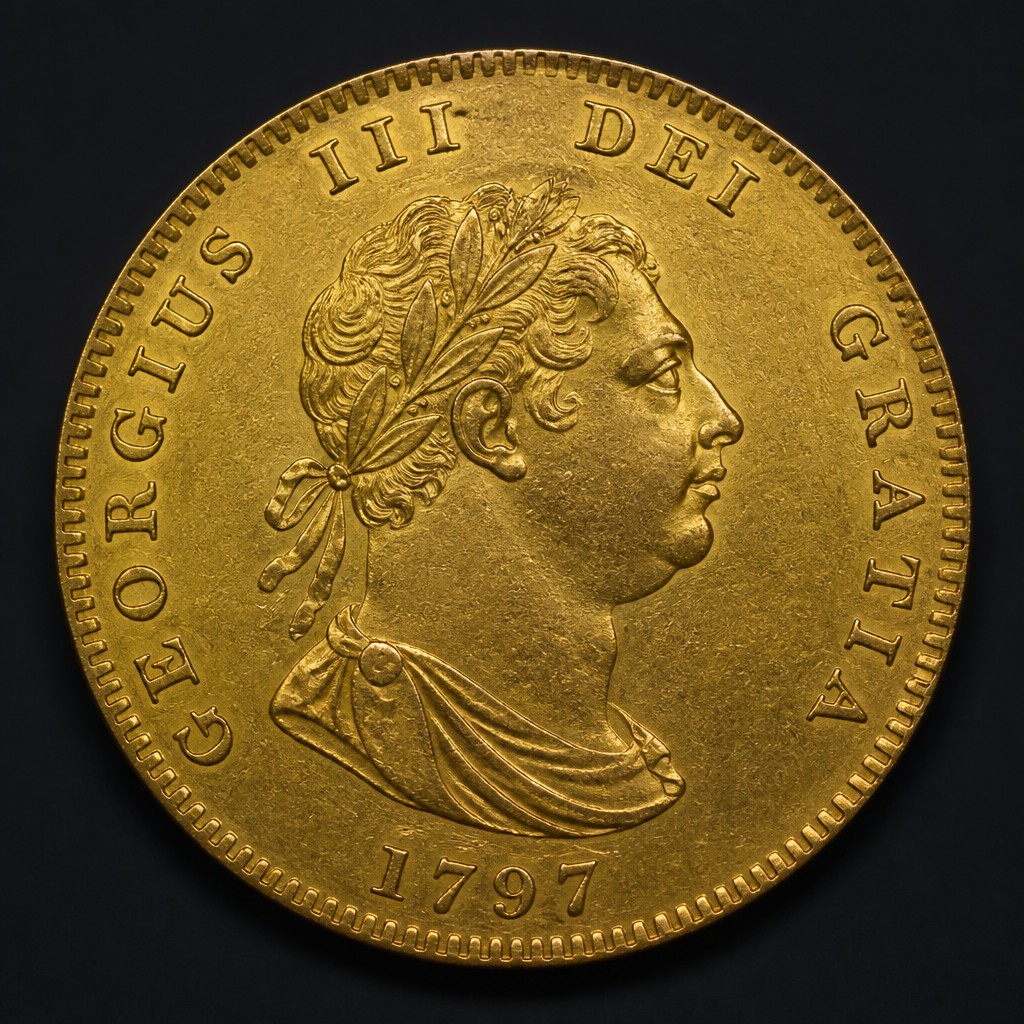
What Is It
The Third Guinea is a small British gold coin representing one-third of a guinea, equal to seven shillings. It was introduced in 1797 under George III, during a period when larger gold coins were being hoarded and melted due to wartime economic pressures, prompting the Royal Mint to issue smaller, more practical gold denominations. Production continued intermittently through 1813, shortly before the guinea system was replaced by the sovereign in 1816-1817.
Obverse Design
The obverse shows George III's bare head facing right, with the surrounding legend GEORGIUS III DEI GRATIA, in the same plain neoclassical style used on other late George III gold coinage.
Reverse Design
The reverse displays a crowned, garnished shield bearing the royal arms, with the date positioned around or below the shield and the remainder of the Latin royal title completing the legend. Unlike the guinea and half guinea, the Third Guinea's small size means its heraldic details are noticeably compact and less detailed.
Size, Weight, and Metal
The Third Guinea is struck in 22-carat gold, weighs roughly 2.8 grams, and measures about 17mm in diameter, making it a notably thin and small coin. Its light weight and small size mean it is easily bent, scratched, or worn.
Mint Marks and Where to Find Them
All Third Guineas were produced at the Royal Mint in London and carry no branch mint marks. Identification relies on reading the date, which sits close to the shield due to the coin's limited space.
Telling It Apart from Similar Coins
The Quarter Guinea is even smaller and thinner and was struck only in 1718 and 1762, so any coin of this general style dated between 1797 and 1813 is almost certainly a Third Guinea rather than a Quarter Guinea. The Half Guinea, by contrast, is visibly larger and heavier, providing an easy size comparison when the two are placed side by side.
Judging Condition at a Glance
Wear shows first on George III's hair and cheek on the obverse, and on the raised curves of the crown and shield on the reverse. Because these coins are thin and were carried loosely in pockets and purses, finding one with sharp, undamaged rims and full original luster is less common than finding a worn, bent, or lightly creased example.
Authenticity Red Flags
Given their small size and gold content, Third Guineas have sometimes been targeted for lightweight cast reproductions; a genuine piece should weigh close to 2.8 grams and show crisp, well-defined lettering despite its small size. Excessive softness in the design, an incorrect diameter, or a weight noticeably below the expected figure are signs of a copy rather than an original mint product.
Frequently asked questions
Why was the Third Guinea introduced?
It was introduced in 1797 to provide a smaller, more practical gold denomination after larger gold coins became scarce due to hoarding and melting during wartime economic strain.
How much was a Third Guinea worth?
It was worth one-third of a guinea, equivalent to seven shillings in the pre-decimal British currency system.
How do I tell a Third Guinea from a Quarter Guinea?
The Quarter Guinea was only struck in 1718 and 1762, so any similar small gold coin dated between 1797 and 1813 is a Third Guinea rather than a Quarter Guinea.
Why are Third Guineas often found bent or worn?
Their small size and thinness made them fragile in daily use, so surviving examples frequently show more wear, bending, or edge damage than larger, sturdier gold coins.