
How to Identify the Thebes Boeotian Shield Stater
A guide to identifying Theban silver staters by the distinctive figure-eight Boeotian shield obverse, amphora reverse, and the ΘE city inscription used across the Boeotian League.
Read the full Thebes Boeotian Shield Stater encyclopedia entry →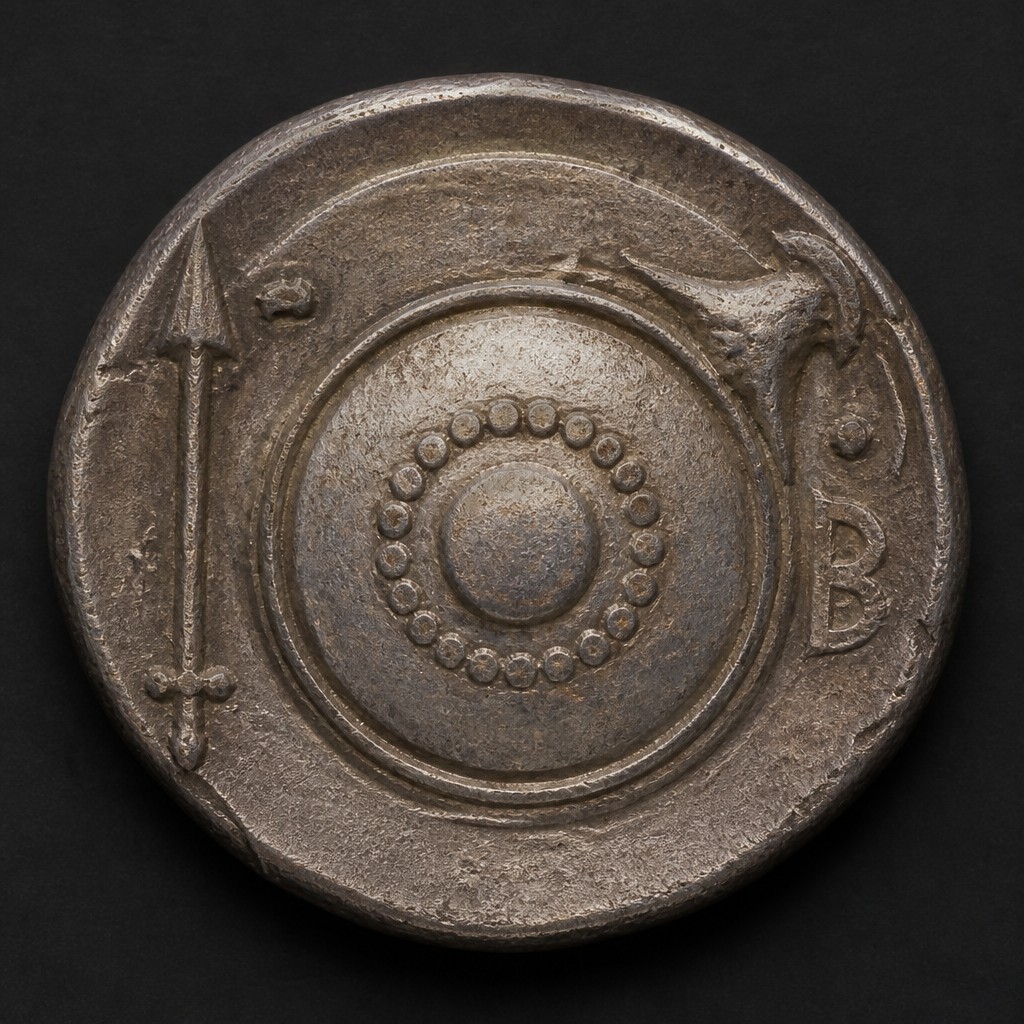
What It Is
The Boeotian shield stater was struck by Thebes and other cities of the Boeotian League in central Greece over several centuries, from the archaic period through the 4th century BC. Thebes was the dominant city of the league, and its staters carry the same shield emblem used league-wide but are marked with letters identifying Thebes as the issuing city.
Obverse
The obverse shows a Boeotian shield, a distinctive oval shield with deep semicircular cutouts on each long side, giving it a figure-eight silhouette. This shield shape was a regional emblem shared by every city in the Boeotian League and appears essentially unchanged across the series.
Reverse
The reverse carries an amphora (a two-handled storage jar) within an incuse square on earlier issues, later rendered in low relief on a flat field. Letters reading ΘE (theta-epsilon, short for Thebai) appear beside the amphora on Theban issues; on later 4th-century staters a magistrate's name may also be added in small letters.
Size, Weight, and Metal
Boeotian staters are silver and were struck on the Aeginetic weight standard, with a full stater weighing roughly 12 grams and companion fractions (drachms, obols) weighing proportionally less. The flans are thick and dumpy rather than broad and thin.
Identifying the City of Issue
Because every Boeotian city used the same shield design, the issuing city is identified only by the small inscription on the reverse next to the amphora or other reverse device. ΘE or the fuller ΘEBAI marks a Theban issue; other league cities used their own initial letters instead.
Telling It Apart From Similar Coins
Coins of other Boeotian cities (such as Tanagra or Haliartus) share the identical shield obverse, so confusion is common; only the reverse inscription and device distinguish them. Aeginetic-standard shield staters should not be confused with Aegina's own tortoise-type staters, which show a turtle rather than a shield.
Grading at a Glance
Look for full, even striking of the shield's raised rim and the two crescent cutouts, plus legible reverse lettering. Because these coins were struck on thick, small flans, off-center strikes and weak edges are common even on otherwise well-preserved examples.
Authenticity Red Flags
Watch for cast copies showing a grainy surface, blurred shield rim, or bubbling instead of sharp metal flow lines, and for the ΘE lettering being crudely re-cut or replaced with an incorrect city abbreviation to imply a rarer variant. Weight noticeably below the expected stater standard is another warning sign.
Frequently asked questions
What shape is the Boeotian shield on these coins?
It is an oval shield with deep semicircular notches cut into both long sides, giving it a figure-eight outline.
How do I know a shield stater is from Thebes and not another Boeotian city?
Check the small reverse inscription beside the amphora; Theban coins carry ΘE or ΘEBAI, while other league cities used different initials.
What metal and weight standard were these coins struck on?
They are silver, struck on the Aeginetic standard, with a full stater weighing around 12 grams.
Could this be confused with an Aegina tortoise coin?
Not if the obverse is examined closely: Aegina's coins show a sea or land turtle, while Boeotian staters show a shield.