
How to Identify the Thailand (Siam) Silver Baht 'Bullet Money' (Pod Duang)
Traditional Thai currency shaped like a bent silver bar or bullet, identified by punch-marked royal symbols and a rounded, almost bean-like form unlike any flat, struck coin.
Read the full Thailand (Siam) Silver Baht 'Bullet Money' (Pod Duang) encyclopedia entry →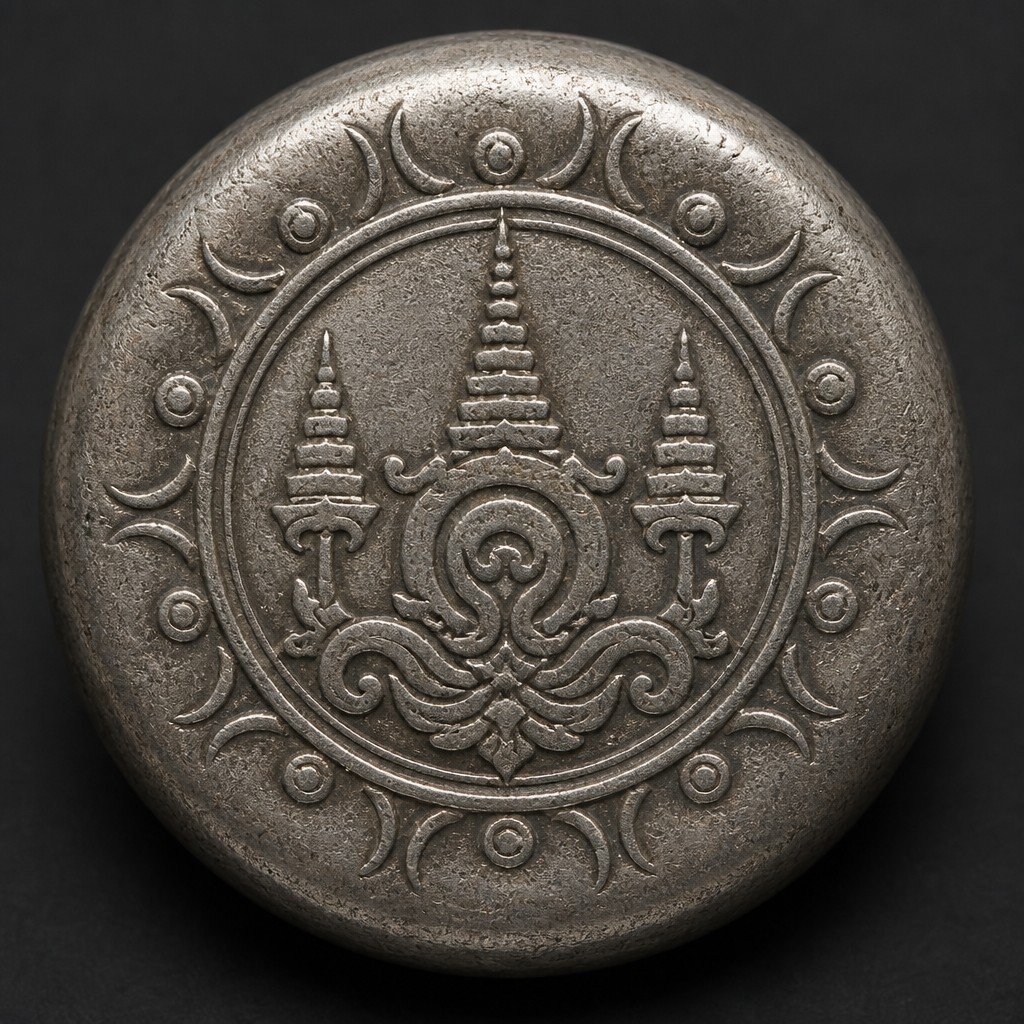
What This Coin Is
Known in Thai as "pod duang," bullet money was the traditional currency of Siam for several centuries before flat, Western-style coins were introduced in the late 1800s. Rather than being struck flat like most world coins, it was formed by bending a bar of silver into a curled, rounded shape and stamping it with official marks. Various denominations existed, from small fractions up to a full baht and above, based on weight.
Obverse Design ("Punch Marks")
Because bullet money has no flat obverse in the usual sense, identification instead focuses on its punch marks. Each piece bears one or more small stamped symbols, most commonly a royal or dynastic emblem such as the chakra (wheel), and often a secondary symbol identifying the reigning king or era, such as an elephant, a conch, or other royal insignia used across different reigns of the Chakri dynasty.
"Reverse" and Form
There is no separate reverse design in the way a flat coin has; the punch marks appear on the rounded outer surface of the curled bar, and the coin's overall form is roughly spherical or bean-shaped with a visible seam where the silver bar was bent back on itself.
Size, Weight, Metal, and Edge
Bullet money was issued in a range of sizes corresponding to Siamese weight-based denominations (such as fuang, salung, and baht), with the full baht piece weighing roughly 15 grams in silver. There is no true "edge" as with flat coins; instead, the visible seam and rounded surface are the defining physical traits.
Mint Marks and Where to Find Them
Rather than a mintmark in the Western sense, the punch marks themselves indicate the issuing authority and reign, and their combination and placement can help date a piece to a particular period of the Chakri dynasty, up through the reign of King Chulalongkorn (Rama V), when this currency form was phased out in favor of flat coinage around the turn of the twentieth century.
Telling It Apart from Similar Coins
Bullet money is visually unmistakable next to any flat-struck coin because of its rounded, bar-like shape, but different denominations can be confused with one another; size and weight are the primary way to distinguish a small fuang from a larger baht piece. Later counterfeits or lower-quality pieces may lack the crisp double-punch marks of genuine royal issues.
Grading at a Glance
Condition is judged by how clear and deep the punch marks remain, since these are the primary design elements, along with the overall silver surface quality and the tightness of the bent seam. Well-preserved pieces show sharp, well-centered stamps, while worn or low-quality examples show shallow, off-center, or partially missing marks.
Authenticity Red Flags
Fakes are typically betrayed by punch marks that look too shallow, blurry, or modern in style, by silver content that feels unusually light for the piece's apparent size, or by a seam that looks freshly cut or filed rather than naturally aged. Uniform, machine-perfect roundness across multiple "different" pieces can also suggest modern reproduction rather than hand-formed period manufacture.
Frequently asked questions
Why is it called 'bullet money'?
Western collectors gave it this nickname because its curled, rounded shape resembles a bullet or bean rather than a flat coin.
What are the punch marks used for?
They identify the royal authority and reign that issued the piece, functioning similarly to a design and mintmark combined.
When did Siam stop using bullet money?
It was phased out in favor of flat, Western-style struck coins around the reign of King Chulalongkorn (Rama V) near the turn of the twentieth century.
How do I tell different denominations apart?
Size and weight are the main indicators, since smaller fractional units like the fuang are noticeably lighter than a full baht piece.