
How to Identify the Thailand One Baht Commemorative
A collector's guide to the 1961 Thai baht: the conjoined royal portraits, the tower-bearing royal arms, Thai date, metal, size and look-alikes.
Read the full Thailand One Baht Commemorative encyclopedia entry →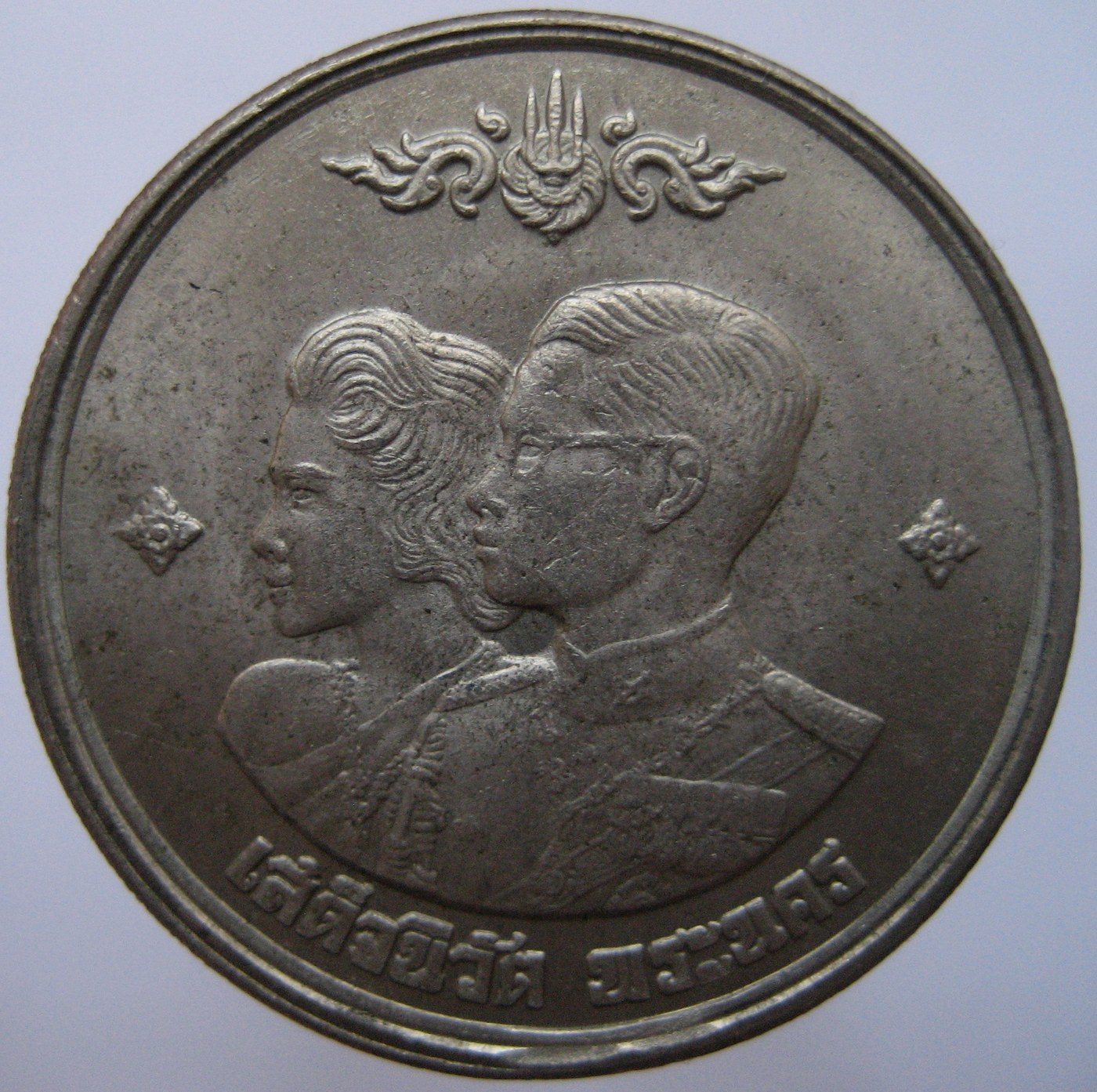
Start with the obverse, which is the quickest and most reliable identifier. Look for two conjoined left-facing profiles — the king in the foreground and the queen behind him — with a Thai ornamental motif arching over the top of the field. These are King Bhumibol Adulyadej (Rama IX) and Queen Sirikit. A single royal head is ordinary; two joined royal heads on a baht is the signature of this commemorative and is usually enough to place the type.
Read the reverse to confirm. It carries the Thai royal coat of arms centered on crenellated, tower-like heraldic elements, ringed by Thai-script legends and the date. Because the inscriptions are entirely in Thai, match the emblem's shape and the numerals rather than attempting a transliteration. The Western date is 1961, which appears in Thai issues as the Buddhist Era year BE 2504 — remember the 543-year offset when cross-checking references.
Check the physical coin. This is a round, silver-colored one-baht of the traditional Thai standard: a modest-diameter piece struck in relief with a formal, medallic look. Weigh and measure it and compare against a catalog of Rama IX coinage, since the baht denomination has appeared in several metals and sizes over the years and the numbers help separate the silver commemorative from base-metal circulation baht.
Separate it from look-alikes. Thailand issued many royal commemoratives across Rama IX's long reign, a good number showing the king alone or the king and queen for later anniversaries and events with different reverses and dates. Do not assume every conjoined-portrait Thai coin is this 1961 issue — verify the date and the specific tower-bearing royal-arms reverse together, not the portraits alone. Later commemoratives and higher denominations can carry broadly similar imagery.
Apply normal authentication cautions. Genuine strikes show crisp portrait detail, sharp Thai lettering and clean fields; be wary of cast copies with soft or blurred detail, seams or surface bubbles, and of pieces artificially toned or plated to look like silver. When precious-metal content or authenticity is in question, confirm weight, diameter and alloy against a trusted Thai numismatic reference or have the coin examined by a specialist.
Frequently asked questions
How do I know it is the 1961 issue and not a later Thai commemorative?
Match the date and the reverse, not just the portraits. Read the coin as dated 1961 (BE 2504) and confirm the tower-bearing royal coat of arms on the reverse. Later Rama IX commemoratives reuse similar royal imagery but carry different dates and different reverse designs.
The inscriptions are all in Thai — how can I read the date?
Thai coins of this era use Buddhist Era dating, 543 years ahead of the Western calendar, so 1961 appears as BE 2504. Compare the Thai numerals on the coin against a reference chart of Thai digits, or match the coin to a cataloged image of the type.
How can I tell the silver commemorative from an ordinary circulation baht?
Weight, diameter and design. The commemorative shows the conjoined king-and-queen portraits and a formal medallic finish, while base-metal circulation baht typically show a single portrait or plain devices. Measure the coin and check the alloy against a standard reference when in doubt.
What are the signs of a fake or altered example?
Watch for casting seams, bubbles, mushy portrait detail, incorrect weight or diameter, and artificial plating or toning meant to imitate silver. Genuine coins are struck with sharp relief and clean Thai lettering; verify against a reliable catalog or a specialist if unsure.