
How to Identify the Tetradrachm of Eretria
A collector's guide to the female head, standing bull, and EYBOIA legend that mark this Euboean silver tetradrachm, with authentication cautions.
Read the full Tetradrachm of Eretria encyclopedia entry →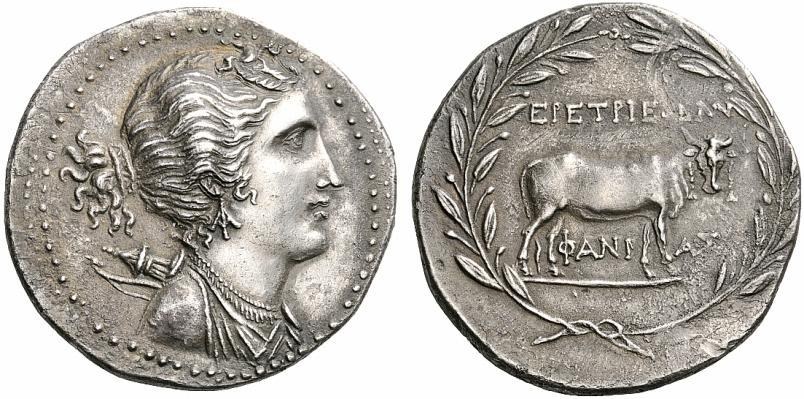
Begin with the reverse legend, because it is the most reliable single clue. Look for the Greek letters EYBOIA (epsilon, upsilon, beta, omicron, iota, alpha) in the field beside a standing bovine. That word names the island of Euboea and, together with the animal, points to the Euboean cattle coinage associated with Eretria rather than to a cow-and-nymph type from another mint using a different inscription.
Read the two types together. The obverse should be a female head in profile facing right, with curled or wavy hair and a pearl necklace at the neck; the reverse should be a bull standing to the left. Note the direction the animal faces and whether it stands, lies, or is shown only as a head, since related Greek cattle coins vary in these details and the exact combination is part of the attribution.
Check size, metal, and fabric against the denomination. A tetradrachm is a large, heavy silver coin, so a genuine piece should feel substantial and clearly exceed a drachm or the small Euboean fractions in diameter and weight. Expect hand-struck fabric: a slightly irregular flan, grey toned silver, occasional die-shift or double strike, and centering that can push part of the legend off the edge. Machine-perfect roundness, a mirror-smooth surface, or a seam around the rim are warning signs.
Be cautious with look-alikes and modern productions. Euboean cattle imagery is widely imitated, and large silver Greek coins in general are among the most frequently faked and replicated for the souvenir and fantasy market, sometimes with invented denominations or legends. Cast copies show a grainy surface and soft detail; tooled genuine coins show scratchy re-cut lines. Compare portrait and letter style against published references for the region, and treat any oversized or unusually heavy piece with skepticism.
For a coin of this value, do not rely on visual matching alone. Weigh and measure it, photograph both sides clearly, and seek attribution from a specialist in ancient Greek coinage or a reputable third-party grading and authentication service before buying or assigning value.
Frequently asked questions
What is the fastest way to recognize this type?
Find the Greek legend EYBOIA next to a standing bull on the reverse, then confirm a right-facing female head with a pearl necklace on the obverse. That combination is the core diagnostic for the Euboean cattle type tied to Eretria.
How do I tell it apart from other Greek cow or bull coins?
Read the legend and note the animal's pose. Many Greek cities used cattle imagery, but the EYBOIA inscription names Euboea specifically, and the standing bull paired with a necklaced female head distinguishes this issue from cow-and-nymph or bull's-head types of other mints.
What are the biggest authentication red flags?
Machine-perfect roundness, a casting seam or file marks on the edge, a grainy or soapy surface, soft mushy detail, and weight or size that is far outside the norm for a silver tetradrachm. Any of these suggests a cast copy or a modern replica.
Should I get a large silver Greek coin like this authenticated?
Yes. Large ancient silver is frequently copied, so weigh and measure the coin, keep clear photos of both sides, and have it reviewed by a specialist dealer or a recognized grading and authentication service before treating it as genuine.