
How to Identify the Tanzania 200 Shillings
A collector's guide to identifying the Tanzania 200 shillings brass coin by its African-animal design, bold 200, Swahili SHILLINGI legend, and look-alikes.
Read the full Tanzania 200 Shillings encyclopedia entry →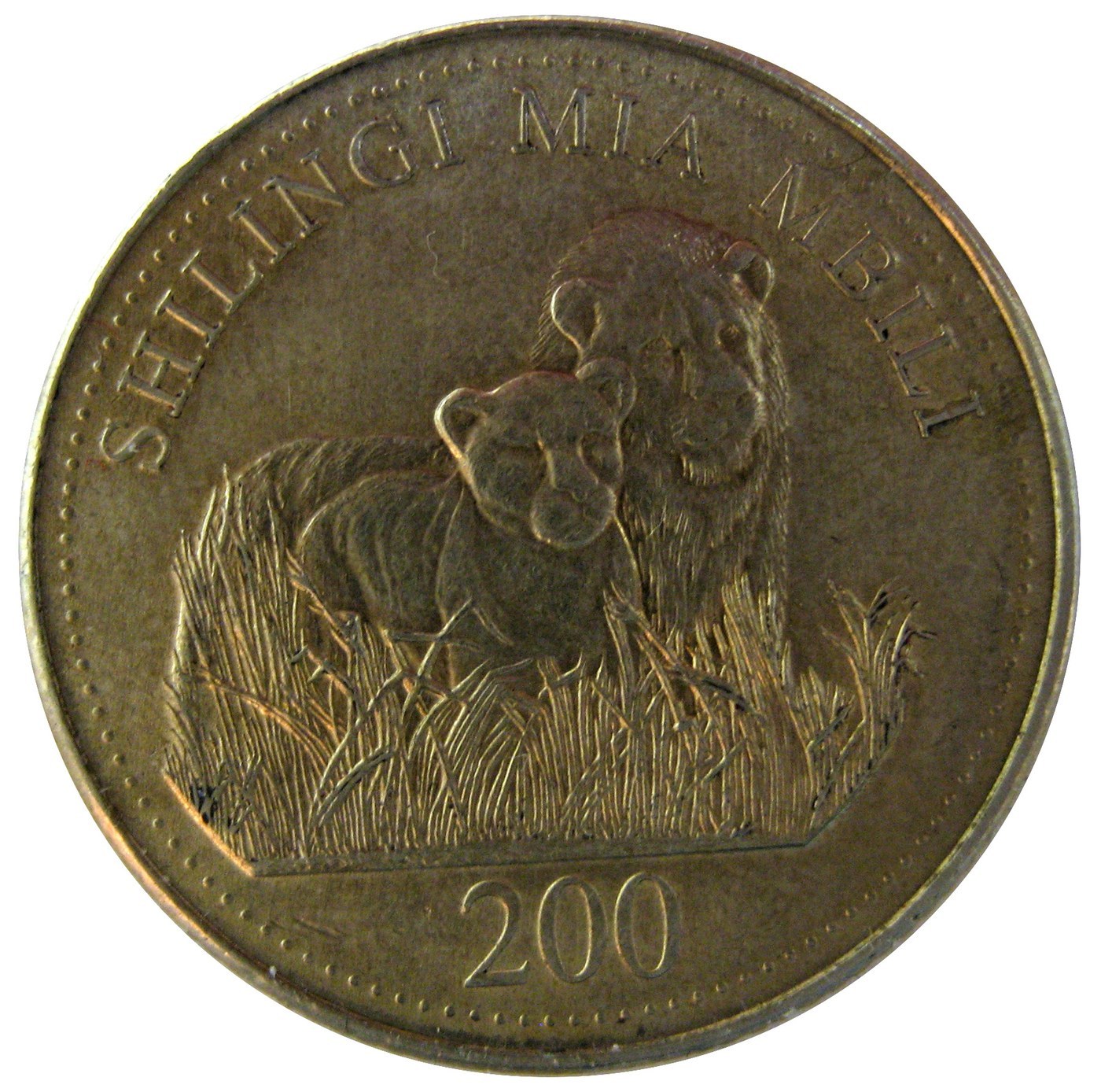
What This Coin Is
The Tanzania 200 shillings is a golden brass circulating coin of the United Republic of Tanzania from the 1990s era. Identifying one comes down to matching three things together: a large African animal in grass, the bold numeral 200, and a Swahili shilling legend with the Tanzanian country name. Any single feature can be shared by other coins, so confirm the combination.
Reading the Design Faces
One face is the value-and-wildlife side: it shows a big-bodied African animal standing in grass paired with a large 200. The animal's heavy silhouette can read as bear-like at first glance, so do not attribute the coin by the animal alone. The other face carries the legends — look for the word SHILINGI (shillings), the country name in Swahili (Jamhuri ya Muungano wa Tanzania, the United Republic of Tanzania), and the year, which should fall in the 1990s era.
Metal, Colour, and Fabric
This is a brass coin, so a genuine example is warm golden-yellow when fresh and darkens to a duller brown-gold once circulated — not the cool grey of silver or cupro-nickel. It is a mid-to-large base-metal piece consistent with a higher circulating denomination. Weigh and measure any candidate and compare it against published specifications for the type; a coin that is markedly off in diameter, thickness, or weight, or that shows silvery metal, does not fit this brass denomination.
Look-Alikes and What to Rule Out
Other modern Tanzanian shilling coins share the same wildlife-and-Swahili design family and golden or base-metal tone, so the surest separators are the numeral 200 and the SHILLINGI value legend read together — check the number and the word, not just the animal. Higher and lower shilling denominations of the same era can look similar in style but differ in size, animal motif, and stated value, so verify the denomination explicitly. Be alert to worn coins where the number is faint; angle the coin to light to read the value.
Authentication Cautions
As a common circulating brass coin this type is rarely counterfeited, so most identification questions are about wear and misreading rather than forgery. Even so, treat cleaned, polished, or artificially brightened surfaces with caution, since aggressive cleaning damages original lustre and reduces collector appeal. For attribution, match the animal, denomination, legends, and date to a standard catalogue of modern Tanzanian coinage rather than relying on colour or the animal's outline alone.
Frequently asked questions
How do I tell the 200 shillings from other Tanzanian coins?
Read the numeral and the value legend together: this coin pairs a bold 200 with the Swahili word SHILINGI. Other denominations share the wildlife-and-Swahili style, so confirm the stated value rather than judging by the animal or colour.
Is the golden colour a sign the coin is gold?
No. The gold-like tone comes from brass, a common base metal for circulating coins. A genuine piece is bright golden when fresh and dulls with wear; it is not precious metal.
What if the animal on my coin is hard to identify?
The animal can look bear-like or indistinct when worn, so it is not a reliable identifier on its own. Use the numeral 200, the SHILLINGI legend, the Tanzanian country name, and the date to attribute the coin instead.
Do I need to worry about fakes?
Counterfeits of this common brass coin are unusual, so wear and misreading are the main concerns. Watch instead for cleaned or polished surfaces, and confirm weight and diameter against a reference if a coin looks wrong.