
How to Identify the Tanzania 100 Shillings
Identify the brass Tanzania 100 Shillings by its running-antelope scene, the Swahili legend SHILINGI MIA MOJA, the 100 numeral, and its yellow brass color.
Read the full Tanzania 100 Shillings encyclopedia entry →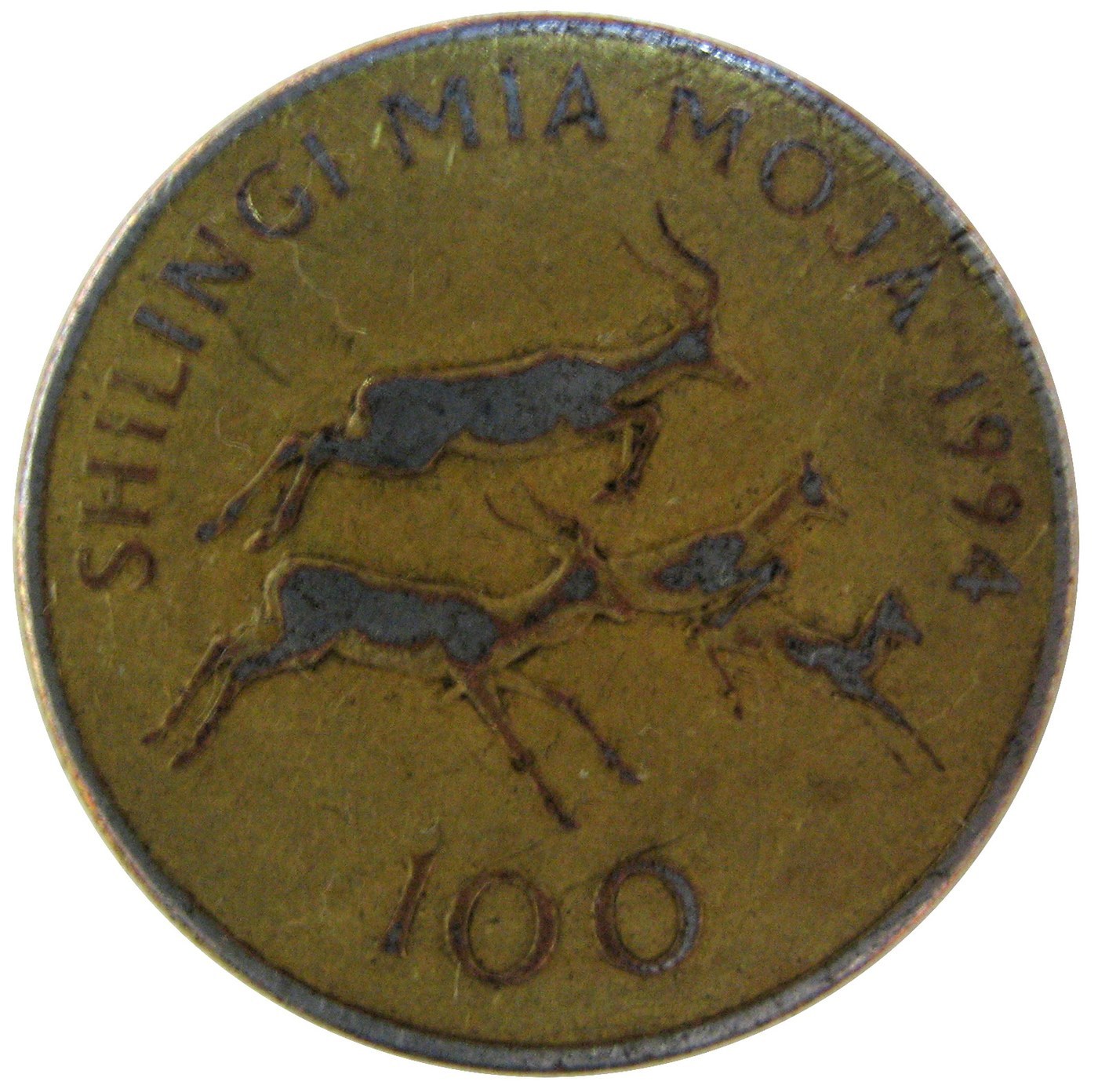
Start With the Legend and Value
The fastest confirmation is the Swahili wording on the animal side: SHILINGI MIA MOJA curving around the rim, which translates to "one hundred shillings." Beneath the wildlife scene sits a large numeral 100. Together, the words and the numeral pin down the denomination unambiguously, even when wear has softened the design. A four-digit date (such as 1994) appears within the surrounding legend.
Read the Wildlife Scene
Look for a group of antelope shown mid-leap across grassy ground — several animals of different sizes, giving the impression of a herd in motion. This dynamic fauna design is characteristic of the type and distinguishes the 100-shilling piece from other Tanzanian values, which use different animals and layouts. Fine lines representing grass fill the field beneath the animals.
Check Metal, Size, and Edge
The coin should be brass — a warm yellow-gold alloy, not silver-white and not the red-brown of pure copper. Circulated examples commonly tone darker in the recesses while high points stay brighter. It is a round coin with a raised rim and generally a reeded (grained) edge. The brass color plus the antelope design is a reliable first-glance signature.
Confirm the Other Side
The face opposite the animals (not shown in this photo) should carry the issuer's identity rather than more wildlife — expect the country name for the United Republic of Tanzania and a portrait or national emblem. If the reverse instead shows another animal or a different country name, you may be looking at a different denomination or a coin of another East African nation, so check both sides before concluding.
Look-Alikes and Cautions
Other East African shilling coins and other Tanzanian brass denominations can look broadly similar in color and style, so always read the Swahili legend and the numeral rather than judging by the animal alone. Brass coins can also be mistaken for gold by newcomers — this coin contains no precious metal. As a common circulation piece it is rarely counterfeited, but be wary of artificially brightened or polished examples being sold as "uncirculated"; original, evenly toned surfaces are preferable.
Frequently asked questions
How do I tell this from another Tanzanian coin?
Read the value: SHILINGI MIA MOJA plus the numeral 100 marks the 100-shilling coin. Other denominations show different animals, wording, and numbers.
How can I be sure it is brass and not gold?
Brass is a base copper-zinc alloy with a yellow tone but no precious value; a common circulation coin of this size and date is brass, not gold.
Which side is the wildlife on?
The running-antelope scene is the value side, paired with SHILINGI MIA MOJA and 100. The opposite face carries the country name and a portrait or emblem.
Could this be from another country?
Similar shilling coins exist across East Africa. Confirm the Swahili legend and the Tanzania issuer name on the other side to be certain.