
How to Identify the Tanzania 10 Shillings
A collector's guide to recognizing the Nyerere-portrait Tanzania 10 shillings by its portrait, coat of arms, Swahili legends, and magnetic base metal.
Read the full Tanzania 10 Shillings encyclopedia entry →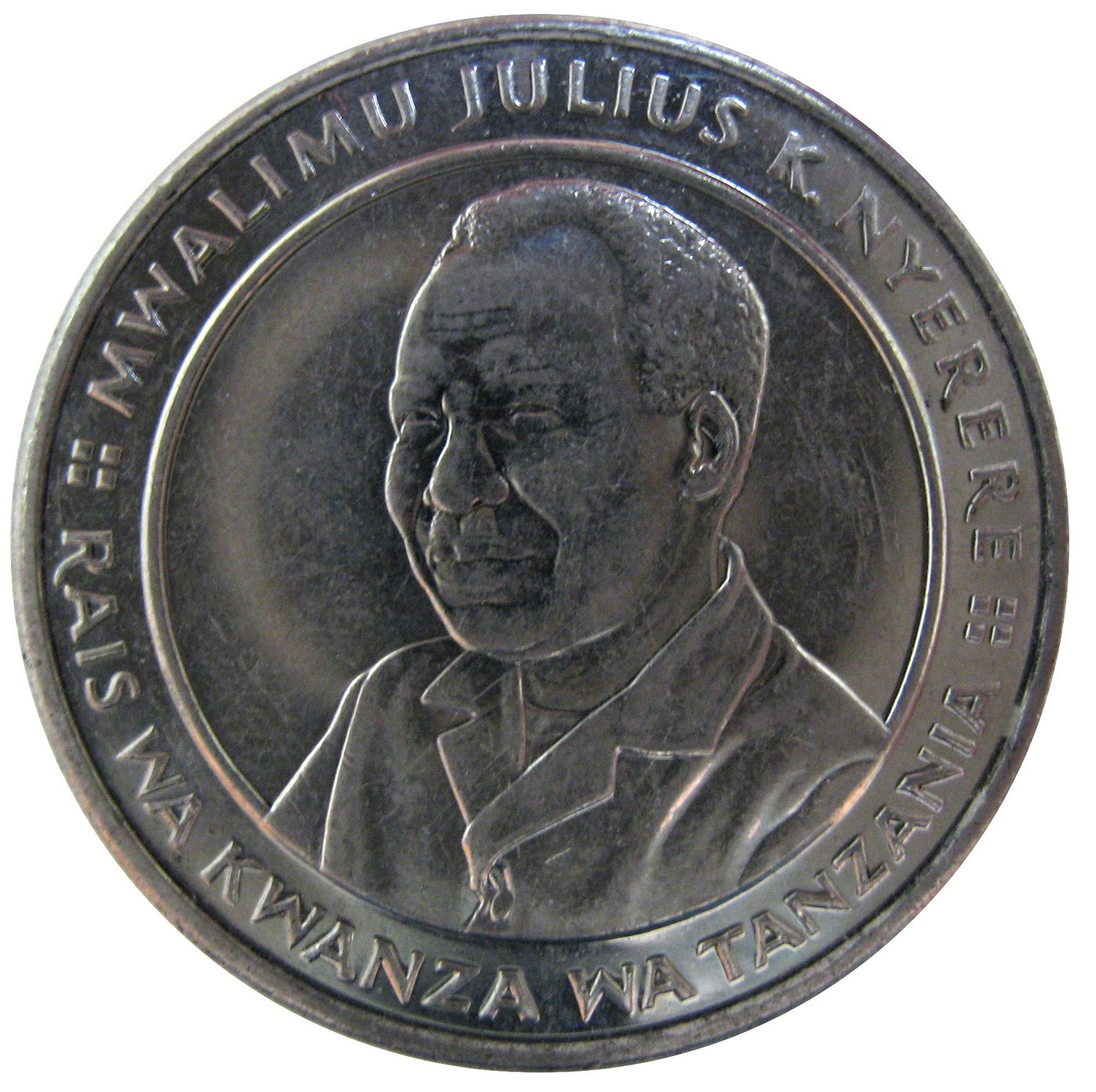
Begin with the portrait face. A genuine Tanzania 10 shillings of this series shows a bust of Julius Nyerere in a jacket, ringed by the Swahili legend MWALIMU JULIUS K. NYERERE and RAIS WA KWANZA WA TANZANIA. If the coin shows a different person or no portrait at all, it is not this type. The portrait is the single most reliable identifier of the series.
Turn to the coat-of-arms face to confirm the denomination. The reverse carries Tanzania's national arms—a warrior's shield with a torch, crossed tools, and a spear, flanked by two standing figures on Mount Kilimanjaro over the motto UHURU NA UMOJA. Read the arc of text SHILINGI KUMI ("ten shillings") and locate the large numeral 10 beneath the arms. A different numeral (5, 20, and so on) means a different denomination in the same family.
Check size, color, and magnetism. This is a round, medium-sized base-metal coin with a pale, silver-gray tone, not a copper-red or golden brass color. Issues of this period are commonly reported as nickel-clad steel, so a genuine piece is usually attracted to a magnet—a quick, useful test. A coin of the expected design that is markedly heavier, non-magnetic, or a distinctly different color deserves a closer look.
Find the date to pin down the exact issue. On the photographed coin the year 1993 sits to the right of the coat of arms, along the reverse rim. The Nyerere-portrait 10 shillings was struck across several years in the late 1980s and early 1990s, so reading the date places your coin within that run and flags any scarcer year.
Authentication is rarely a concern for such a low-value coin, so focus on correct attribution rather than fear of forgery. Watch for wear, corrosion, or cleaning that can blur the date and legends, and compare the portrait, arms, and Swahili wording against catalog images before assigning a value or grade.
Frequently asked questions
How do I confirm it is the 10 shilling value?
Read the reverse. The legend SHILINGI KUMI means "ten shillings," and a large numeral 10 sits below the coat of arms. Match both the wording and the number to be sure.
Does the magnet test help identify this coin?
Yes. Coins of this period are commonly reported as nickel-clad steel, so a genuine Tanzania 10 shillings of this series is typically attracted to a magnet, unlike many purely cupronickel or brass coins.
Where is the date on the coin?
The year appears on the coat-of-arms (reverse) side, along the rim beside the arms—for example 1993 to the right on the photographed example. It identifies the specific issue within the series.
How is it different from other Tanzanian shilling coins?
The Nyerere portrait and the SHILINGI KUMI legend with numeral 10 are decisive. Other values in the same series share the arms and portrait style but show different numerals and Swahili denomination words.