
How to Identify the Syracuse Dekadrachm (Kimon)
A celebrated ancient Greek silver dekadrachm from Syracuse, signed by the engraver Kimon, identified by its facing dolphin-framed Arethusa head and a charioteer reverse crowned by Nike.
Read the full Syracuse Dekadrachm (Kimon) encyclopedia entry →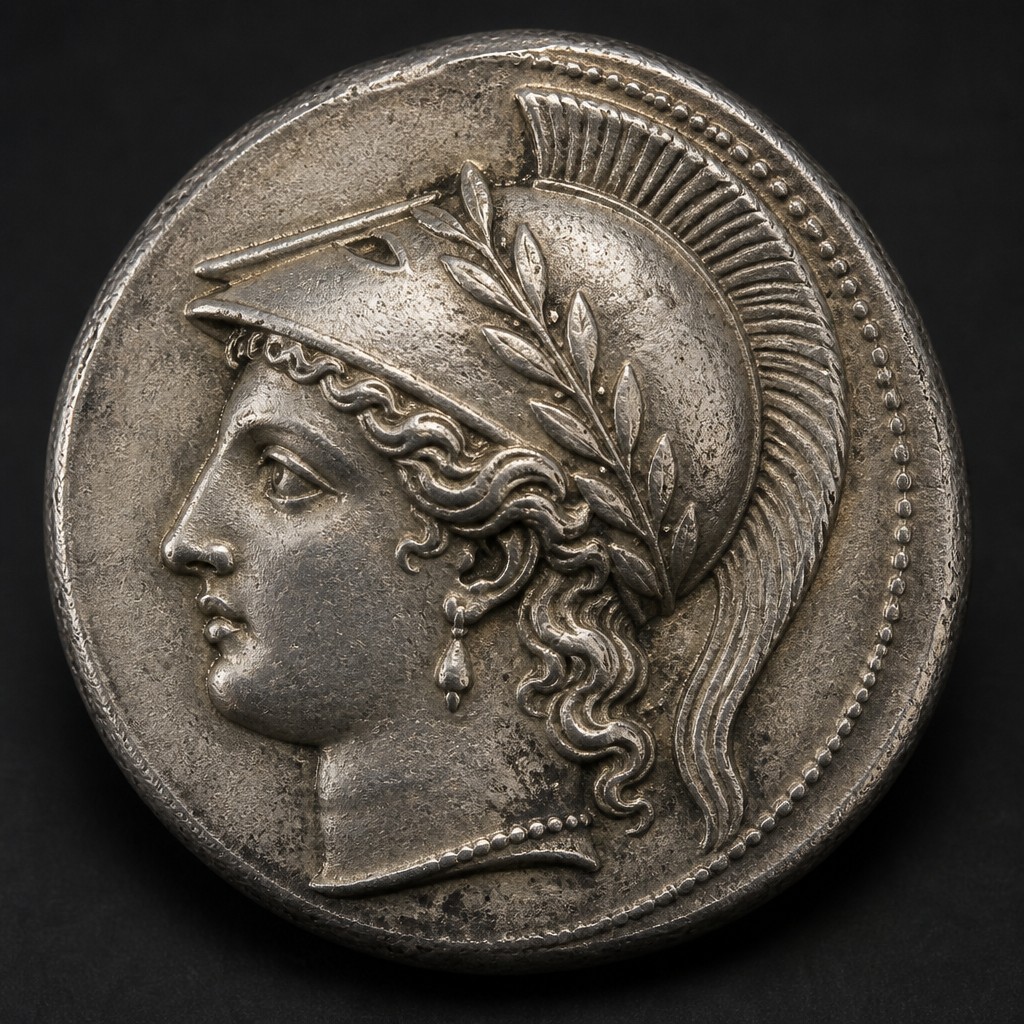
What This Coin Is
The Syracuse Dekadrachm signed by Kimon is one of the most admired coin designs from the ancient Greek world, struck in the Sicilian city of Syracuse around the late 5th to early 4th century BC, likely in connection with celebrations following military victories. A dekadrachm was a large silver denomination worth ten drachms, and coins signed by a named engraver like Kimon (or his contemporary Euainetos) are especially prized for their artistry.
Obverse Design
The obverse depicts the head of the nymph Arethusa, a local water spirit associated with a freshwater spring on the island of Ortygia in Syracuse. Her hair is elaborately bound, often with strands flowing free, and she wears a pendant earring and necklace. Four dolphins swim around her head, representing the sea surrounding Syracuse. On many examples, Kimon's signature, "KIMΩN," appears in tiny letters, often worked into the design on the hair band or below the truncation of the neck.
Reverse Design
The reverse shows a fast-moving quadriga (four-horse chariot) driven by a charioteer, typically shown from a three-quarter or side view with dynamic motion. Above the chariot, the winged goddess Nike flies down to crown the horses (or the charioteer) with a wreath, symbolizing victory. Below the chariot, in the exergue, a panoply of arms and armor — a helmet, shield, and greaves — is often depicted, sometimes with a grain ear symbolizing Sicily's agricultural wealth.
Size, Weight, and Metal
This coin is struck in silver, typically weighing around 42 to 43 grams and measuring roughly 35 to 37mm in diameter, making it notably larger and heavier than standard tetradrachms of the period. There is no "edge" design as with modern milled coinage; ancient coins were hand-struck between two dies and often show a slightly irregular, rounded edge.
Identifying the Engraver and Mint
Ancient Greek coins did not use mint marks in the modern sense. Instead, identification relies on recognizing the city of issue (Syracuse), the specific artistic style, and, when present, the engraver's signature. Genuine Kimon-signed dekadrachms show the signature integrated naturally into the design, consistent with the fine, detailed style associated with his known body of work.
Telling It Apart from Similar Coins
Syracuse also issued more common tetradrachms with a similar Arethusa-and-dolphins obverse and quadriga reverse, but these are smaller and lighter than the dekadrachm. Other Sicilian and Greek cities used chariot and nymph imagery as well, so confirming the specific dolphin arrangement, the Kimon signature (if present), and the coin's weight and diameter helps distinguish a genuine Syracuse dekadrachm from other similar ancient issues.
Judging Condition and Authenticity
Condition on ancient coins is judged by strike quality (how fully the design transferred from the die) and surface preservation (wear, corrosion, or cleaning damage) rather than by modern mint-state standards. Look for sharp hair detail on Arethusa and clear musculature on the horses for a well-preserved example. Because this is one of the most reproduced ancient coin types, authenticity red flags include unnaturally uniform casting texture (versus the flow lines of a genuinely struck coin), incorrect weight or diameter, and die styles that don't match known genuine examples — professional numismatic authentication is strongly advised before any purchase of an ancient coin at this level.
Frequently asked questions
Who was Kimon and why does his signature matter?
Kimon was a celebrated die engraver working in Syracuse; his signed dekadrachms are prized for their exceptional artistry and are among the most studied ancient Greek coin designs.
What are the dolphins on the obverse for?
They surround the head of the nymph Arethusa and symbolize the sea and the freshwater spring on Ortygia associated with her myth in Syracuse.
Does this coin have a mint mark like modern coins?
No, ancient Greek coins didn't use mint marks; identification relies on the city's known design style and, when present, an engraver's signature.
How is a dekadrachm different from a tetradrachm?
A dekadrachm is worth ten drachms and is notably larger and heavier (around 42-43 grams) than a tetradrachm, which is worth four drachms and weighs around 17 grams.
Why should I be cautious buying this type of coin?
Because it is one of the most reproduced ancient coin designs, professional authentication is strongly recommended to confirm genuine die work, weight, and surface characteristics.