
How to Identify the Syracuse Decadrachm
A guide to the celebrated Sicilian silver decadrachm signed by master engravers Kimon and Euainetos, covering its Arethusa obverse, chariot reverse, and forgery risks.
Read the full Syracuse Decadrachm encyclopedia entry →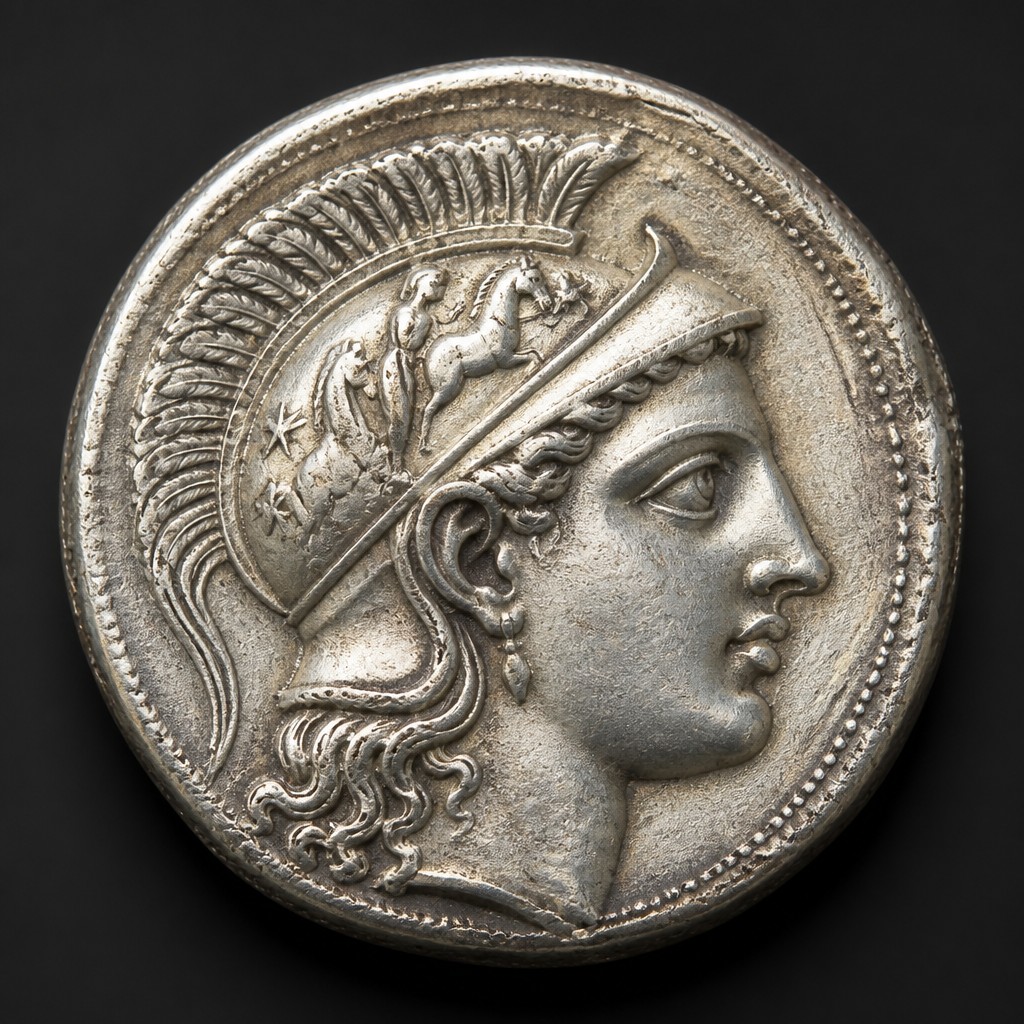
What Is the Coin
The Syracuse decadrachm is a large silver coin struck by the Greek city of Syracuse in Sicily, most famously around 400 BC, in commemoration of Syracusan military victories. It is considered one of the artistic high points of ancient Greek coinage, largely because several dies were signed by renowned engravers Kimon and Euainetos.
Obverse Design
The obverse shows the head of the nymph Arethusa, associated with a freshwater spring in Syracuse, facing left or right depending on the die, with flowing hair and surrounded by four swimming dolphins. On signed examples, the engraver's name (KIMON or EYAINETOY) appears in tiny letters, often on a headband or below the truncation of the neck.
Reverse Design
The reverse depicts a charioteer driving a four-horse chariot (quadriga) at speed, with the goddess Nike flying above crowning the horses or driver with a wreath. Many examples include a small panel below (in the exergue) showing a suit of armor, symbolizing a military prize or victory being commemorated.
Size, Weight, Metal & Edge
The coin is struck in silver, weighs approximately 42-43 g, and measures roughly 35-36 mm in diameter, considerably larger and heavier than the standard tetradrachm, reflecting its status as a special commemorative or prestige issue.
Identifying Marks and Attribution
Beyond the signed engraver names, small symbols and letter combinations in the exergue or field help distinguish the various die pairs used across the coin's production, which numismatists have carefully catalogued given the coin's importance and the number of known dies.
Telling It Apart From Similar Coins
The Syracuse decadrachm should not be confused with the more common Syracusan tetradrachm, which shares the Arethusa-and-dolphins theme but is smaller, lighter, and generally not signed by name. Because this type has long been one of the most copied and reproduced ancient coin designs (in both deceptive forgeries and openly marketed replicas), the size and weight are essential first checks, along with the fine engraving quality expected of genuine dies.
Grading and Condition at a Glance
Because dies for this type were cut with exceptional artistic care, collectors pay close attention to strike quality and centering as much as wear; a well-centered strike showing Arethusa's full hair detail and a complete chariot scene is especially prized. Light wear on Arethusa's cheek and the horses' backs is typical even on well-preserved genuine examples.
Authenticity Red Flags
Given the decadrachm's fame and value, incorrect weight or diameter, soft or "mushy" hair and drapery detail, an engraver's signature that appears crudely added rather than integrated into the original die, or unnaturally uniform surfaces are all signs of a modern forgery. Because this is one of the most frequently faked ancient coin types, provenance and specialist authentication are especially important.
Frequently asked questions
Why are some Syracuse decadrachms signed?
Master engravers Kimon and Euainetos signed several of the dies used for this type, an unusual practice that reflects the artistic prestige of the design.
What is shown on the obverse?
The head of the nymph Arethusa surrounded by four dolphins, referencing a spring associated with Syracuse.
How is it different from a Syracuse tetradrachm?
The decadrachm is larger and heavier (about 42-43 g versus roughly 17 g for a tetradrachm) and was a special, often commemorative issue.
Why is this coin especially prone to forgery?
Its fame and high value have made it one of the most frequently reproduced ancient coin designs, so weight, diameter, and engraving quality all deserve close scrutiny.