How to Identify the Syracuse Arethusa Tetradrachm
A classic ancient Greek silver coin from Syracuse, identified by the dolphin-encircled head of the nymph Arethusa on one side and a galloping quadriga crowned by Nike on the other.
Read the full Syracuse Arethusa Tetradrachm encyclopedia entry →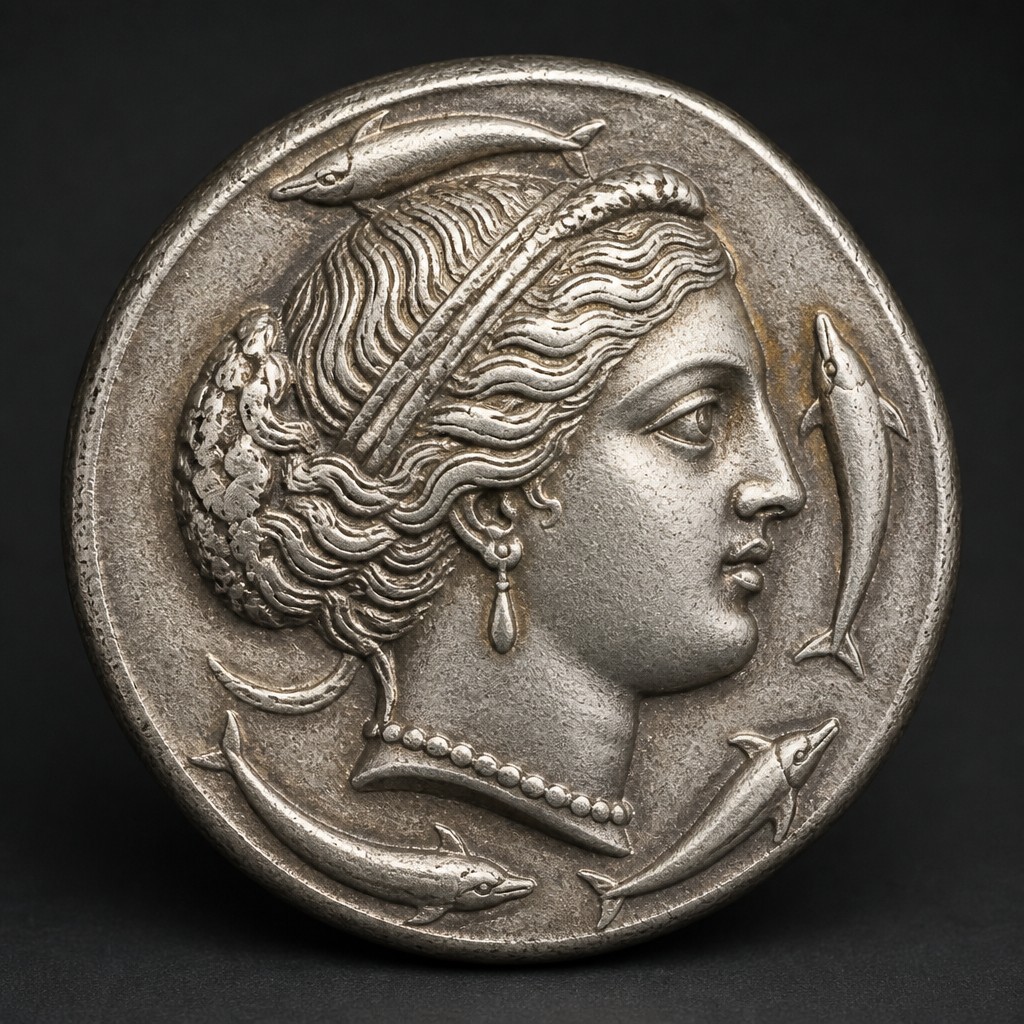
What This Coin Is
The Syracuse Arethusa Tetradrachm was struck by the Greek city-state of Syracuse in Sicily over roughly a century, from the early to late 5th century BC, evolving stylistically as different engravers worked on the dies over time. A tetradrachm was a widely used silver denomination worth four drachms, and this particular type became one of the most recognizable and widely imitated coin designs of the ancient Greek world.
Obverse Design
The obverse shows the head of the nymph Arethusa, associated with a sacred freshwater spring on the island of Ortygia within Syracuse. Her hair is bound, sometimes with a headband or within a net (called a sakkos on later, more elaborate examples), and four dolphins encircle her head, representing the surrounding sea. Earlier examples tend to show a simpler, more archaic rendering of Arethusa's face, while later 5th-century examples show increasingly refined, naturalistic detail as Syracusan die-engraving matured.
Reverse Design
The reverse depicts a quadriga (four-horse chariot) driven by a charioteer, usually shown in a side or three-quarter view suggesting rapid movement. On many examples, the goddess Nike flies above the chariot to crown the horses or driver with a wreath, celebrating victory, often connected to the city's success in chariot racing at Panhellenic games or in military conflicts.
Size, Weight, and Metal
The coin is struck in silver, typically weighing around 17.2 grams and measuring roughly 24 to 27mm in diameter, consistent with the standard Attic-Sicilian weight system used for tetradrachms in this region. As with other ancient hand-struck coins, there is no engineered edge design, and slight irregularities in shape and centering are normal and expected.
Identifying the Mint and Period
Ancient Greek coins do not carry mint marks in the modern sense, so identification relies on recognizing the city's characteristic design (Arethusa and dolphins paired with a quadriga) along with stylistic details that can help place a given coin earlier or later within the type's long production run. Some later examples include a small engraver's signature worked subtly into the design, similar in concept to the famous dekadrachm signatures of engravers like Kimon and Euainetos.
Telling It Apart from Similar Coins
Because Syracuse produced this design over many decades, styles vary considerably: earlier coins have a more static, formal Arethusa portrait, while later coins show more dynamic, three-dimensional detail. The Syracuse dekadrachm shares the same core imagery but is a larger, heavier denomination (about 42-43 grams versus around 17 grams for the tetradrachm). Other Sicilian cities also used dolphin and chariot imagery, so confirming the specific arrangement of dolphins, the style of Arethusa's hair, and the coin's weight helps confirm a Syracusan attribution.
Judging Condition and Authenticity
Condition is judged by the sharpness of Arethusa's facial features and hair detail on the obverse and the clarity of the horses' anatomy and chariot wheel on the reverse, along with overall centering and surface preservation. Because this is one of the most widely collected and, unfortunately, most frequently reproduced ancient coin types, verifying authenticity through weight, metal composition, and die-style consistency with known genuine examples — ideally with input from an experienced ancient coin specialist — is strongly recommended before any purchase.
Frequently asked questions
Who is depicted on the obverse of this coin?
The nymph Arethusa, associated with a sacred freshwater spring in Syracuse, shown surrounded by dolphins representing the sea.
How is this different from the Syracuse dekadrachm?
Both share similar Arethusa-and-quadriga imagery, but the tetradrachm is smaller and lighter, at around 17 grams versus roughly 42-43 grams for the dekadrachm.
Why do styles vary so much between examples?
Syracuse produced this coin type over roughly a century, with different engravers gradually refining the design from a more formal early style to a more naturalistic later style.
Does this coin have a mint mark?
No, ancient Greek coins didn't use mint marks; attribution relies on recognizing the city's design style, sometimes alongside a subtle engraver's signature.
What should I check before buying one of these coins?
Verify weight, diameter, and die style against known genuine examples, and consider professional authentication given how frequently this popular type has been reproduced.
Syracuse Arethusa Tetradrachm identified by the community
Recent Syracuse Arethusa Tetradrachm coins identified with Coin Identifier.