
How to Identify the Swiss 20 Francs Gold Vreneli
The Swiss 20 Francs gold coin, nicknamed the "Vreneli," features a young woman's head symbolizing Helvetia on the obverse and a Swiss shield surrounded by alpine flora on the reverse, and remains a popular small gold bullion coin.
Read the full Swiss 20 Francs Gold Vreneli encyclopedia entry →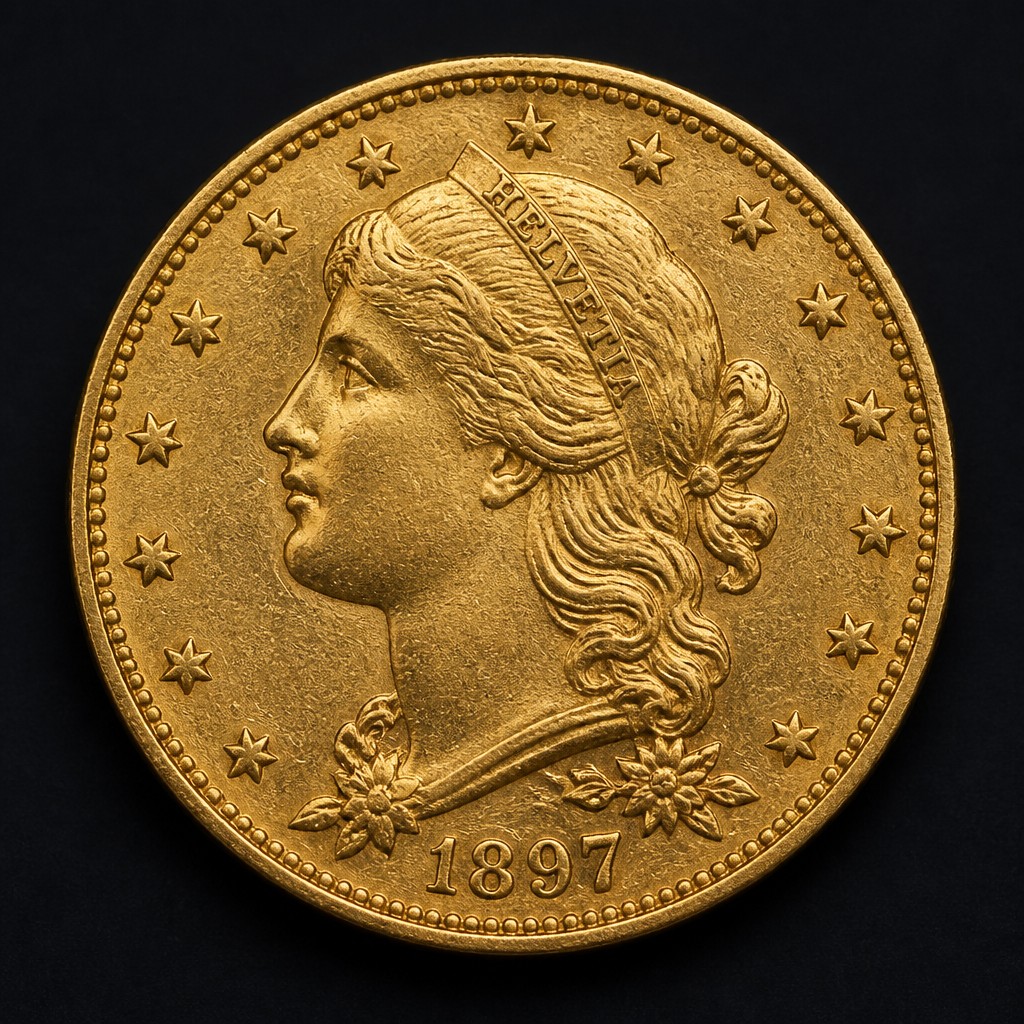
What It Is
The Vreneli is the affectionate Swiss nickname for the 20 Francs (and later 10 Francs) gold coin first struck in 1897 and produced intermittently through the 20th century, including later official restrikes. The nickname derives from "Verena," a common Swiss first name, referencing the young woman depicted on the coin, though the design formally represents Helvetia, the national personification of Switzerland.
Obverse Design
The obverse shows the head of a young woman in profile wearing her hair in a braid, meant to represent Helvetia, with the Swiss Alps visible in the background and "HELVETIA" inscribed along the upper rim.
Reverse Design
The reverse displays the Swiss federal shield (a cross on a shield) surrounded by an oak branch on one side and other foliage on the other, with the denomination "20 FR" and the date below, and "F" and "L" (the designer's initials, Fritz Landry) sometimes noted near the design elements by specialists.
Size, Weight & Metal
The 20 Francs Vreneli is struck in 90% gold, weighing 6.45 grams with a diameter of about 21 mm, matching the broader "Latin Monetary Union" gold coin standard shared with coins like the French 20 Francs and Italian 20 Lire of the same era. A smaller 10 Francs version exists as well, roughly half the weight and slightly smaller in diameter.
Mint Marks
Vrenelis were struck at the Swiss Federal Mint in Bern, and genuine coins do not carry a separate branch mintmark since Switzerland operated a single central mint; identification instead relies on the date and matching design details.
Telling It Apart from Similar Coins
Because the Vreneli shares its weight and diameter with several other Latin Monetary Union gold coins of the period (notably the French Napoleon and Italian 20 Lire), the design itself, Helvetia's head and the Swiss cross shield, is the clearest way to confirm you're looking at a Swiss coin rather than a similarly sized French or Italian piece.
Original Strikes vs. Later Restrikes
Because the Vreneli remained popular as a small gold bullion coin well after its original run, some later dates were struck again in subsequent decades using dies that closely match the originals. This means date alone does not always confirm exactly when a specific coin left the mint, and collectors interested in an early original strike versus a later restrike often rely on subtle die differences, overall wear patterns, or documented provenance rather than the date by itself.
Judging Condition at a Glance
Wear first appears on Helvetia's cheek and the high point of her braided hair, and on the raised ridges of the Swiss cross on the reverse shield. Because many Vrenelis were saved as bullion rather than heavily circulated, a good number of surviving examples are in relatively high grade, though heavily worn pieces do exist from earlier circulation periods.
Authenticity Red Flags
Given its recognized weight and diameter, precise measurement is a strong first authenticity check, since underweight or mis-sized pieces suggest a counterfeit. Look for crisp detail in Helvetia's hair and the shield's cross, as counterfeits often show softer, less defined engraving, and be cautious of a color or luster that seems off compared to genuine 90% gold.
Frequently asked questions
Why is the coin called a "Vreneli"?
It's a nickname derived from "Verena," reflecting the young woman's head on the obverse, even though the figure formally represents Helvetia, the personification of Switzerland.
What is the gold content of a Vreneli?
The 20 Francs version is 90% gold, weighing 6.45 grams with a 21 mm diameter; a smaller 10 Francs version also exists.
How is it different from similar-sized French or Italian gold coins?
All share the same general weight and diameter standard, but the Vreneli's design, Helvetia's head and the Swiss cross shield, is unique and helps distinguish it at a glance.
Does the Vreneli have a mintmark?
No, it was struck solely at the Swiss Federal Mint in Bern, so there's no separate branch mintmark to check.
Are all Vrenelis original historic strikes?
No, official restrikes were produced later using earlier dates, so date alone doesn't guarantee a coin was struck in its stated year; overall condition and documentation can help clarify a coin's specific striking period.