
How to Identify the Swiss 20 Franc Vreneli
A guide to Switzerland's classic gold 20 franc coin, covering the Helvetia obverse, Swiss cross reverse, specifications, and how to spot later restrikes or fakes.
Read the full Swiss 20 Franc Vreneli encyclopedia entry →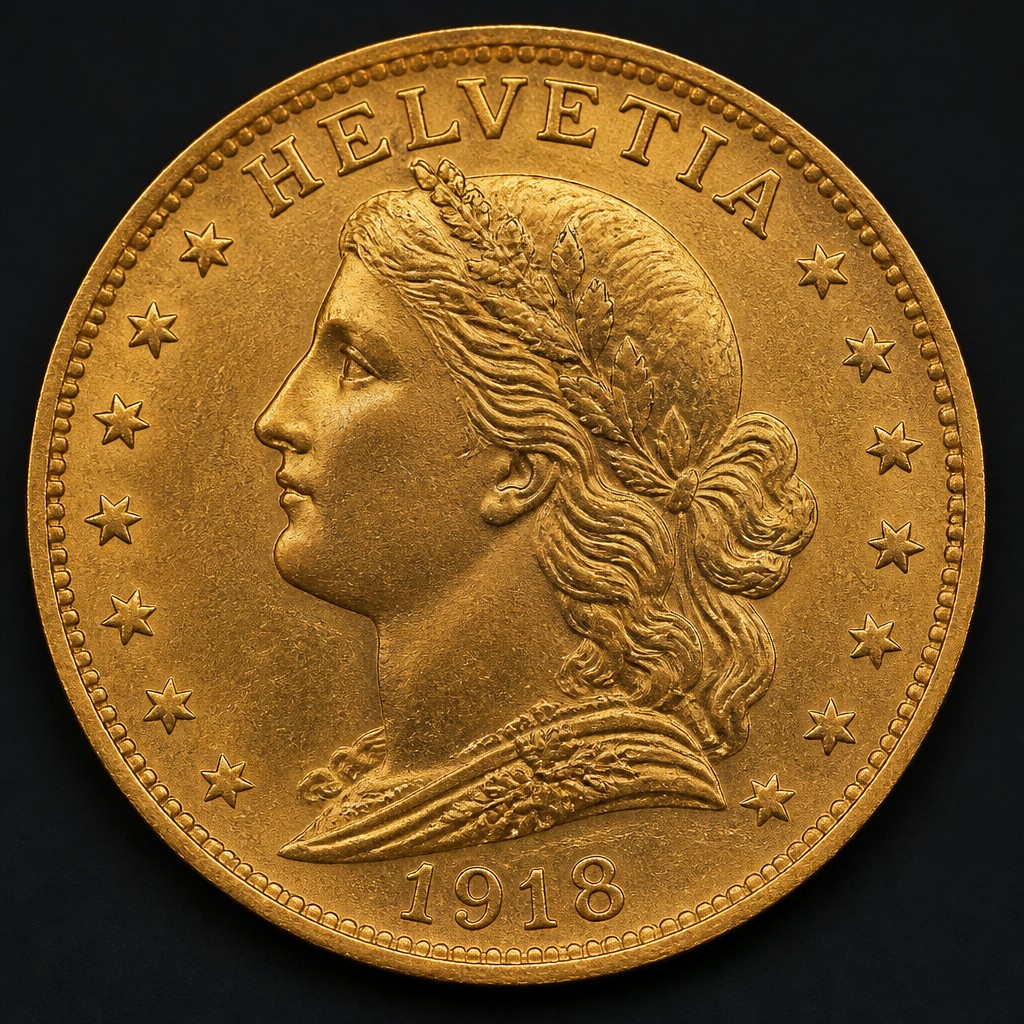
What Is the Coin
The Vreneli is the popular nickname for the Swiss 20 franc gold coin struck from 1897 to 1949, with an official 1935L restrike variety produced later using the original design. "Vreneli" is a diminutive of "Verena," reflecting the young woman depicted on the coin.
Obverse Design
The obverse shows the head of a young woman (Helvetia, the female personification of Switzerland) with braided hair, wearing a headband, set against a backdrop suggesting the Alps. The word "HELVETIA" appears above her head, and a ring of stars, usually representing the Swiss cantons, surrounds the design near the rim.
Reverse Design
The reverse features the Swiss federal shield (a cross) at the center, surrounded by a wreath combining oak leaves (strength) and edelweiss flowers (a national alpine symbol). The denomination "20 FR" and the date appear below the shield, with the inscription "CONFOEDERATIO HELVETICA" (the Latin name for the Swiss Confederation) arcing around the top.
Size, Weight, Metal & Edge
The coin is struck in .900 fine gold, weighs 6.45 g, and measures 21 mm in diameter with a reeded edge, matching the same Latin Monetary Union standard as the French and Belgian 20 franc gold coins of the period.
Mint Marks and Where to Find Them
A small "B" mint mark for the Bern mint appears on the reverse near the rim, along with the engraver's initials near the base of Helvetia's neck on the obverse. The 1935L restrike carries an "L" mark identifying it as a later official restrike rather than an original 1935-dated issue.
Telling It Apart From Similar Coins
Because the Vreneli shares identical size, weight, and fineness with other 20 franc-equivalent gold coins (the French Rooster and Napoleon types, Belgian and Italian issues), the female portrait with braided hair and alpine backdrop, paired with the Swiss cross and edelweiss reverse, is the clearest way to confirm Swiss origin.
Grading and Condition at a Glance
Wear shows first on Helvetia's cheek and the raised braid of hair on the obverse, and on the highest points of the shield and wreath leaves on the reverse. Sharp star points around the rim and well-defined edelweiss petals indicate a coin with less handling wear.
Authenticity Red Flags
Given the coin's popularity with collectors and investors, verify weight (6.45 g) and diameter (21 mm) carefully, and examine the fine hair braiding and edelweiss petals for crisp, unblurred detail; soft or mushy design elements, incorrect edge reeding, or a portrait that looks subtly "off" compared to genuine references are typical signs of a counterfeit or later unofficial copy. Because the Vreneli has long been a popular target for gold-plated base-metal fakes, a simple weight and diameter check catches most counterfeits before any deeper examination is needed.
Frequently asked questions
What does 'Vreneli' mean?
It is a Swiss-German nickname derived from 'Verena,' referring to the young woman's portrait on the coin's obverse.
What is the coin's gold content?
.900 fine gold at 6.45 g, the same weight standard shared by several other European 20 franc gold coins of the era.
How do I know if mine is an original 1935 or the later restrike?
The official 1935L restrike carries an 'L' mint mark distinguishing it from coins struck in the original 1897-1949 production run.
Where is the mint mark located?
A 'B' for Bern appears on the reverse near the rim, with engraver's initials near Helvetia's neck on the obverse.