
How to Identify the Swedish Riksdaler
Sweden's historic large silver coin used before the krona, recognized by its royal portrait obverse and three-crowns national emblem reverse.
Read the full Swedish Riksdaler encyclopedia entry →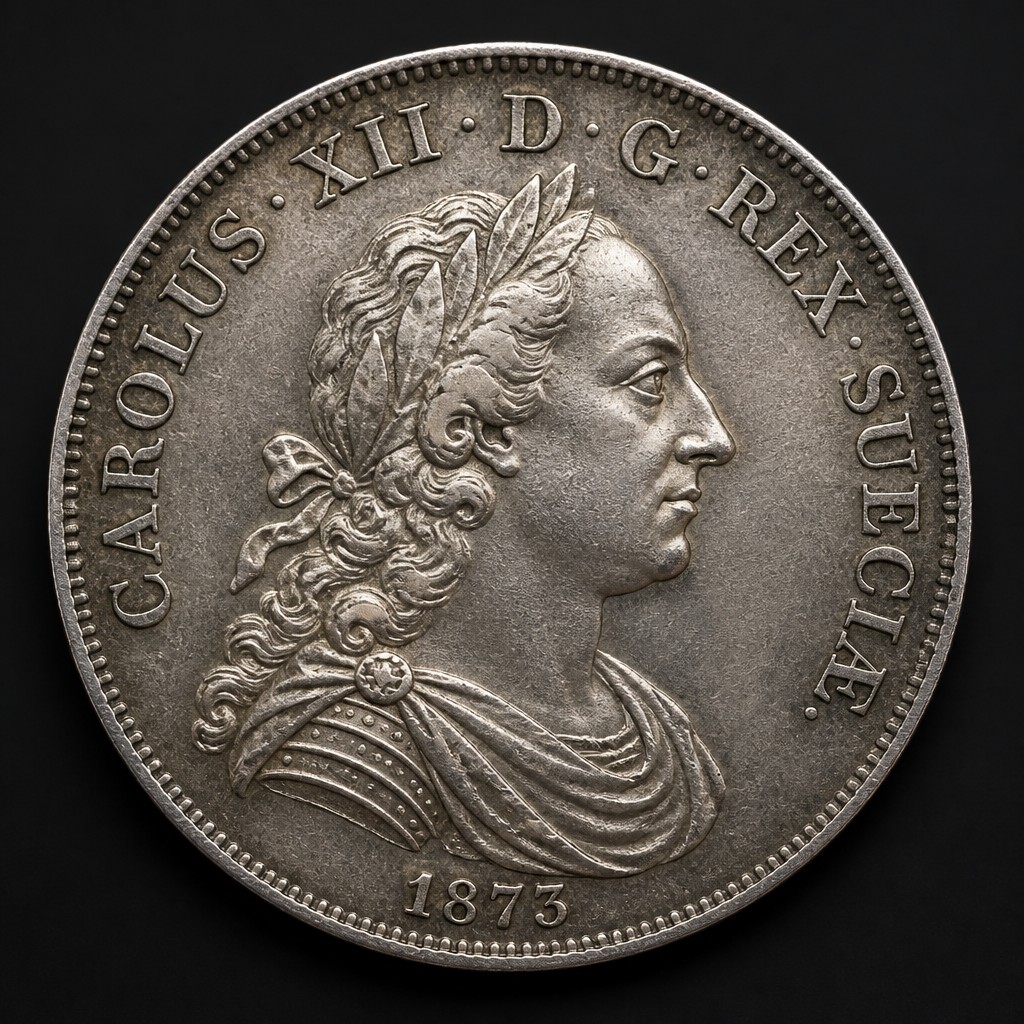
What Is the Swedish Riksdaler?
The Riksdaler served as Sweden's core monetary unit for centuries, with silver Riksdaler coins circulating widely until Sweden joined the Scandinavian Monetary Union and switched to the krona in 1873. These coins span the reigns of several kings and exist in multiple sub-types, including the Riksdaler Specie and later Riksdaler Riksmynt reforms.
Obverse Design
The obverse displays a profile portrait of the reigning Swedish king — common examples include Karl XIV Johan, Oscar I, Karl XV, or Oscar II — with a Latin legend naming the ruler and his title, often abbreviated as "SVERIGES, NORGES G. och V. KONUNG" during the period of union with Norway, or simply referencing Sweden alone on earlier and later issues.
Reverse Design
The reverse typically features the Swedish national emblem of three crowns, sometimes combined with the Vasa sheaf or full royal arms depending on the issue, surrounded by the denomination and date. Ornamental wreaths or mantling often frame the central design.
Size, Weight & Metal
Riksdaler coins are struck in silver, generally in the .750 to .800 fineness range depending on the specific reform period, with larger denominations weighing roughly 25 to 35 grams and measuring approximately 36 to 44 millimeters across — placing them firmly in "crown" territory alongside other large European silver coins of the era.
Mint Marks
Swedish coins of this period were struck at the mint in Stockholm. Small identifying initials of the mint master appear near the rim or base of the design and can assist in pinpointing the exact year or variety when the date is worn.
Telling It Apart from Similar Coins
Because Sweden and Norway were united under a single monarch from 1814 to 1905, Swedish Riksdaler coins share portrait styles with Norwegian Speciedaler coins from the same kings. The clearest distinguishing feature is the national emblem: Sweden's three crowns versus Norway's crowned lion holding an axe. Danish coins of the same century, by contrast, show the Danish triple-lion arms and use Danish rather than Swedish royal titles.
Judging Condition at a Glance
Look closely at the king's hair and the crown points in the three-crowns emblem — these are the highest relief areas and the first to show flattening with circulation. A well-preserved coin retains sharp separation between the crowns and clear texture in the portrait's hair; a heavily worn example shows a smooth, rounded profile and faint, shallow legends.
Authenticity Red Flags
Be cautious of coins with an unnaturally uniform, bright surface that could indicate cleaning or re-toning, as well as edge devices (reeding or lettering) that don't match known patterns for the claimed date. Because older Riksdaler coins can be scarce and valuable, a coin that seems unusually crisp for its stated age and wear level is worth comparing carefully against verified reference photos before assuming it is genuine.
Frequently asked questions
What replaced the Riksdaler in Sweden?
The krona replaced the Riksdaler when Sweden joined the Scandinavian Monetary Union in 1873.
What symbol appears on the reverse of most Riksdaler coins?
The Swedish three-crowns emblem, often combined with royal arms or the Vasa sheaf depending on the issue.
How do I distinguish a Swedish Riksdaler from a Norwegian Speciedaler?
Both may share the same king's portrait during the union period, but Sweden's reverse shows three crowns while Norway's shows a lion holding an axe.
What is the typical silver fineness of a Riksdaler?
It varies by reform period but generally falls between .750 and .800 fine silver.
Where were Swedish Riksdaler coins minted?
At the mint in Stockholm, with small mint master initials often visible near the rim or base of the design.