
How to Identify the Sun Yat-sen Memorial Dollar (Junk Dollar)
The Sun Yat-sen Memorial Dollar, nicknamed the 'Junk Dollar,' is a Republic of China silver coin showing Sun Yat-sen's portrait on one side and a traditional junk ship sailing beneath rays of sun on the other.
Read the full Sun Yat-sen Memorial Dollar (Junk Dollar) encyclopedia entry →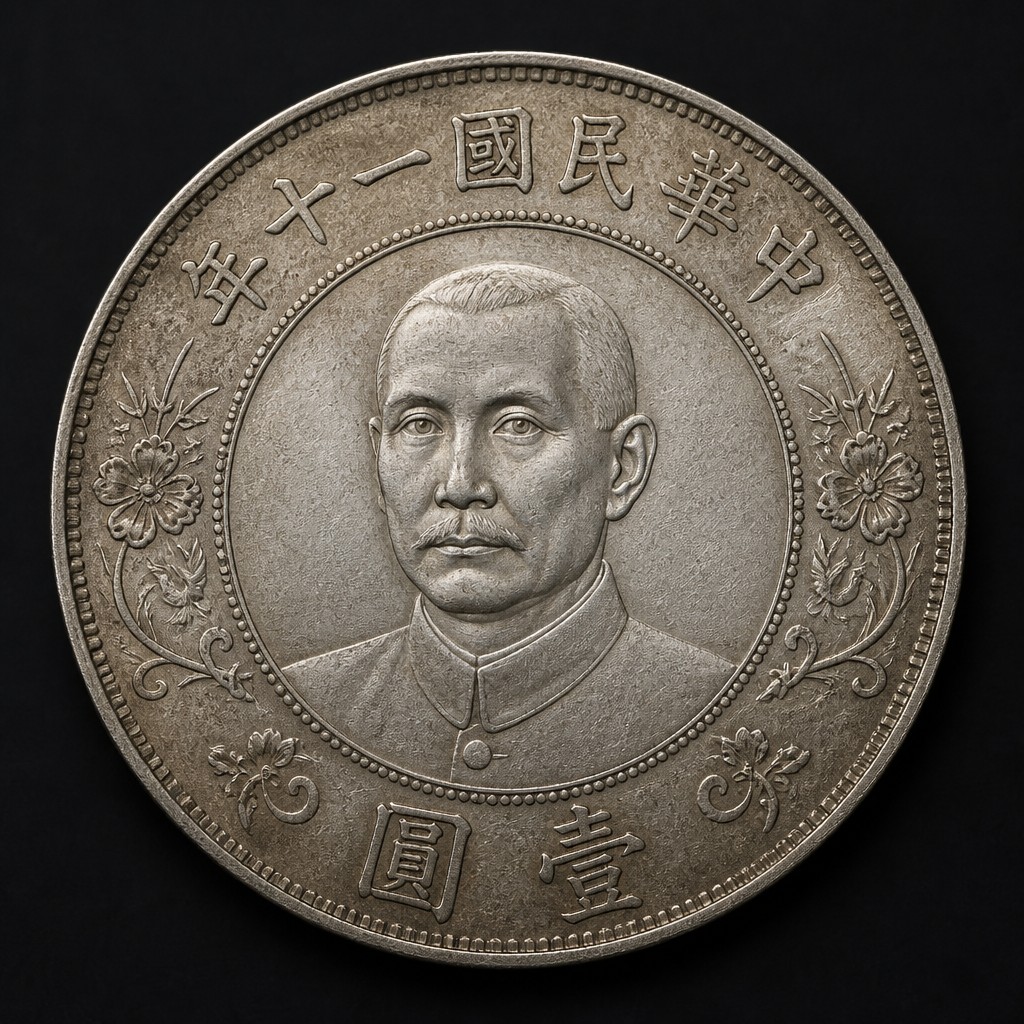
What It Is
This silver dollar was issued by the Republic of China in the early 1930s, honoring Sun Yat-sen, the revolutionary leader regarded as the founding father of the Republic. It is commonly nicknamed the "Junk Dollar" because of its distinctive ship motif and remains one of the most recognizable Chinese coins of the Republican era. It was intended to help standardize China's silver coinage at a time when many different regional and provincial dollar types were still circulating side by side.
Obverse Design
The obverse features a left- or right-facing portrait bust of Sun Yat-sen in formal attire, with Chinese characters identifying him and the issuing authority arranged around the rim.
Reverse Design
The reverse shows a traditional Chinese junk (sailing ship) on open water, with sun rays radiating from the upper corner and birds in flight overhead — a design so distinctive that it gave the coin its popular "Junk Dollar" and "Birds over Junk" nicknames. The denomination and date appear in Chinese characters, often integrated into the design near the rim.
Size, Weight & Metal
The coin follows the standard Chinese silver dollar format: approximately 39mm in diameter and about 26.6 grams, struck in silver, generally cited around .880 fineness, consistent with other Republican-era Chinese dollar coinage.
Mint Marks and Where to Find Them
Variations exist based on the specific minting year and mint, with subtle differences in the number and arrangement of birds, the positioning of the sun rays, and small design details near the ship's sail — these variety markers function as informal identifiers for specialists distinguishing between different striking batches.
Telling It Apart from Similar Coins
The junk ship and sun rays motif is unique to this coin among Chinese dollar issues and should not be confused with the earlier Yuan Shikai "Fatman" dollar, which instead shows a portrait bust on both denomination context and crossed flags or wreath on the reverse rather than a ship. Confirming the presence of the sailing junk and birds is the fastest way to identify this specific type.
Judging Condition at a Glance
Check the fine rigging lines and sail details of the junk, along with the birds in the sky, for sharpness, as these delicate elements wear down quickly. On the obverse, look at Sun Yat-sen's facial features and the fine texture of his clothing for flattening that indicates circulation wear.
Authenticity Red Flags
Like other historically popular Chinese silver dollars, this type is frequently targeted by counterfeiters. Be cautious of coins with blurry ship rigging, poorly defined birds, incorrect weight or diameter, or a portrait that looks subtly different in proportion from genuine examples; comparing against known reference strikes or seeking an experienced opinion is recommended given the prevalence of reproductions in this series.
Frequently asked questions
Why is this coin nicknamed the 'Junk Dollar'?
It gets its nickname from the traditional Chinese sailing ship, called a junk, depicted prominently on the coin's reverse beneath rays of sun and flying birds.
Who is depicted on the obverse of this coin?
The obverse shows a portrait of Sun Yat-sen, the revolutionary leader widely regarded as the founding father of the Republic of China.
How is this coin different from the Yuan Shikai 'Fatman' dollar?
The Sun Yat-sen dollar shows a sailing junk ship on its reverse, while the Yuan Shikai dollar instead features crossed flags or a wreath design, making the two easy to distinguish at a glance.
What is the approximate silver fineness of this coin?
It is generally struck around .880 fine silver, in line with other Republican-era Chinese dollar coinage of the period.