
How to Identify the Sun Yat-sen Junk Dollar
A Republic of China silver dollar honoring founding father Sun Yat-sen, identified by his portrait on the obverse and a sailing junk beneath a rising sun and birds on the reverse.
Read the full Sun Yat-sen Junk Dollar encyclopedia entry →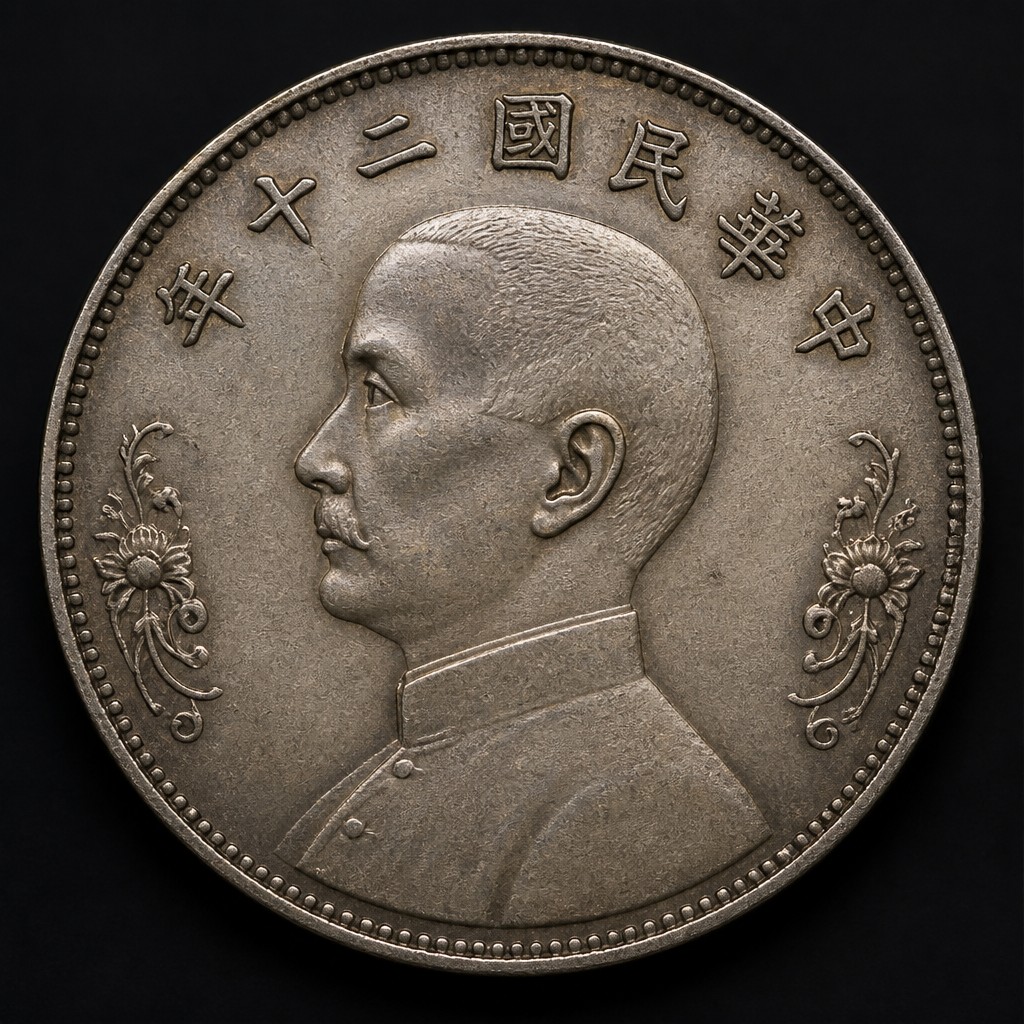
What It Is
The Sun Yat-sen Junk Dollar is a silver dollar coin of the Republic of China, issued primarily in the late 1920s and into the 1930s, honoring Sun Yat-sen, widely regarded as the founding father of modern China. It is popularly nicknamed the "Junk Dollar" for the traditional Chinese sailing ship depicted on the reverse, and it remains one of the most commonly encountered Chinese silver dollars among collectors. Because it was struck in large numbers over several years and remained in active circulation well into the mid-20th century, the Junk Dollar is one of the more affordable and commonly available entry points into Chinese silver dollar collecting.
Obverse Design and Inscriptions
The obverse shows a right-facing (or in some varieties left-facing) portrait bust of Sun Yat-sen in a formal high-collared jacket, with Chinese characters above identifying him and the Republic of China, and the issue year expressed in the Chinese republican calendar below the portrait.
Reverse Design and Inscriptions
The reverse depicts a Chinese junk (a traditional sailing vessel) at sea, beneath a rising sun with radiating rays and a pair of flying birds above, with the denomination in Chinese characters below the ship. Minor variations exist across different years, including differences in the number of rays from the sun and the positioning of the birds, which specialists use to attribute specific varieties.
Size, Weight, Metal, and Edge
The coin is standard dollar-sized, approximately 39 mm in diameter, struck in roughly .880-.900 fine silver and weighing about 26.6-27 grams, in line with other Chinese silver dollar coinage from the same period. The edge is reeded.
Mint Marks and Where to Find Them
Junk Dollars were produced at multiple Chinese mints without an obvious branch mint letter for casual identification; instead, subtle differences in the sun's ray count, junk sail design, or bird placement are used by numismatic specialists to distinguish mint of origin and specific year varieties.
Telling It Apart from Similar Coins
This coin is often confused with the earlier Yuan Shih-kai "Fat Man Dollar," which uses a floral wreath reverse rather than a ship scene, and with other Chinese commemorative dollars from the same general period. The sailing junk beneath a rising sun and birds is the unmistakable identifying feature of this particular type.
Judging Condition at a Glance
Examine the fine rigging lines on the junk's sails and the feather detail on the birds above, since these delicate elements wear away quickly. A well-preserved coin shows distinct, separated sail lines and clear individual feathers, while a worn example shows a smoothed, indistinct ship silhouette and a flattened, featureless sun.
Authenticity Red Flags
Given how widely reproduced this popular coin type is, check carefully for accurate weight and diameter, correctly proportioned sun rays and junk rigging matching known genuine varieties, and a naturally toned, evenly struck surface. Grainy textures, a visible seam around the edge, or lettering that looks slightly different in font or spacing from documented genuine dies are signs of a counterfeit or later restrike.
Frequently asked questions
Why is this coin called the 'Junk Dollar'?
It gets its nickname from the traditional Chinese sailing junk depicted on the reverse, shown beneath a rising sun and flying birds.
How can I tell different Junk Dollar varieties apart?
Specialists look at the number of rays from the sun, the sail and rigging details on the junk, and the position of the birds, which vary slightly between years and mints.
How is the Junk Dollar different from the Yuan Shih-kai Dollar?
The Junk Dollar honors Sun Yat-sen and shows a sailing ship reverse, while the Yuan Shih-kai Dollar shows his military portrait with a floral wreath reverse.
What should genuine weight and silver content be?
About 26.6-27 grams at roughly .880-.900 fine silver, consistent with standard Republic of China dollar coinage.