
How to Identify the Sumatra EIC Keping (British Bencoolen)
A small base-metal coin issued by the British East India Company for its Bencoolen settlement on Sumatra, identified by its modest size, Company-associated lettering, and low-value "keping" denomination.
Read the full Sumatra EIC Keping (British Bencoolen) encyclopedia entry →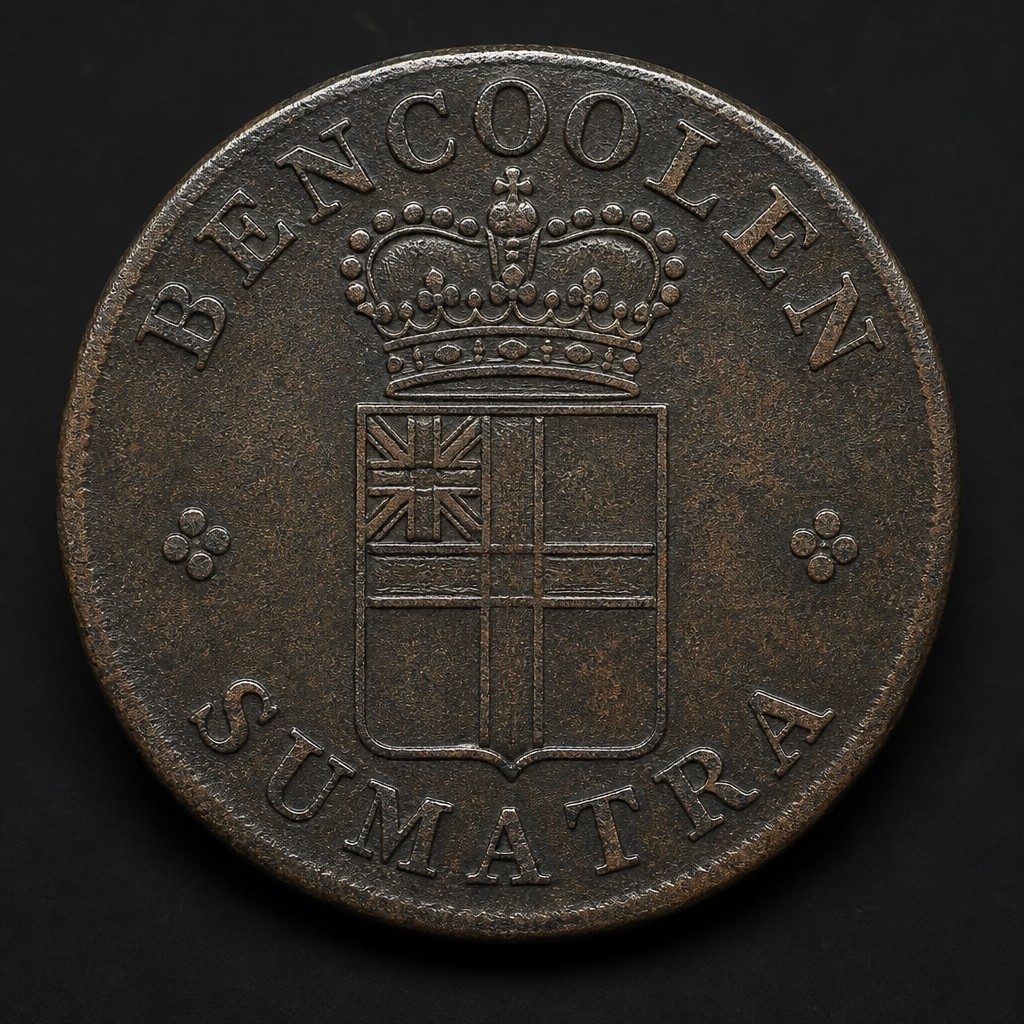
What It Is
The keping was a small-denomination coin issued by the British East India Company for its Bencoolen (Fort Marlborough) settlement on the west coast of Sumatra, a Company outpost that operated from the late 17th century into the early 19th century. These coins served everyday local trade needs in a settlement far removed from the Company's larger Indian mints.
Obverse Design & Inscriptions
Obverse designs typically feature lettering associated with the East India Company administration, often including initials or wording identifying the Company and the Bencoolen/Sumatra context, along with a date where present. The overall style is utilitarian rather than ornamental, reflecting the coin's role as small local change.
Reverse Design & Inscriptions
The reverse generally carries the "keping" denomination or a numeral value, sometimes alongside additional lettering or simple decorative border elements. Design execution is generally simple, consistent with a coin meant for basic local commerce rather than prestige or trade-dollar purposes.
Size, Weight & Metal
Kepings were struck in base metals — commonly tin or copper alloys — and are small, low-value coins, considerably smaller and lighter than silver trade dollars of the era. Tin kepings in particular can show a distinctive dull gray color and are more prone to corrosion and surface degradation than copper or bronze issues.
Mint Marks & Where to Find Them
Because these were a localized Company issue for a specific settlement, mint attribution is generally straightforward from the design and lettering itself (referencing Bencoolen or the Company) rather than requiring a separate mint-mark symbol; collectors rely on comparing lettering style and date to catalog references for this series.
Telling It Apart from Similar Coins
Kepings are distinguished from contemporary Dutch East Indies "duit" coins and other regional small-change coinage by their specific East India Company lettering and Bencoolen/Sumatra association, as well as by their characteristic tin or copper composition and modest size. Comparing the lettering and any dates present against reference examples is the most reliable way to confirm the specific issue.
Judging Condition at a Glance
Well-preserved kepings show clear, readable lettering and numerals with a relatively even, intact surface. Because tin is a soft, reactive metal, many surviving examples show pitting, corrosion, or a rough, degraded surface texture even with only moderate handling wear, which is a normal characteristic of the metal rather than necessarily heavy circulation.
Authenticity Red Flags
Given the modest value of genuine kepings, outright counterfeiting for profit was less common historically than for higher-value silver coins, but modern reproductions for the collector market do exist. Look for correct weight, appropriate base-metal color and texture (especially the distinctive look of aged tin), and lettering consistent with genuine Bencoolen East India Company issues when verifying a piece.
Frequently asked questions
What does "keping" mean?
Keping refers to the small local coin denomination issued by the British East India Company for its Bencoolen settlement on Sumatra.
What metal are these coins usually made of?
Most kepings were struck in tin or copper alloys, with tin examples often showing a dull gray color and more surface corrosion over time.
How can I tell this apart from a Dutch East Indies duit?
Check the lettering for East India Company and Bencoolen/Sumatra references, which distinguish it from Dutch colonial small-change coinage that uses different text and design conventions.
Is heavy surface corrosion a sign of a fake?
No, tin kepings are naturally prone to pitting and corrosion over time simply due to the properties of the metal, so surface degradation alone does not indicate a reproduction.