
How to Identify the Styca of Aethelred
Collector checks for a Northumbrian styca of Aethelred: tiny base-metal flan, king's name, moneyer legend, central devices, and look-alikes.
Read the full Styca of Aethelred encyclopedia entry →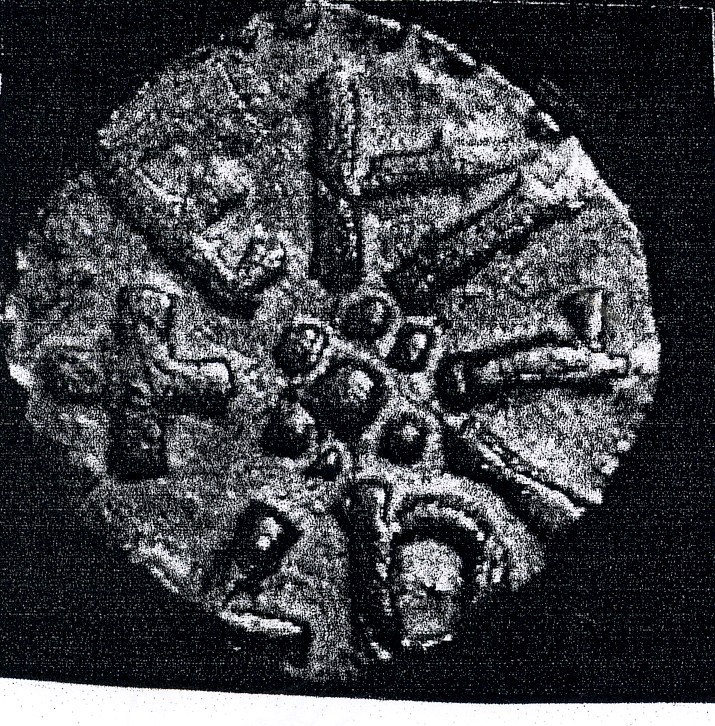
Start with size and metal. A styca is distinctively small and thick, usually about 11-13 mm across and near 1 gram, and it is struck in a copper-based alloy, not silver. Expect brown, red, or green surfaces and a slightly uneven flan. If the coin is broad, thin, and bright silver, it is not a styca but some other early medieval type.
Read the obverse legend for the king. Around the central device you should find Aethelred's name rendered in the mixed Anglo-Saxon lettering of the period, in forms such as EDILRED or AEDILRED, usually followed by REX. Spellings are inconsistent and letters can be reversed or blundered, so read the whole ring of characters rather than expecting modern spelling.
Turn to the reverse and identify the moneyer. The second face shows a cross or symbolic central motif encircled by another name, this is the moneyer, the person accountable for striking the coin, not a mint town or a second ruler. Matching the moneyer name against published lists of Aethelred's moneyers helps confirm the attribution and pin down the die variety.
Expect hand-cut variation and off-center strikes. Because dies were individually engraved and coins were struck loosely, centering is often poor and part of a legend may run off the edge. Retrograde letters, ligatures, and irregular pellet ornaments are normal for genuine stycas and are not by themselves signs of a fake.
Watch for look-alikes and cautions. Stycas were issued in the names of several Northumbrian kings and an archbishop of York, so always confirm the name reads Aethelred rather than Eanred, Redwulf, Osberht, or Wigmund. Later imitative or "blundered" stycas copy the type with garbled legends. Cast copies with soft, seamed detail exist, so for better pieces weigh and measure the coin and seek an experienced dealer or specialist opinion before buying or selling.
Frequently asked questions
How do I tell a styca from other small Anglo-Saxon coins?
A styca is very small and thick, roughly 11-13 mm and about 1 gram, and struck in copper alloy rather than silver. Its base-metal fabric and paired king-and-moneyer legends set it apart.
How can I be sure it names Aethelred and not another king?
Read the obverse legend around the central device. Look for the name in forms like EDILRED or AEDILRED with REX, and rule out other Northumbrian names such as Eanred, Redwulf, or Osberht.
Whose name is on the other side?
The reverse legend is the moneyer, the official responsible for striking the coin, arranged around a cross or symbol. It is not a mint town, so match it to lists of Aethelred's known moneyers.
Are blundered or off-center legends a problem?
Not necessarily. Stycas were struck from hand-cut dies and are often off-center with irregular or reversed letters. This is typical and does not by itself indicate a modern fake.