
How to Identify the Straits Settlements One Cent
A collector's checklist for confirming a George V Straits Settlements bronze cent and telling it apart from similar colonial coins.
Read the full Straits Settlements One Cent encyclopedia entry →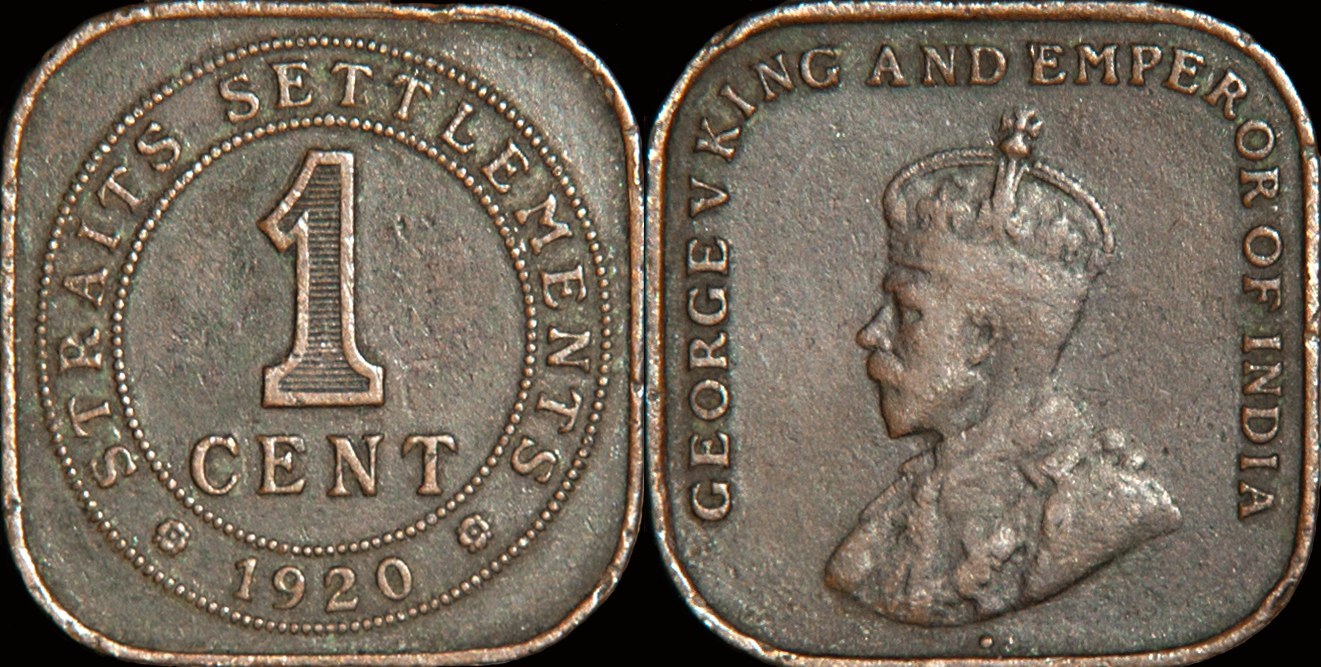
Start with the legends, because they are the most reliable diagnostics. The denomination side must read "STRAITS SETTLEMENTS" together with the value "ONE CENT" set inside a circular border, and the portrait side must show a bare, left-facing bust of George V with a legend titling him king and emperor. If any of those three elements is missing or names a different colony, you have a different coin.
Confirm the physical traits next. This is a round, bronze coin with the warm copper coloration that ages to brown or reddish-brown; verdigris, black spotting, or a scrubbed pink shine all point to environmental damage or cleaning rather than a different type. Check the date in the design — the photographed example reads 1920 — and note that the George V bronze cent was struck across the early 1920s, so the same design appears on more than one year.
Mint marks are not a primary tool here: the series does not carry a bold, obvious mint letter the way some Heaton or branch-mint issues do, so do not rely on finding one. Instead, weigh and measure the coin and compare it against catalog figures for the George V one cent to rule out under- or over-sized fakes and altered pieces.
Beware of look-alikes. Many British-Empire territories issued brown bronze cents of similar size in the same era — British India, Hong Kong, British North Borneo, Sarawak, and the neighboring Malayan issues among them — and at a glance they resemble this coin. The colony name in the legend is what separates them, so always read the full inscription rather than judging by portrait and color alone. Also distinguish this round type from the later square-format Straits cent, which is a different design.
For authentication, favor original, uncleaned surfaces and consistent, period-correct lettering and portrait detail. Cast counterfeits often show soft, mushy devices, seams, or bubbles, and re-toned or artificially reddened copper can hide problems. When value or authenticity is in doubt, seek third-party grading or an opinion from a specialist in British colonial coinage.
Frequently asked questions
What is the single most reliable way to identify this coin?
Read the full legend. The words 'Straits Settlements' plus 'One Cent' around a circular border, paired with the George V portrait, confirm the type more reliably than size or color.
Does it have a mint mark?
Not a prominent one. The George V Straits cent does not rely on a bold mint letter for identification, so use the legends, portrait, denomination, and date instead of hunting for a mark.
How do I tell it from a British India or Hong Kong cent?
Those coins share the George V portrait and brown bronze look, but their legends name a different colony or empire. The 'Straits Settlements' inscription is the deciding detail.
How can I spot a fake or altered example?
Watch for casting seams, bubbles, soft mushy detail, off weight or diameter, and artificially reddened or heavily cleaned surfaces. When unsure, get a specialist opinion or third-party certification.