
How to Identify the Straits Settlements Dollar
A collector's guide to attributing the silver Straits dollar: the Edward VII portrait, the ONE DOLLAR emblem side, size, silver and look-alikes.
Read the full Straits Settlements Dollar encyclopedia entry →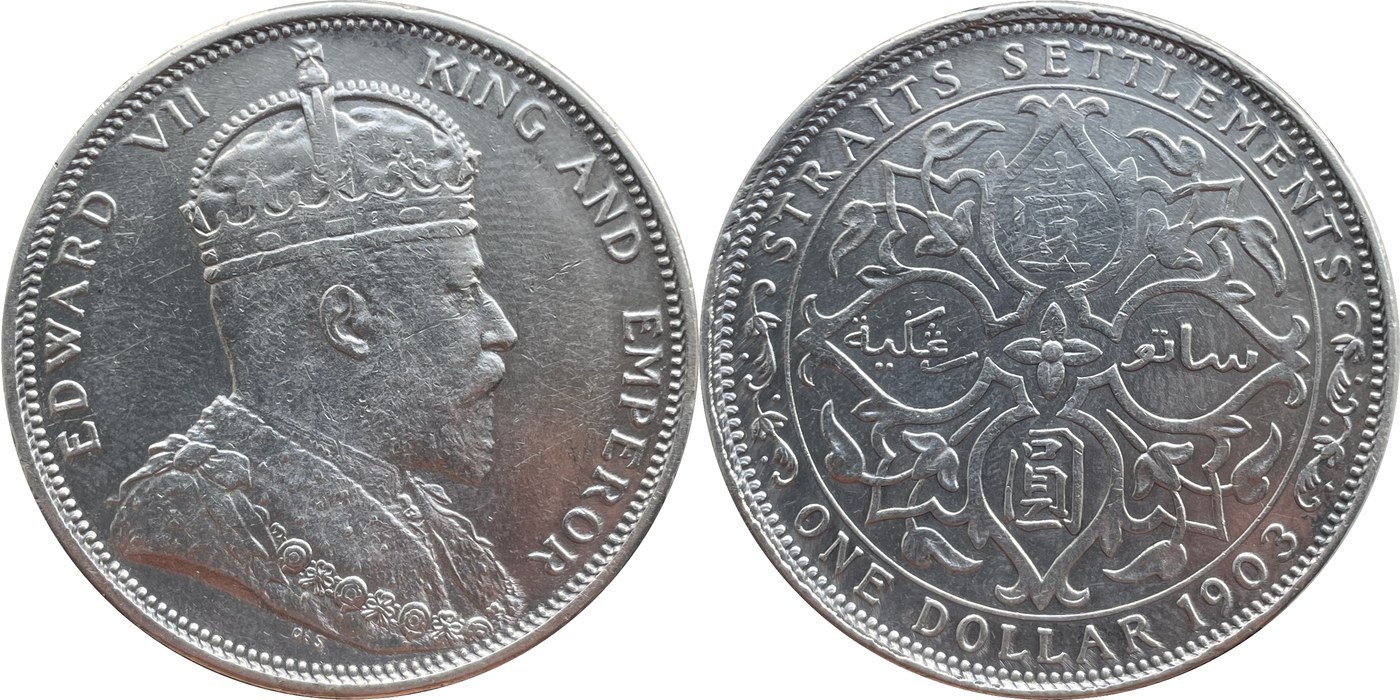
Start with the two design elements that fix the type. One face shows a profile portrait of King Edward VII facing right, in the manner of British imperial coinage of his reign. The other face carries an ornamental, heraldic-style emblem together with the denomination ONE DOLLAR and the date — 1904 on the coin shown here — with the value also rendered in the scripts used across the colony. That Edward VII portrait paired with the ONE DOLLAR emblem side together identify the Straits Settlements dollar and separate it from other Asian silver dollars.
Confirm the physical coin. The early dollars of this series are crown-size silver pieces: expect a diameter of roughly 38 mm, a heft in the region of about 27 grams, a reeded edge, and a pale silver surface that often carries gray or iridescent toning. The coin should feel dense and ring like silver; a large light-weight or magnetic piece of this design is a warning sign.
Check the date and any mint mark. The date sits alongside the denomination on the emblem side, and some issues of the series carry a small mint mark denoting the striking facility. These details distinguish one year and variety from another and matter when cataloguing the exact issue, so note them rather than assuming every Straits dollar of this design shares the same date.
Be alert to size varieties and look-alikes. The Straits dollar exists in an earlier large format and a later reduced format, so always size and weigh the coin before deciding which you have; the early dollar like this 1904 piece is the bigger, heavier version. The same denomination continued under later British monarchs whose portraits differ, and the coin should not be confused with other regional trade dollars such as the Mexican peso or the British trade dollar, which carry entirely different devices and legends.
Apply standard authentication cautions. The Straits dollar is a valued silver type and has been counterfeited and cast. Genuine coins are sharply struck with crisp portrait detail, clean lettering and a clean reeded edge; be wary of soft or blurry detail, casting seams or bubbles, an edge that looks filed or seamed, off weights and diameters, or artificially applied toning meant to hide surface problems. When in doubt, weigh and measure the coin, test the silver, and compare the date and mint mark against a reliable catalog of Straits Settlements coinage.
Frequently asked questions
What is the fastest way to confirm it is a Straits Settlements dollar?
Match both faces: a right-facing Edward VII portrait on one side and an emblem with the ONE DOLLAR legend and date on the other. That combination is specific to this series and confirms the type.
How do I tell the early large dollar from the later reduced one?
By size and weight. The early dollar, like this 1904 piece, is the larger, heavier crown-size coin near 38 mm and about 27 grams; the later dollars were struck smaller and lighter, so always measure and weigh before deciding.
Could my coin be counterfeit?
Because it is a valued silver type, cast and struck fakes exist. Look for sharp portrait and lettering detail, a clean reeded edge, and correct weight and diameter; seams, bubbles, mushy detail or a filed edge point to a copy.
Where do I find the date and mint information?
The date appears with the denomination on the emblem side, and some issues carry a small mint mark for the striking facility. Compare both against a standard reference for Straits Settlements coinage to pin down the exact year and variety.