
How to Identify the St George Sovereign (Pistrucci)
The St George Sovereign refers to the gold sovereign's classic reverse design by Benedetto Pistrucci, showing Saint George on horseback slaying a dragon, used on and off since 1817.
Read the full St George Sovereign (Pistrucci) encyclopedia entry →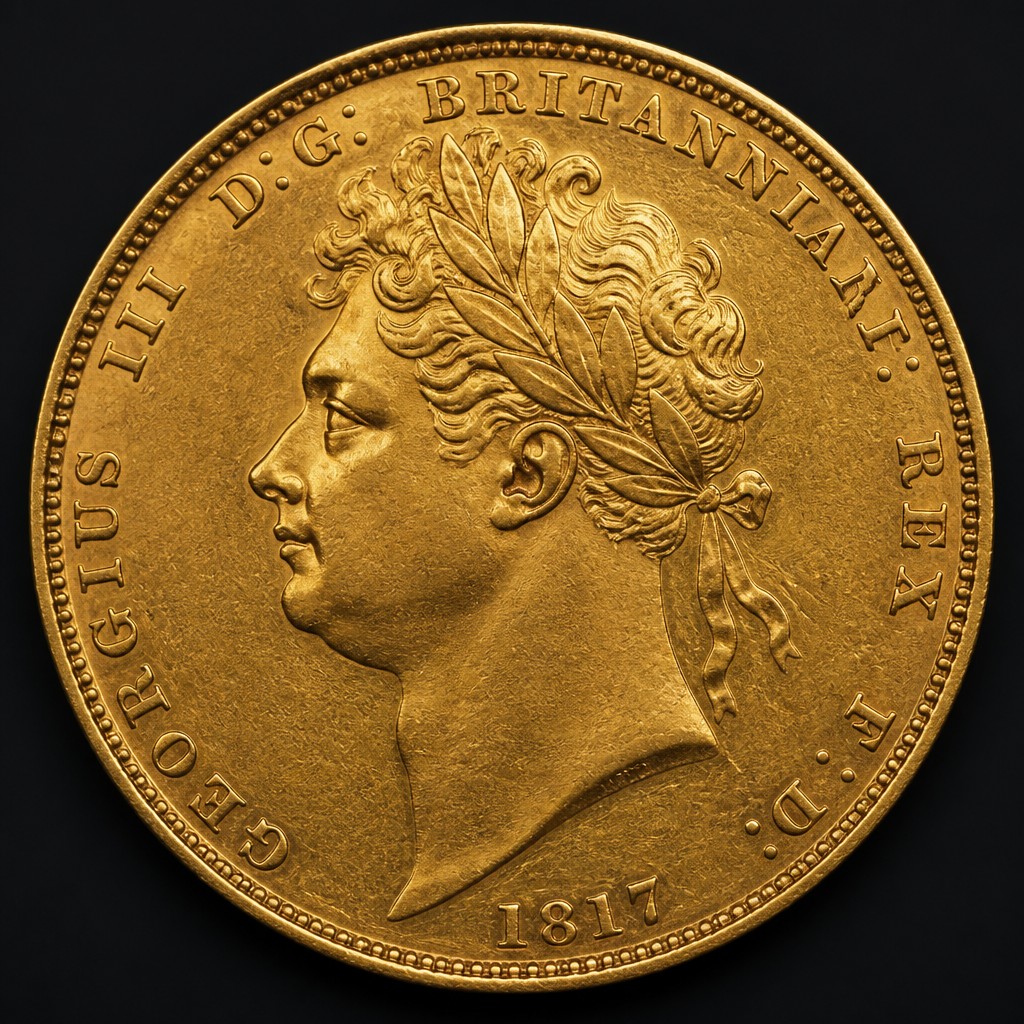
What Is It
The St George Sovereign is not a separate denomination but the common name for gold sovereigns that carry Benedetto Pistrucci's celebrated Saint George and the Dragon reverse. First introduced in 1817 as part of the Great Recoinage, this design has been used, dropped, and revived across the reigns of George III through the present day, making it one of the most enduring coin images in the world.
Obverse Design
Like all sovereigns, the obverse carries a portrait of the reigning monarch with the customary Latin legend giving name and title. Because the sovereign has been struck continuously (with gaps) for over two centuries, the obverse portrait style changes noticeably from one monarch and era to the next, while the Pistrucci reverse remains visually consistent.
Reverse Design
Pistrucci's design shows Saint George, largely nude but for a flowing cloak and helmet, mounted on a rearing horse, thrusting a sword downward at a dragon coiled beneath the horse's hooves. A broken lance lies on the ground. On many strikes, a tiny "BP" (Benedetto Pistrucci's initials) can be found in the exergue or ground line beneath the horse, a detail collectors look for with a loupe.
Size, Weight, and Metal
The standard sovereign is struck in 22-carat (91.7% fine) gold, weighs 7.98 grams, and measures 22.05mm in diameter, with a milled edge. These dimensions have remained essentially unchanged since the coin's 1817 introduction, which makes weight and diameter a reliable way to confirm a genuine full sovereign regardless of the date or monarch depicted.
Mint Marks and Where to Find Them
A small mint mark letter may appear on the ground line beneath Saint George and the dragon: S for Sydney, M for Melbourne, P for Perth, SA for Pretoria, and I for Bombay/India, depending on the period. London-struck sovereigns typically show no mark. These marks are small and often require magnification to see clearly.
Telling It Apart from Similar Coins
Because the sovereign was also struck at times with a shield reverse instead of Saint George (notably some Victorian "young head" issues before 1871 and briefly around 1887-1892), the presence of the mounted Saint George scene versus a plain crowned shield is itself a quick way to sort sovereign varieties by design type. Compared with the half sovereign, which shares the same design elements but is roughly half the diameter and weight, size is the deciding factor.
Judging Condition at a Glance
Wear appears first on Saint George's thigh and the horse's foreleg and rump, the highest points of the relief, followed by the finer lines of the horse's mane and the dragon's wing membrane. A sovereign with a fully struck, sharply defined horse's leg muscle and crisp dragon scales indicates light wear, while a flattened, indistinct horse and dragon suggest heavier circulation.
Authenticity Red Flags
Genuine sovereigns have a precise, consistent diameter and weight that counterfeiters struggle to match exactly, so weighing and measuring a suspect coin is the single most useful check. A dull or off-color surface, blurred or shallow design details (especially in Saint George's musculature and the dragon), and an edge that is not evenly and finely reeded are all common signs of a cast or plated fake rather than a genuine struck gold sovereign.
Frequently asked questions
Who designed the Saint George and Dragon image on sovereigns?
Italian engraver Benedetto Pistrucci created the design in 1817, and it remains one of the most recognized coin reverses in the world.
Is every sovereign a 'St George Sovereign'?
No, some periods and issues used a crowned shield reverse instead of Saint George, so the term specifically refers to sovereigns bearing Pistrucci's mounted Saint George design.
What do the small letters near the ground line mean?
A small S, M, P, SA, or I marks the coin as struck at a branch mint (Sydney, Melbourne, Perth, Pretoria, or Bombay) rather than London, which used no mark.
How can I quickly tell a real gold sovereign from a fake?
Check that the diameter is close to 22.05mm and the weight close to 7.98 grams; genuine sovereigns are very consistent in these measurements, while counterfeits often deviate noticeably.