
How to Identify the Speciedaler
A collector's guide to confirming a 1628 Norwegian Speciedaler by its crowned bust, Norwegian lion shield, large silver format, and legends.
Read the full Speciedaler encyclopedia entry →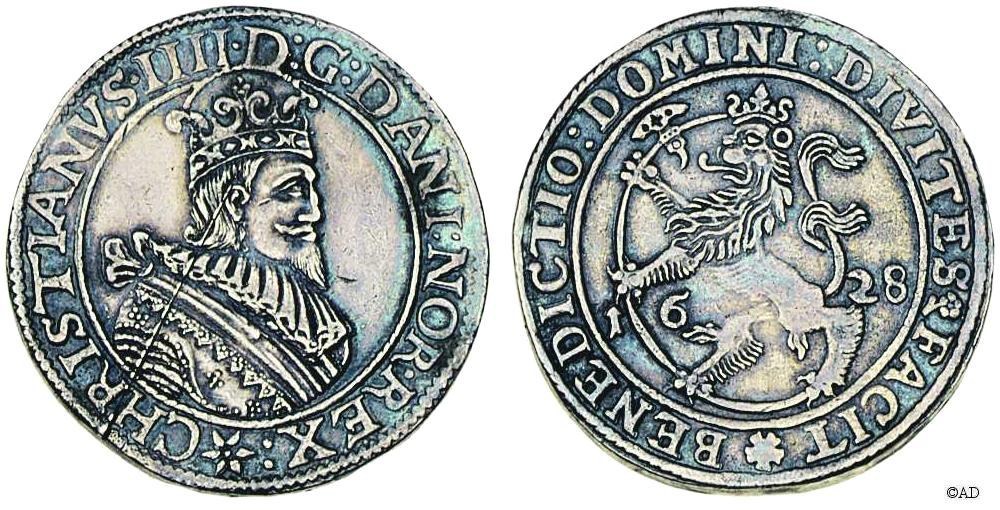
Start With Size and Metal
The first test is physical. A genuine speciedaler is a large silver coin in the thaler class, typically around 40 mm in diameter and roughly 28 to 29 grams. It should feel heavy and dense in the hand, show the muted tone of old silver, and be non-magnetic. A small, light, or magnetic coin with this design is not a genuine speciedaler.
Read the Two Sides Together
A correct coin of this type pairs a crowned male royal bust in profile on the obverse with the Norwegian lion, a rampant lion on a shield inside an ornamental circle, on the reverse. Both must be present. If the piece shows two shields, a full standing figure, or no royal portrait, it is a different denomination or a different country's thaler even if the lion looks familiar.
Confirm the Date and the Legends
The observed coin is dated 1628, placing it in the reign of Christian IV. The Latin legends around the bust give the royal name and titles, and the reverse legend accompanies the lion arms. Reading these inscriptions confirms the ruler and often the mint, and it separates this early issue from later speciedalers that reused the name and lion motif for another two centuries.
Distinguish It From Related Thalers
Many seventeenth-century European states struck crown-sized silver with a royal bust and a heraldic shield, so the general layout is not unique. Look specifically for the Norwegian lion arms and the Dano-Norwegian royal titles rather than a Danish, Swedish, or German coat of arms. Also check the stated denomination and fractional pieces: half and quarter speciedalers share the design but are smaller and lighter.
Authenticate Before Trusting High Value
Early thalers are among the most frequently faked coins, including cast copies, tooled surfaces, and altered dates. Weigh and measure the coin, examine the lettering and lion detail against trusted references, and check the edge and fields for casting seams or smoothing. For any example beyond low grade, third-party authentication or certification is strongly advised before paying a collector price.
Frequently asked questions
How do I know it is Norwegian and not Danish or Swedish?
Look for the Norwegian lion arms, a rampant lion on a shield, on the reverse and the Dano-Norwegian royal titles in the legend. Danish, Swedish, and German thalers of the era use different arms and different rulers' names.
What size and weight should a speciedaler be?
Expect a large silver coin roughly 40 mm across and about 28 to 29 grams. It should feel heavy and solid for its size, be non-magnetic, and show a genuine old-silver tone rather than bright plating.
How can I tell it from a half or quarter speciedaler?
The fractions share the crowned bust and lion design but are noticeably smaller and lighter, and their legends state the lower value. Always weigh and measure the coin rather than judging by design alone.
Should I have it authenticated?
Yes, for anything beyond a heavily worn piece. Early thalers are widely counterfeited and sometimes have altered dates, so verifying weight, diameter, and design or obtaining certification protects against fakes.