
How to Identify the Spanish-Philippine 8 Reales Counterstamped Dollar
A Spanish colonial 8 reales silver dollar bearing a small circular counterstamp applied in the Philippines, identified by the underlying host coin design plus the added royal monogram or stamp.
Read the full Spanish-Philippine 8 Reales Counterstamped Dollar encyclopedia entry →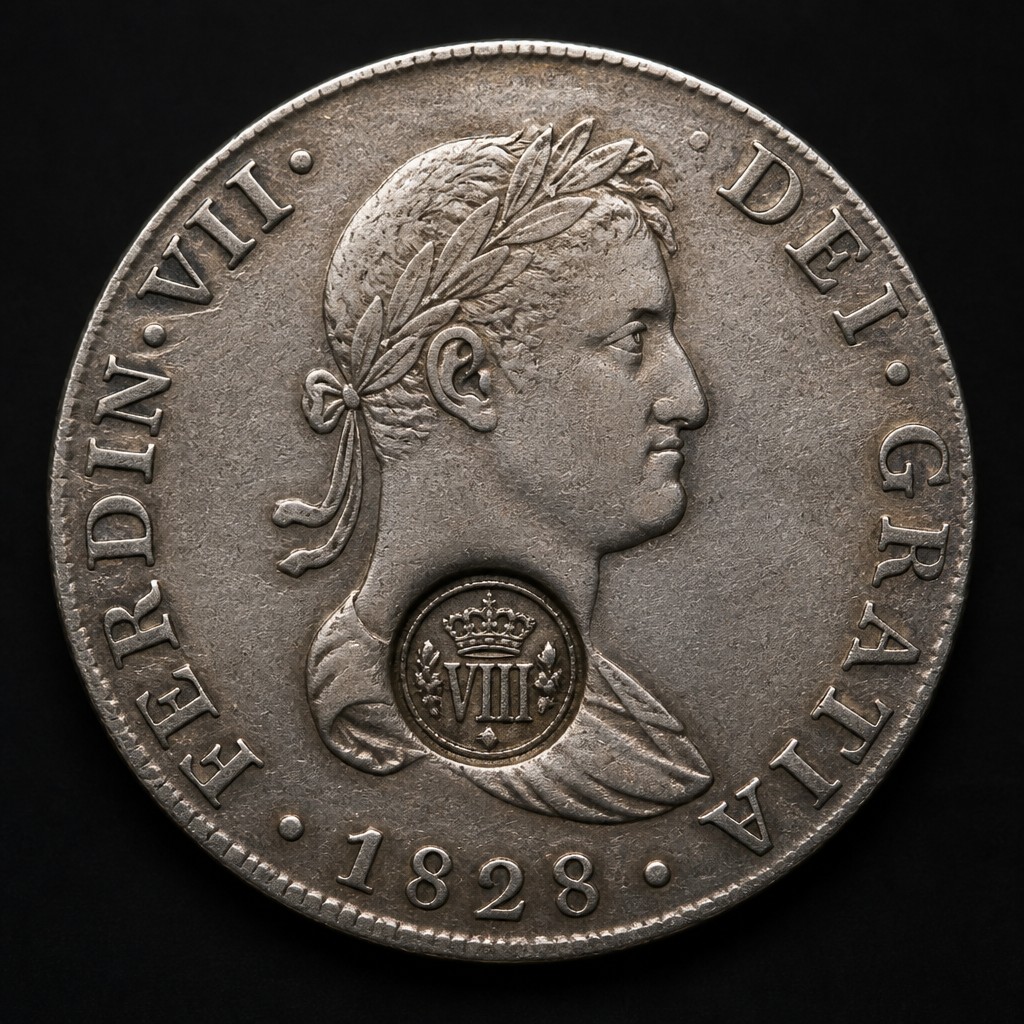
What This Coin Is
This coin began life as a standard Spanish colonial 8 reales "piece of eight," minted at a Spanish American colonial mint, and was later officially counterstamped in the Philippines to authorize it for local circulation and to distinguish it from other foreign silver dollars flowing through Manila's trade. Counterstamping foreign coinage for local use was a common practice in colonial territories facing silver shortages.
Obverse Design (Host Coin)
The underlying host coin's obverse typically shows the bust of the reigning Spanish monarch at the time of original striking (such as Charles III, Charles IV, or Ferdinand VII), along with the monarch's name and royal title, since the base coin was struck years earlier at a colonial mint in the Americas before being counterstamped in the Philippines.
Reverse Design (Host Coin) and the Counterstamp
The host coin's reverse generally shows the Spanish crowned pillars and globes design (the "pillar dollar" motif) or the Spanish coat of arms, depending on the coin's original type and date. The distinguishing Philippine feature is a separately applied circular counterstamp, typically containing a royal monogram or crowned initial, punched into the coin's surface after its original striking.
Size, Weight, Metal, and Edge
As a genuine 8 reales piece, the coin retains the size, weight, and silver fineness of standard Spanish colonial dollar coinage, with the counterstamp added afterward without altering the coin's overall dimensions.
Mint Marks and Where to Find Them
The host coin's original mint mark (identifying a specific Spanish American mint) appears in its usual location as struck, while the Philippine counterstamp is a separate, smaller mark applied later, usually near the center of the obverse or reverse field, distinct in style and depth from the original strike.
Telling It Apart from Similar Coins
The key identifying feature is the presence of the applied counterstamp itself; without it, the coin is simply an ordinary Spanish colonial 8 reales. Collectors should compare the counterstamp's design and placement against known genuine Philippine countermarking practices, since other colonial territories applied their own distinct counterstamps to similar host coins for their own local purposes.
Grading at a Glance
Grading considers both the underlying host coin's wear (portrait and pillar/arms detail) and the sharpness and completeness of the counterstamp itself, since a well-defined, fully struck countermark is an important part of this coin's overall condition and desirability.
Authenticity Red Flags
Because counterstamped coins carry added historical and collector value, look out for counterstamps that appear too shallow, crudely applied, or stylistically inconsistent with genuine period countermarking, as well as host coins that don't match the type or date range known to have circulated in the Philippines when the counterstamping occurred.
Frequently asked questions
Why was this coin counterstamped?
The Philippine colonial administration counterstamped circulating foreign silver dollars, including Spanish 8 reales, to authorize and control which coins could be used locally.
What does the underlying coin normally look like?
It shows the standard Spanish colonial design of the era, typically the reigning monarch's bust on the obverse and crowned pillars or a coat of arms on the reverse.
Does the counterstamp affect the coin's weight or size?
No, the counterstamp is punched into the existing coin surface and does not change its overall size or silver weight.
How do I know if a counterstamp is genuine?
Compare its design, placement, and strike depth against documented genuine examples of Philippine countermarking practices from the period.