How to Identify the Spanish Peseta
The peseta was Spain's national currency for over 130 years, appearing across many political eras with changing portraits, from Bourbon kings to Franco-era eagles and modern issues.
Read the full Spanish Peseta encyclopedia entry →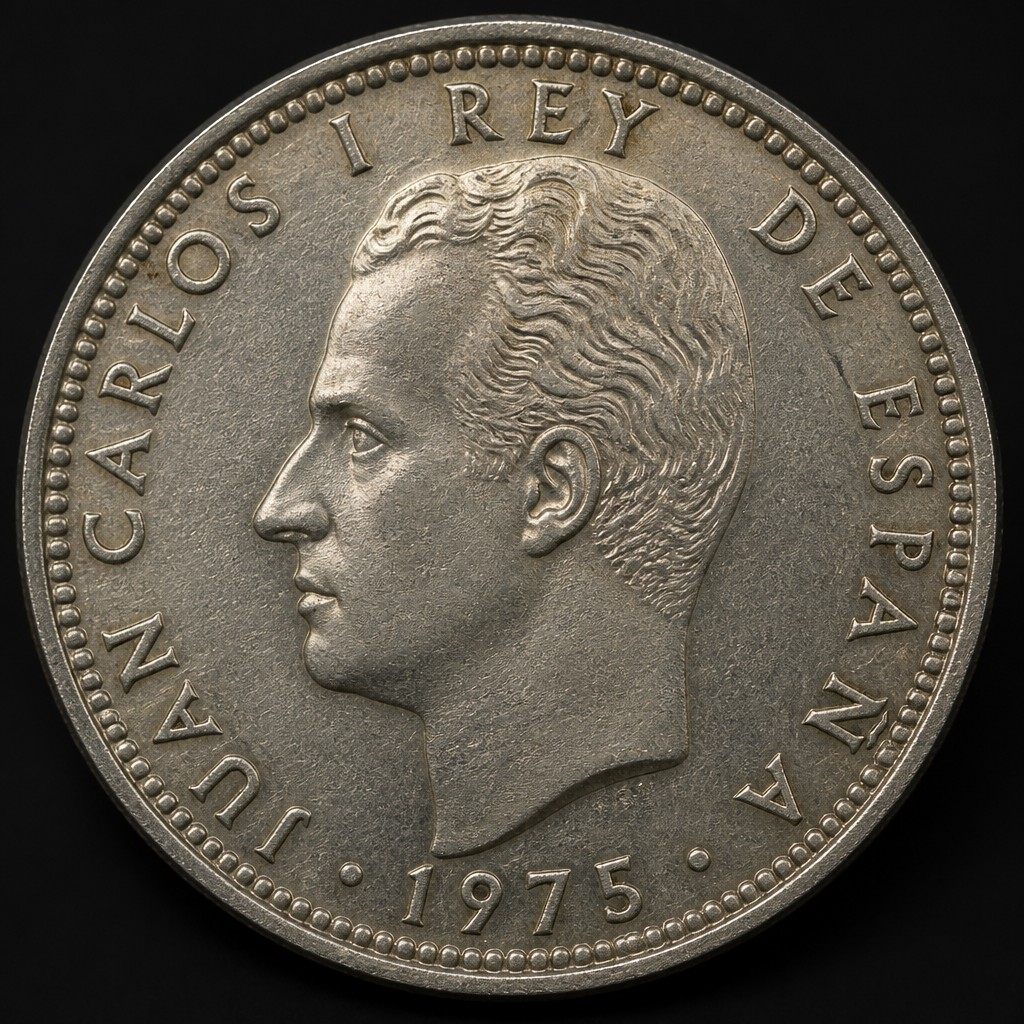
What Is the Spanish Peseta
The peseta was the standard monetary unit of Spain from 1869 until the euro's adoption in 2002. It was struck across many political regimes — the Bourbon monarchy, the First and Second Republics, the Francoist state, and the restored monarchy under Juan Carlos I — meaning designs vary widely by era. This long production history makes the peseta series one of the more historically layered European coinages, with each political change reflected directly in the coin's imagery.
Obverse Design and Inscriptions
Designs vary significantly by period: 19th-century coins show a young Alfonso XII or Alfonso XIII in profile; Republic-era coins show allegorical female figures representing Spain; Franco-era coins show Franco's portrait or the Spanish eagle; post-1975 coins show King Juan Carlos I.
Reverse Design and Inscriptions
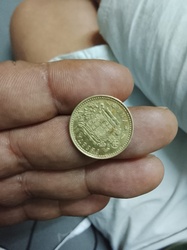
The reverse commonly shows the Spanish coat of arms, which itself changed across eras, or a denomination within a wreath, along with "ESPANA" or "ESTADO ESPANOL" and the date. The specific eagle style used under Franco is a strong period indicator.
Size, Weight, Metal, and Edge
Metal composition ranges widely across the peseta's long history, from silver in 19th-century issues to copper-nickel, aluminum-bronze, and other base-metal alloys for later denominations as silver coinage was phased out. Size and weight vary by denomination and era.
Mint Marks and Where to Find Them
A distinctive Spanish feature on many peseta coins is a small six-pointed star flanking two digits, which reveals the actual year of striking. This can differ from the larger printed date, especially under Franco when older dies were sometimes reused.
Telling It Apart From Similar Coins
The portrait style and the small star date marks are the most reliable identifiers. Because Spain reused some older dated dies during the Franco era, always check the star-and-digit mark rather than relying solely on the large printed date for precise dating. The wording "ESPANA," "ESTADO ESPANOL," or a specific king's name also helps place a coin within the correct political period before comparing finer design details.
Judging Condition at a Glance
Check the portrait's facial features and the eagle's or arms' fine detail for wear. Base-metal issues from the 20th century wear and discolor differently than earlier silver issues, so compare surface tone as well as sharpness. Since some later peseta coins used lighter alloys prone to spotting or dark toning, an evenly colored surface without heavy corrosion is generally a better sign of preservation than raw shine alone.
Authenticity Red Flags
Watch for mismatched star-date digits versus the large printed date, incorrect metal color or weight for the claimed denomination, and blurred lettering. Genuine coins from this era generally show consistent, well-centered strikes typical of Spain's mint standards.
Frequently asked questions
What do the small stars on some peseta coins mean?
They flank two small digits indicating the actual year the coin was struck, which can differ from the larger date shown elsewhere on the coin, especially on Francoist-era issues.
Whose portrait appears on peseta coins?
It depends on the era — Bourbon kings Alfonso XII and Alfonso XIII, various Republican allegorical figures, Francisco Franco or Francoist symbols, and later King Juan Carlos I.
Was the peseta always silver?
No, early peseta coins used silver for larger denominations, but Spain gradually shifted to base metals like copper-nickel and aluminum-bronze through the 20th century.
When did the peseta stop being used?
Spain phased out the peseta when it adopted the euro in 2002, though pesetas had circulated since 1869.
How do I identify a Franco-era peseta?
Look for Franco's portrait or the simplified eagle coat of arms combined with 'ESTADO ESPANOL' (Spanish State) text.
Spanish Peseta identified by the community
Recent Spanish Peseta coins identified with Coin Identifier.