
How to Identify the Spanish Gold Escudo (Doubloon)
The Spanish gold escudo, popularly nicknamed the "doubloon" (especially the 2-escudo piece), was struck across Spain's colonial mints for centuries, typically showing a monarch's arms or portrait and a cross design.
Read the full Spanish Gold Escudo (Doubloon) encyclopedia entry →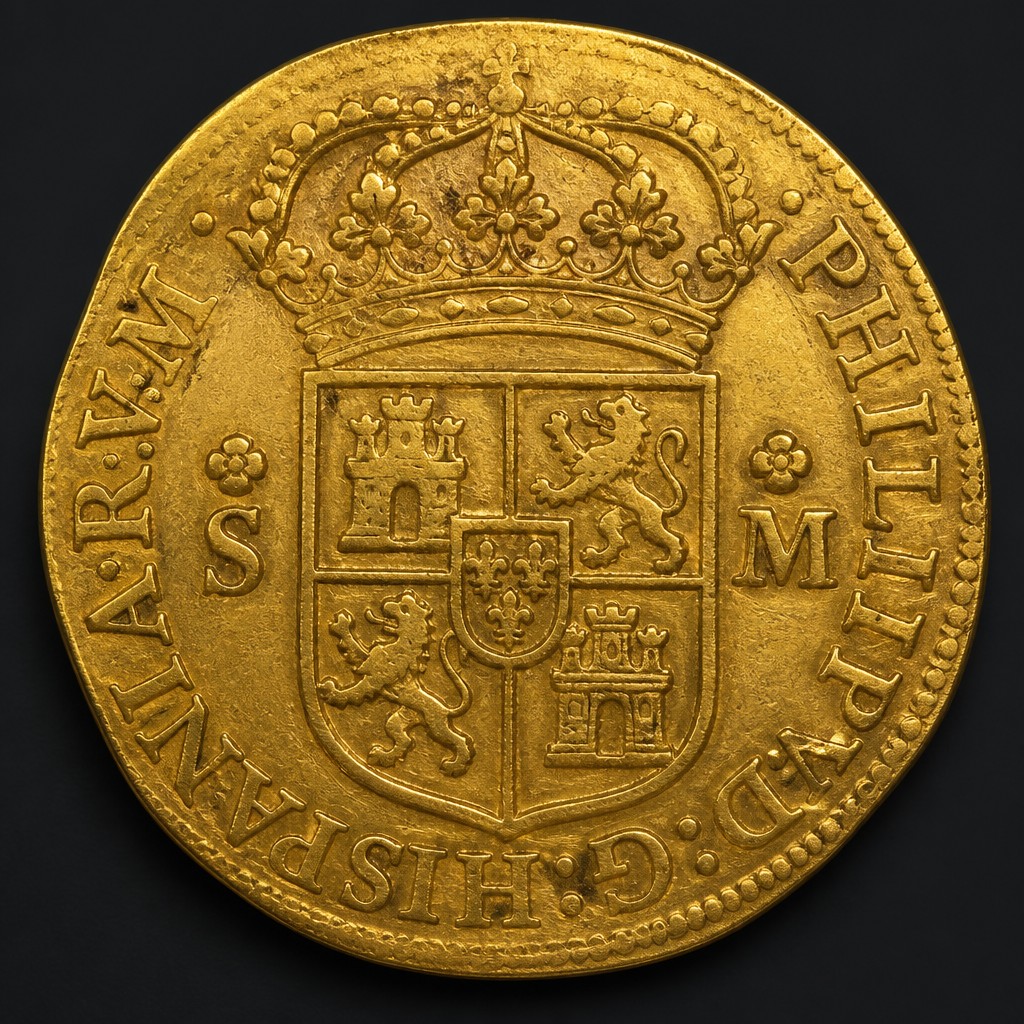
What It Is
The escudo was a Spanish gold denomination struck from the 16th century onward, both in Spain and across its extensive colonial mints in the Americas (Mexico City, Lima, Potosi, and others). The term "doubloon" is a colloquial English name most commonly applied to the 2-escudo coin (a "double" escudo), though it's sometimes used loosely to refer to Spanish colonial gold coinage in general. Because production spanned so many mints, monarchs, and centuries, escudos vary considerably in design between early "cob" (irregularly shaped, hand-struck) issues and later, more uniform milled coinage.
Obverse Design
Early colonial cob escudos often show a simplified crowned shield of arms representing the Spanish crown, sometimes with only partial design visible due to their irregular, hand-cut shape. Later, more standardized milled escudos (especially 18th-century "portrait" issues) show a bust of the reigning Spanish king in profile, such as Charles III or Charles IV, with a Latin legend naming him.
Reverse Design
Cob-era reverses commonly show a cross design (often a Jerusalem-style cross with quadrants) surrounded by lions and castles representing the Spanish kingdoms. Later portrait-era escudos typically show the Spanish crowned arms with the Pillars of Hercules on either side, echoing the design elements found on Spanish 8-real silver coinage of the same later period.
Size, Weight & Metal
Escudo weight followed a consistent standard across mints: a single escudo weighed about 3.4 grams, meaning the 2-escudo "doubloon" weighed roughly 6.77 grams, with larger denominations (4 and 8 escudos) scaling up proportionally. Gold fineness was typically around 22 karat (91.7%) for most of the colonial period.
Mint Marks & Where to Find Them
Colonial escudos carry a mint mark identifying their city of origin, such as "Mo" for Mexico City, "L" or "LM" for Lima, "P" for Potosi, "NG" or "G" for Guatemala, and others, usually found near the shield or cross design along with an assayer's initial confirming the metal's quality was verified by a specific mint official.
Telling It Apart from Similar Coins
Cob escudos, being irregularly shaped and hand-struck, look distinctly different from the later, round, machine-milled portrait escudos, so overall shape and strike style is the fastest way to place a coin within the broader escudo timeline. Within either era, the mint mark and assayer initials narrow down the coin's specific origin, while the monarch's portrait or shield style helps date milled issues more precisely.
Judging Condition at a Glance
On portrait-era coins, wear shows first on the king's cheek and hair, and on the crowned shield's highest details on the reverse. Cob coins are judged differently, since their irregular strikes often leave parts of the design off the flan entirely; collectors assess cobs by how much of the design and mint/assayer marks remain visible and legible rather than by traditional wear alone.
Authenticity Red Flags
Given colonial gold's long history and enduring popularity, reproductions are common. Check weight against the expected escudo-multiple standard, and be wary of overly uniform, machine-perfect finishes on coins claimed to be irregular hand-struck cobs, since genuine cobs show authentic, natural irregularities from their manufacturing process rather than artificially "distressed" surfaces.
Frequently asked questions
What does "doubloon" actually refer to?
It's a colloquial English term most specifically applied to the 2-escudo Spanish gold coin, though it's sometimes used more loosely for Spanish colonial gold coinage generally.
What is the weight of a single escudo?
About 3.4 grams, with multiples (2, 4, and 8 escudos) scaling up proportionally from that base weight.
Why do some escudos look irregularly shaped?
Early colonial "cob" coins were hand-cut and hand-struck rather than machine-milled, resulting in irregular shapes and sometimes incomplete designs.
Where do I find the mint mark on a Spanish colonial escudo?
Near the shield or cross design, typically a letter combination identifying the mint city, alongside a separate assayer's initial.
How is a later portrait escudo different from an earlier cob escudo?
Portrait escudos are round and machine-milled with a clear king's bust, while cob escudos are irregularly shaped, hand-struck, and usually show a cross or shield design instead of a portrait.