
How to Identify the Spanish Gold Doubloon
An identification guide to Spanish colonial gold doubloons, covering the crowned-shield and cross designs of hand-struck cob issues, later portrait types, denominations, and mint/assayer marks.
Read the full Spanish Gold Doubloon encyclopedia entry →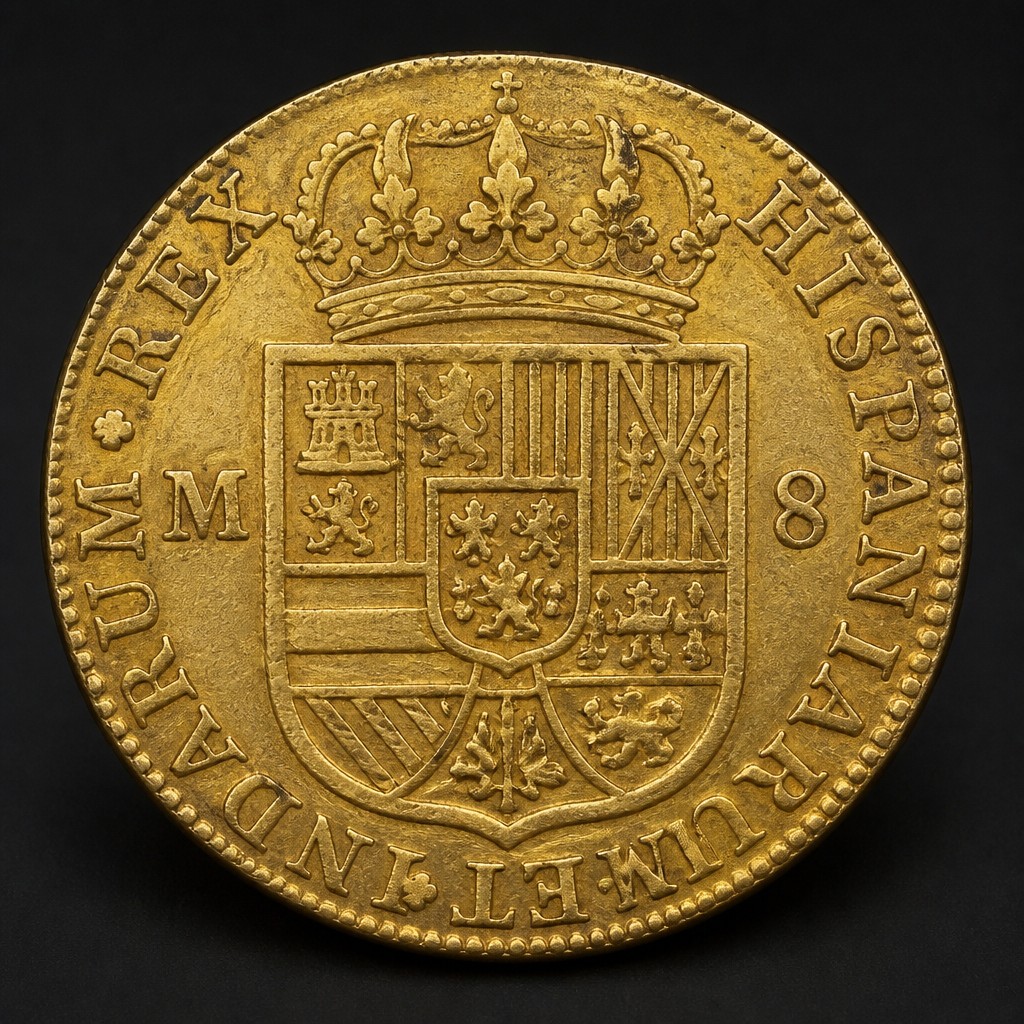
What This Coin Is
"Doubloon" is the popular name for Spanish colonial gold coins, most commonly the 2 escudo denomination, though the term is loosely used for larger multiples up to the 8 escudo (sometimes called the "onza" or quadruple doubloon). These were struck at Spanish American mints from the 16th through early 19th centuries and are strongly associated with colonial-era treasure and shipwrecks.
Obverse Design
Earlier hand-struck "cob" doubloons (before roughly the 1730s) show a crowned shield bearing the arms of Castile and Leon. Later milled doubloons, struck after mint modernization, instead show a portrait bust of the reigning Spanish king facing right or left, with his name and title in the legend.
Reverse Design
Cob-era doubloons typically show a cross fleury with the quartered arms of castles and lions in the angles. Milled, portrait-style doubloons instead show a crowned shield, often flanked by the Pillars of Hercules.
Size, Weight, Metal, and Edge
Doubloons were struck in gold of about .917 fineness (22 karat), with weight depending on denomination: a 2 escudo doubloon weighs roughly 6.77 grams, while an 8 escudo weighs about 27 grams. Cob issues are often irregular in shape with clipped or uneven edges from hand-cutting the blank flan, while later milled issues have round, more uniform edges.
Mint Marks and Where to Find Them
Look in the legend for a mint letter (such as Mo for Mexico City, L or LM for Lima, or NR for Santa Fe de Bogotá) paired with an assayer's initial confirming the gold content, usually placed near the shield or cross design.
Telling It Apart From Similar Coins
The biggest distinction is between early cob doubloons, which are irregular and hand-cut, and later milled portrait doubloons, which are round and machine-struck. Doubloons are also sometimes confused with generic "pirate treasure" souvenir replicas sold at tourist shops, which typically do not match genuine weight, fineness, or mint-mark conventions.
Judging Condition
On cob doubloons, look at how much of the cross and shield design survived the irregular cutting and striking process, since full designs are less common than partial ones. On milled doubloons, examine wear on the king's portrait and the sharpness of the shield's details.
Authenticity Red Flags
Reproduction "treasure coin" replicas are common and are sometimes marked as copies, but unmarked examples can mislead buyers; check the weight and gold color carefully. Cast fakes often show a seam and softer detail than genuinely struck coins, and jewelry-mounted pieces that have been drilled or soldered should be evaluated with that alteration in mind.
Frequently asked questions
What denomination is a 'doubloon'?
It most commonly refers to the 2 escudo gold coin, though the term is sometimes used loosely for larger Spanish colonial gold denominations up to the 8 escudo.
How do I tell a cob doubloon from a milled doubloon?
Cob doubloons are irregularly shaped and hand-cut with a crowned shield and cross design, while milled doubloons are round, machine-struck, and show a portrait bust of the king.
Where is the mint mark on a doubloon?
It appears in the legend near the shield or cross, as a mint letter such as Mo (Mexico City) or LM (Lima), paired with an assayer's initial.
Are 'pirate treasure' doubloons sold at souvenir shops real?
Most souvenir 'doubloons' are modern replicas made for novelty purposes and do not match the weight, fineness, or mint-mark conventions of genuine Spanish colonial gold coins.