
How to Identify the Spanish Colonial Gold Escudo (Doubloon)
A gold coin struck across Spain's American colonial mints, recognizable in cob form by irregular shape and crude crosses/pillars design, or in milled form by a crowned shield and pillars of Hercules.
Read the full Spanish Colonial Gold Escudo (Doubloon) encyclopedia entry →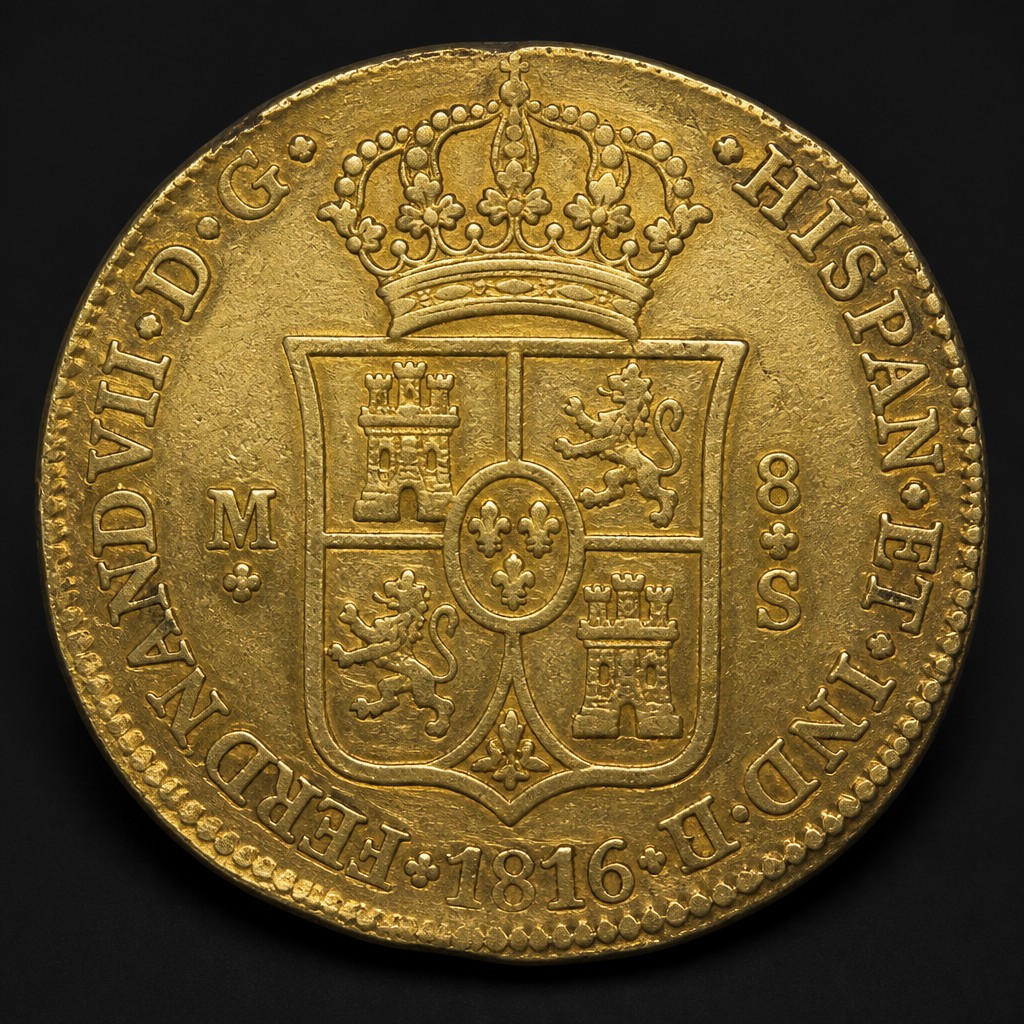
What It Is
The Spanish Colonial Gold Escudo, popularly nicknamed the doubloon, was struck at mints throughout Spain's American empire (including Mexico City, Lima, Potosi, Bogota, and others) from the 16th through early 19th centuries. It circulated as one of the dominant gold trade coins of the early modern world and came in denominations of 1, 2, 4, and 8 escudos.
Obverse Design
Early "cob" coinage (irregularly shaped, hand-cut planchets) typically shows a cross with lions and castles in the quarters, reflecting the arms of Castile and Leon, often crudely struck off-center. Later "milled" (machine-struck, round) coinage from the 18th century shows a crowned shield with the Spanish royal arms, or in some periods a portrait bust of the reigning Spanish monarch.
Reverse Design
Cob-era reverses commonly show the Pillars of Hercules with waves between them and a crown above, along with the denomination and mint/assayer marks squeezed into available space. Milled coinage reverses generally show the pillars flanking two globes with a banner reading "PLUS ULTRA," or a crowned shield design depending on the exact period and denomination.
Size, Weight, and Metal
Struck in high-fineness gold (commonly around .875 to .917 fine depending on era and mint), weight scales with denomination: an 8 escudo piece (the largest, true "doubloon") weighs approximately 27 grams, while smaller denominations weigh proportionally less. Cob coins are irregular in shape and diameter due to hand-cutting, while milled coins are round and consistent, typically around 37mm for the 8 escudo.
Mint Marks
Look for a mint mark letter or symbol (such as "Mo" for Mexico City, "P" for Potosi, or "L" for Lima) along with an assayer's initial, usually placed near the shield or pillars. These marks are essential for identifying exactly where and roughly when a specific coin was struck.
Telling It Apart From Similar Coins
Cob coins are often confused with other irregular hand-struck colonial issues from the same era; the key identifiers are the specific mint mark, assayer initials, and denomination numeral. Milled doubloons can resemble other 18th-century European gold coins, but the combination of Pillars of Hercules, "PLUS ULTRA" banner, and Spanish mint marks is distinctive to this series.
Judging Condition at a Glance
Because cobs were hand-cut and often struck off-center or with incomplete legends by design, "full flan" high-grade cobs with complete crosses and pillars are prized and relatively scarce. For milled coinage, check the sharpness of the crowned shield or portrait and the clarity of mint and assayer marks near the rim, which wear down first.
Authenticity Red Flags
Given the doubloon's fame (partly from pirate lore), it has been widely counterfeited both in period and in modern times as jewelry or souvenir pieces. Check for correct gold weight and fineness, and be wary of pieces with obviously modern, machine-perfect finishes being sold as irregular cobs, or of "shipwreck" coins lacking any believable encrustation or wear consistent with their claimed history.
Frequently asked questions
What's the difference between a cob doubloon and a milled doubloon?
Cobs are irregularly shaped, hand-cut planchets struck with crude dies, while milled coins are round, machine-made, and show more refined, standardized designs.
What do the Pillars of Hercules represent on this coin?
They symbolize the Strait of Gibraltar and Spain's global reach, often paired with the motto PLUS ULTRA meaning 'further beyond.'
How do I find the mint of origin on a Spanish colonial escudo?
Look for a small mint mark letter, such as Mo for Mexico City or P for Potosi, usually placed near the shield or pillars along with an assayer's initial.
How much does a true doubloon (8 escudos) weigh?
Approximately 27 grams of gold, though exact weight varies slightly by mint and period.