
How to Identify the Spanish Colonial Cob (Macuquina)
A crudely hand-cut and hammered silver or gold coin produced at Spanish colonial mints in the Americas from the 1500s through the 1700s, identified by its irregular shape and partial, off-center design elements.
Read the full Spanish Colonial Cob (Macuquina) encyclopedia entry →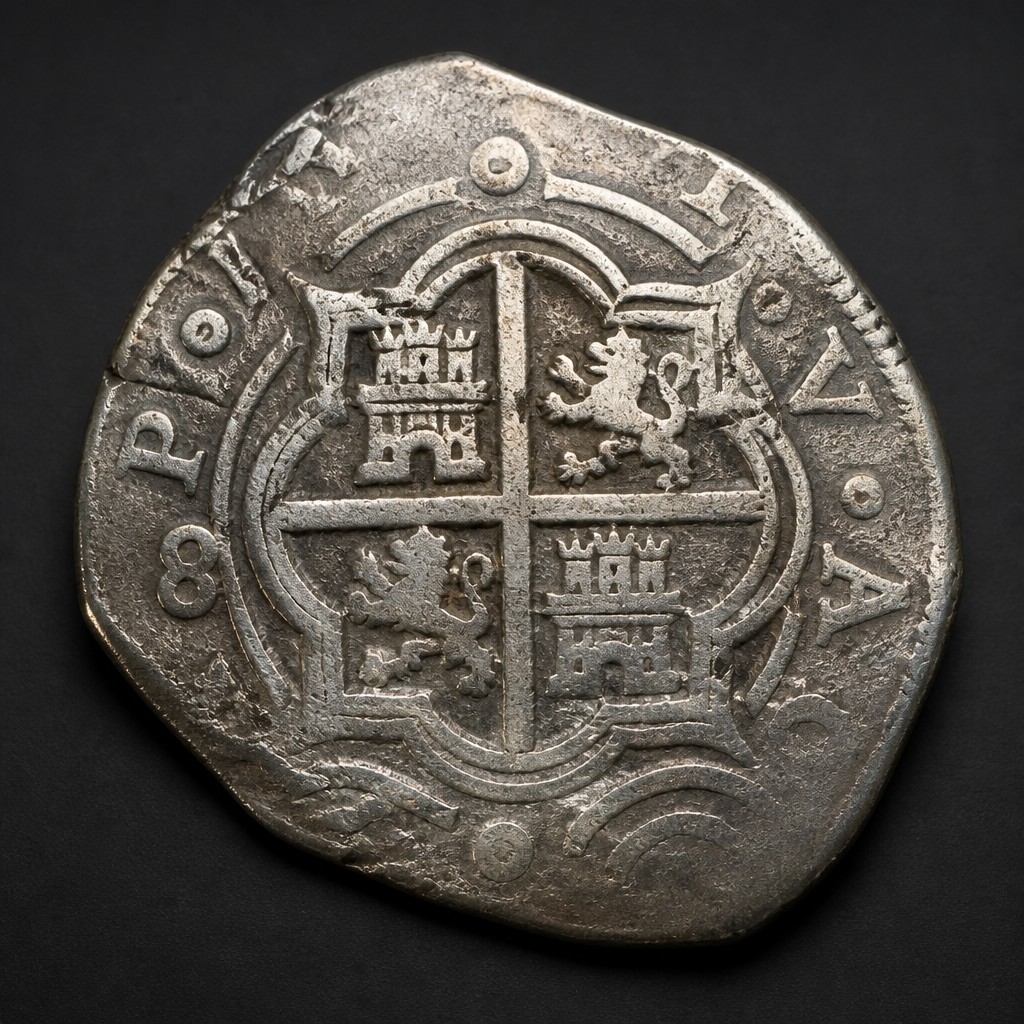
What It Is
The Spanish colonial cob, known in Spanish as macuquina, is a type of hand-made coin produced at mints across the Spanish Empire in the Americas, including Mexico, Potosi (in present-day Bolivia), Lima, and other colonial mint cities, from the 1500s into the 1700s. Rather than being cut into neat round planchets, cobs were made by slicing irregular pieces from a silver or gold bar to the correct weight, then hammering a design onto each piece by hand. This made every cob visually unique in shape.
Obverse Design & Inscriptions
Most cobs display a cross, often a "Jerusalem cross" or shield-cross design, within a decorative border, along with partial legends referencing the ruling Spanish monarch (such as PHILIPPVS or CAROLVS depending on the era) and often a Latin phrase referencing the by-the-grace-of-God formula common to Spanish coinage. Because the design was struck by hand on irregular flans, much of the lettering is typically cut off or only partially visible on any single piece.
Reverse Design & Inscriptions
The reverse commonly shows the quartered arms of Castile and Leon (castles and lions) within a shield, sometimes with pillars representing the Pillars of Hercules on later cob types. As with the obverse, legends are frequently incomplete due to the irregular shape and off-center striking typical of this method.
Size, Weight, and Metal
Cobs were produced in a range of denominations, from small fractional silver reales up to large 8-reales pieces (the famous "piece of eight"), as well as gold escudos. Because each cob was cut to a target weight rather than shaped into a uniform round disc, sizes and outlines vary enormously even within the same denomination, though weight was carefully controlled to match the intended value.
Mint Marks
Cobs typically carry a mint mark identifying the city of production, such as a stylized letter or monogram for Mexico City, Potosi, or Lima, along with an assayer's initial confirming the metal's fineness was checked. These marks are often small and appear wherever they landed on the irregular flan, so locating them can require examining the coin from multiple angles.
Telling It Apart From Similar Coins
Cobs are easily distinguished from later, machine-struck "milled" Spanish colonial coinage (produced from the mid-1700s onward), which shows a neat, round shape and a full, clear design, typically the pillars-and-globes or portrait bust types. A genuine cob's irregular outline and partially struck design are its defining, expected features, not flaws.
Judging Condition at a Glance
Because cobs were meant for commerce and many were also lost in historic shipwrecks, condition assessment often focuses less on classic wear grading and more on how much of the design and legend struck clearly, along with any corrosion or pitting from long burial or immersion for shipwreck-recovered specimens. A cob with a clear, centered cross or shield and a visible mint mark and assayer's initial is considered a stronger example than one with heavy off-center striking.
Authenticity Red Flags
Given the popularity of "pirate treasure" style cobs, reproductions are common, particularly cast replicas sold as souvenirs. Warning signs include a uniformly textured, grainy surface consistent with casting rather than hammering, edges that look too smooth or rounded compared to the sharp, cut-metal edges of a genuine hand-cut flan, and a weight that doesn't correspond to a recognized denomination. Because shipwreck-recovered cobs often carry official salvage documentation, a lack of any provenance paperwork for a claimed shipwreck coin is also worth treating with caution.
Frequently asked questions
Why is a cob shaped so irregularly?
Cobs were cut by hand from a silver or gold bar to the correct weight, rather than punched into a uniform round planchet, so each piece has a unique irregular outline.
What does 'macuquina' mean?
It's the Spanish term for this type of hand-hammered colonial coin, commonly used to describe cobs produced at Spanish American mints.
How do I find the mint mark on a cob?
Look across the entire irregular surface for a small stylized letter or monogram identifying the mint city, along with an assayer's initial, since the mark could land anywhere on the flan.
How is a cob different from a later Spanish colonial dollar?
Later Spanish colonial coins were machine-struck (milled) into neat, round shapes with fully visible designs, while cobs are irregular and often only partially struck.
What should I watch for with shipwreck-recovered cobs?
Genuine shipwreck coins usually come with documented salvage provenance; be cautious of pieces claimed to be shipwreck finds without any supporting paperwork.