
How to Identify the Spanish Colonial 2 Reales (Milled)
A collector's walkthrough for confirming a milled Spanish colonial 2 reales: size, silver, heraldic devices, mint and assayer marks, look-alikes and fakes.
Read the full Spanish Colonial 2 Reales (Milled) encyclopedia entry →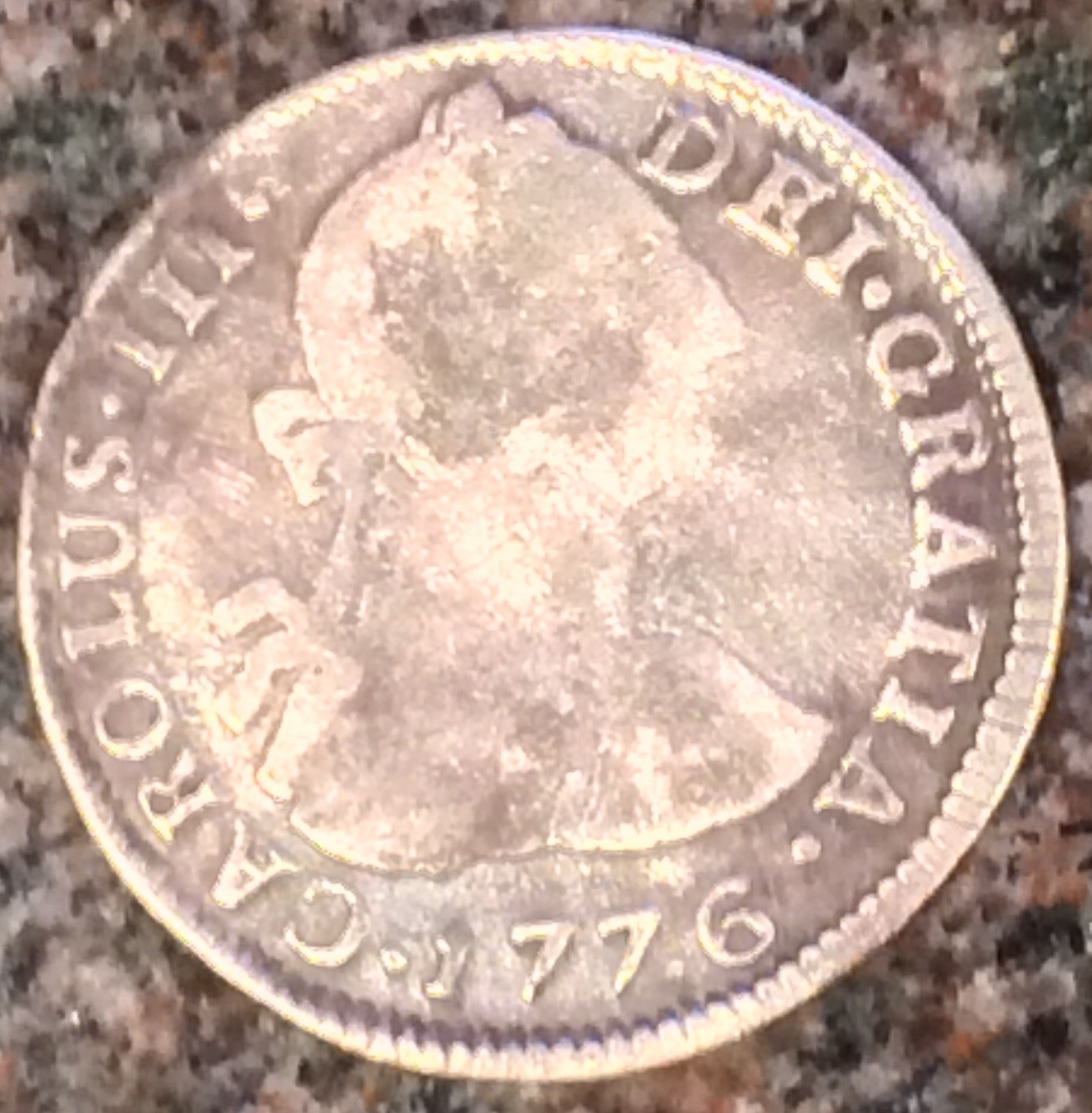
Start with size and weight, because denomination in this series is largely a matter of scale. A genuine milled 2 reales is a small silver coin, roughly 26–27 mm across and about 6–7 grams. If a coin is closer to 39–40 mm and 27 grams, you are holding an 8 reales, not a 2 reales; the smaller 1 real and half real are smaller still. Weigh and measure before anything else.
Read the devices. On a milled colonial 2 reales you should find heraldic elements: the lions and castles of León and Castile arranged within a shield, and a crowned Spanish shield, surrounded by a Latin legend and a date. Confirm the date is engraved as part of the die (for this example, 1776) rather than added or altered. Portrait-era pieces show a monarch's profile; earlier pillar-type pieces show the twin Pillars of Hercules instead—both are legitimate faces of this denomination across its run.
Locate the small mint and assayer letters. Colonial pieces were produced at several American mints, each with its own mark, plus one or two initials for the assayer who guaranteed the silver. These tiny letters are central to attribution and value, so examine them under magnification and record exactly what you see rather than assuming a mint.
Check the edge and the metal. Milled coinage should have an ornamented or reeded edge, not the plain, irregular, sometimes-clipped edge of an earlier hammered cob. The surfaces should look like circulated silver, developing gray toning; suspiciously bright, greasy, or lightweight pieces, or ones that fail a size-and-weight check, warrant caution.
Be alert to look-alikes and fakes. Cast copies often show a soft, grainy surface, mushy lettering, a visible seam, or a weight that is off. Modern replicas and jewelry-mounted pieces are common. For any coin you intend to buy or sell at a meaningful price, compare it against trusted reference images for the exact mint and date, and use third-party authentication when in doubt.
Frequently asked questions
How do I tell a 2 reales from an 8 reales at a glance?
Size and weight. The 2 reales is small (about 26–27 mm, 6–7 g), while the 8 reales 'piece of eight' is large (about 39–40 mm, ~27 g). When unsure, measure the diameter and weigh the coin.
Where are the mint and assayer marks located?
They appear as small letters within the field beside the heraldic devices. The mint letter identifies the colonial mint and the adjacent initial(s) identify the assayer; both are needed for a proper attribution.
What are the most common signs of a fake?
Grainy or bubbled cast surfaces, a seam around the edge, mushy or uneven lettering, wrong weight or diameter, and a plain edge where milled detailing should be. Independent authentication resolves genuine doubt.
Should the edge be reeded?
Milled colonial coins carry an ornamented or reeded edge rather than the plain, clipped edge of hammered cobs. A plain, irregular edge on a coin claimed to be milled is a reason to look closer.