
How to Identify the Spanish 8 Reales Portrait Dollar
A Spanish colonial silver dollar bearing a bust portrait of the reigning king, widely circulated worldwide and historically influential on the design of the United States dollar.
Read the full Spanish 8 Reales Portrait Dollar encyclopedia entry →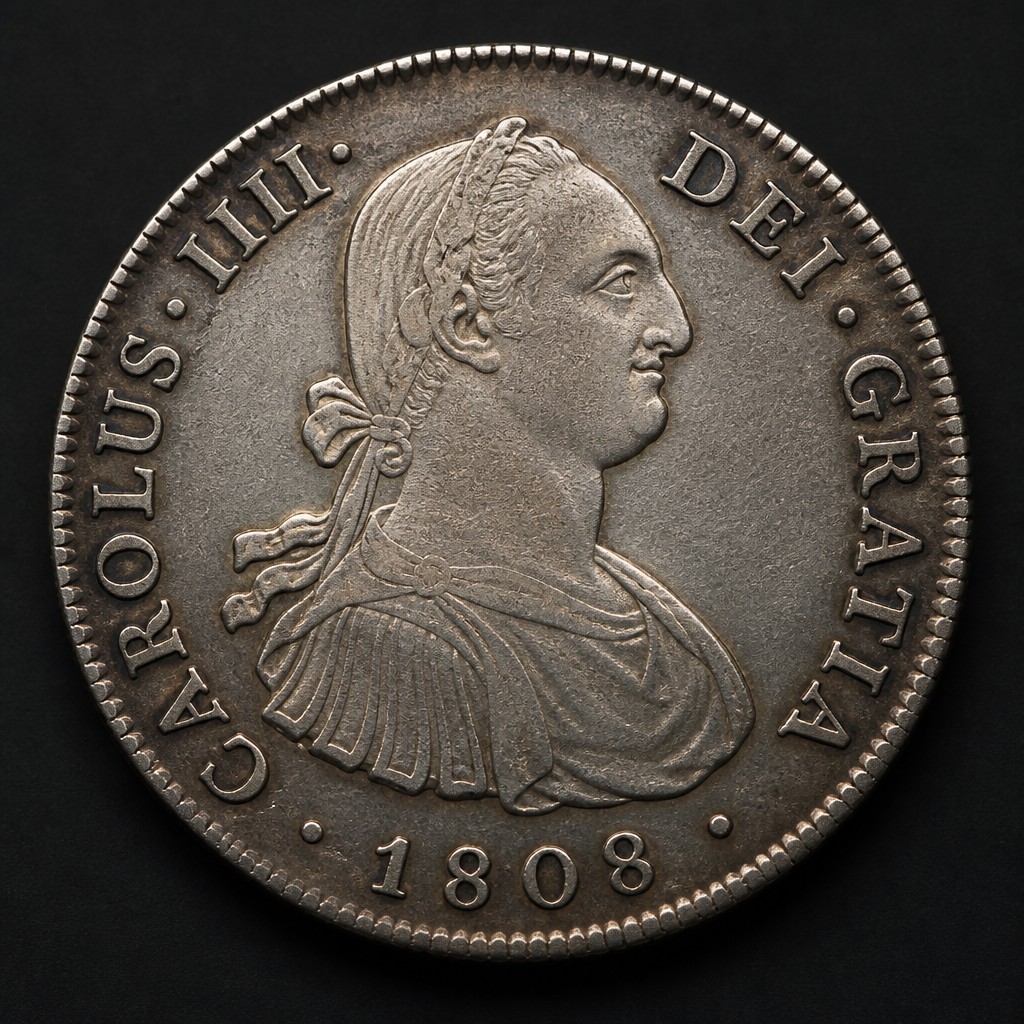
What the Coin Is
By the later 18th century, Spain replaced the earlier "pillar dollar" design on its colonial 8 reales coinage with a bust portrait of the reigning king, producing what collectors call the "portrait dollar." These coins, struck under Charles III, Charles IV, and Ferdinand VII, circulated globally as a trusted trade currency and directly influenced the size and value concept behind the early United States dollar.
Obverse Design & Inscriptions
The obverse shows the king's bust, laureate or armored depending on the reign, facing right, surrounded by a Latin legend naming the monarch and his title, such as CAROLUS IIII DEI GRATIA (Charles IV, by the Grace of God).
Reverse Design & Inscriptions
The reverse displays the crowned Spanish coat of arms, a quartered shield representing the various kingdoms under the Spanish crown, flanked by the Pillars of Hercules draped with banners reading PLUS ULTRA. The denomination (8 R), mint mark, and assayer initials appear around the design, along with the date.
Size, Weight, Metal & Edge
The coin measures roughly 39mm in diameter and weighs about 27.07 grams, struck in silver of approximately .896 to .903 fineness depending on the exact period and mint. The edge typically carries a decorative engraved pattern known as cordoncillo, intended to prevent clipping of the precious metal.
Mint Marks & Where to Find Them
Mint marks and assayer initials appear on the reverse, identifying the specific colonial mint that struck the coin, such as Mo for Mexico City, an LM ligature for Lima, or P/PTS for Potosí, among other colonial mints across Spanish America.
Telling It Apart From Similar Coins
The portrait dollar is easily distinguished from the earlier pillar dollar, which shows two globes between crowned pillars rather than a king's bust. Compare the king's facial features and hairstyle, along with the legend text, to identify which specific monarch's issue you are examining.
Judging Condition at a Glance
Check the king's cheek, hair curls, and the fine lines of the coat of arms for wear, since these raised details flatten first with handling. Because these coins traveled extensively in trade, many survive with moderate wear, holes from being worn as jewelry, or countermarks applied by other nations that accepted them into local circulation.
Authenticity Red Flags
Given their historical importance and continued collector demand, portrait dollars are frequently counterfeited, both as contemporary counterfeits from their own era and modern reproductions. Verify that weight and diameter fall within expected ranges, and examine the edge for a properly executed cordoncillo pattern rather than a smooth or crudely reeded edge, which can indicate a later-made fake.
Frequently asked questions
What replaced the earlier pillar dollar design?
In the later 18th century, Spain introduced a king's portrait bust on the obverse, replacing the earlier design showing two globes between crowned pillars.
Why do many of these coins have holes or countermarks?
Because they circulated so widely as trade currency, many were worn as jewelry, resulting in holes, or were officially countermarked by other nations that put them into local circulation.
Where can I find the mint mark?
On the reverse, alongside the assayer's initials, identifying the colonial mint such as Mexico City, Lima, or Potosí.
How did this coin influence the United States dollar?
Its size, weight, and widespread acceptance as a trusted trade coin served as a practical model when the United States established its own silver dollar denomination.