
How to Identify the Spanish 8 Reales (Piece of Eight)
A guide to the famous Spanish silver dollar, covering the difference between early cob and pillar issues and later portrait-bust coins, its weight and mint marks, and how to spot period and modern counterfeits.
Read the full Spanish 8 Reales (Piece of Eight) encyclopedia entry →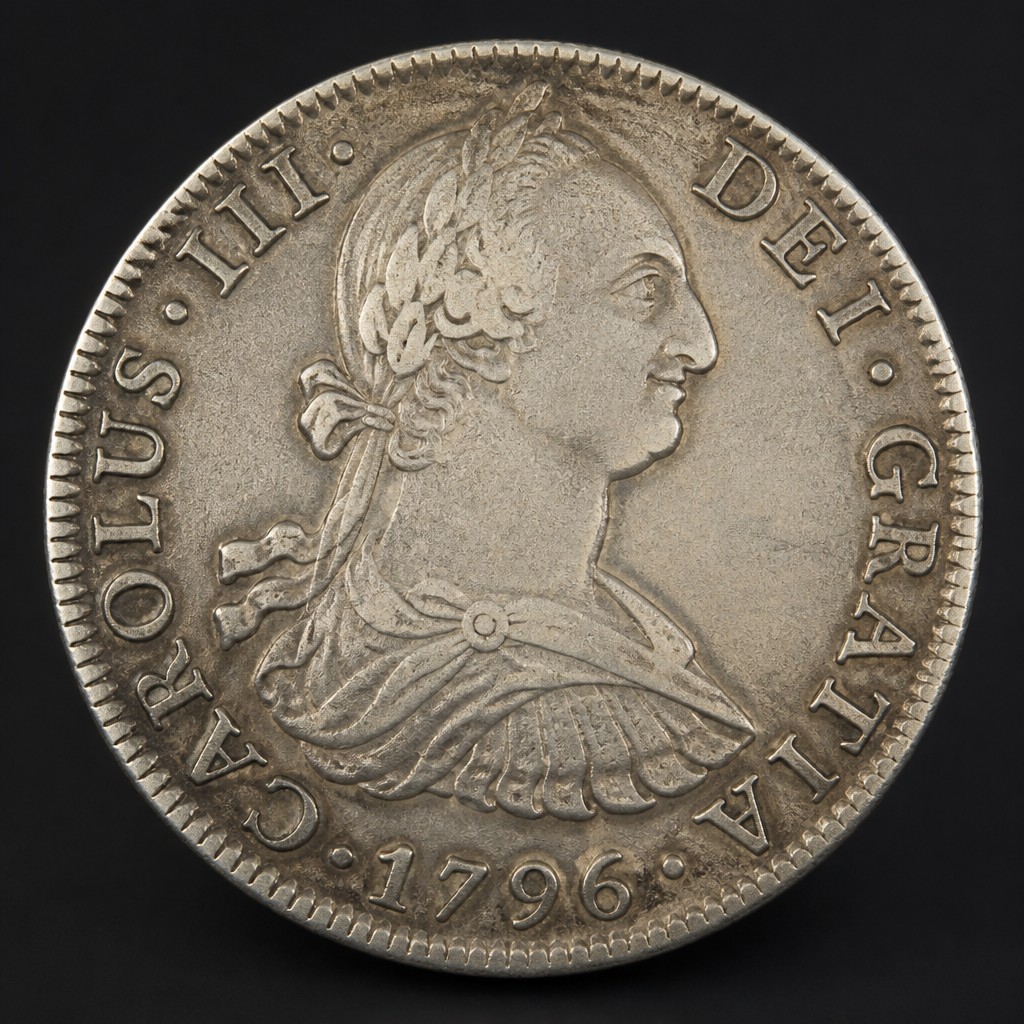
What This Coin Is
The 8 reales, nicknamed the "piece of eight," was the dominant silver trade coin of the Spanish Empire from the 16th through early 19th centuries. It was so widely used internationally that it directly influenced the value and design of the United States dollar and was legal tender in the US for a time.
Obverse Design
Early hand-struck "cob" issues show a crowned shield with the arms of Castile and Leon. From the 1730s, pillar-type coins show crowned globes between the Pillars of Hercules. From 1772 onward, milled "portrait" 8 reales show a bust of the reigning Spanish king (such as Charles III, Charles IV, or Ferdinand VII) with his name and title in the legend.
Reverse Design
Cob and pillar types show a cross or crowned shield design as described above. Portrait-type coins from 1772 onward show a crowned shield flanked by the Pillars of Hercules with the PLVS VLTRA banner.
Size, Weight, Metal, and Edge
The 8 reales is a large silver coin weighing about 27 grams and measuring roughly 38–40mm across, typically .903 to .917 fine silver. Cob coins have irregular, hand-cut edges, while later milled coins are round with a more consistent, sometimes reeded, edge.
Mint Marks and Where to Find Them
A mint letter (such as Mo for Mexico City, P for Potosí, or LM for Lima) appears in the legend, usually paired with an assayer's initial certifying the silver content.
Telling It Apart From Similar Coins
The three broad design phases — cob, pillar, and portrait — are the main way to place a coin in time and are easy to tell apart visually. Within the portrait series, the specific king's face and legend indicate the exact reign. Coins are also sometimes confused with contemporary counterfeits that circulated during the Spanish colonial period itself, which can show slightly different weight or crude die work.
Judging Condition
Look at wear on the king's cheek and hair (portrait types) or the crowns and pillars (earlier types), along with the clarity of the shield's quartering. Chop marks — small stamped symbols added by Asian merchants to verify silver content — are common on genuinely circulated pieces and reflect real trade history rather than damage.
Authenticity Red Flags
Cast counterfeits, both historical and modern, often show a seam line and softer, less crisp detail than a genuinely struck coin. Coins that have been filed down, plugged, or have had holes filled to disguise past mounting should be examined carefully, since these alterations affect both authenticity assessment and the coin's overall integrity.
Frequently asked questions
What is a 'piece of eight'?
It's the popular nickname for the Spanish 8 reales silver coin, so called because it was worth eight reales and could be physically cut into eight pieces (bits) for small change.
How do I tell the age of my 8 reales coin from its design?
Crowned-shield 'cob' designs are pre-1730s, crowned-globes 'pillar' designs run roughly 1730s-1772, and portrait-bust designs of the Spanish king appear from 1772 onward.
What are the small stamped marks on some 8 reales coins?
These are chop marks, added historically by Asian merchants and bankers to verify the silver content during trade, and they are a normal sign of genuine circulation.
Where do I find the mint mark on a piece of eight?
It appears in the legend, typically as a letter such as Mo (Mexico City), P (Potosí), or LM (Lima), next to an assayer's initial.