
How to Identify the Spanish 5 Pesetas Silver (Duro)
A large Spanish silver coin popularly nicknamed the 'duro,' issued under various monarchs and the First Republic from the late 19th into the early 20th century.
Read the full Spanish 5 Pesetas Silver (Duro) encyclopedia entry →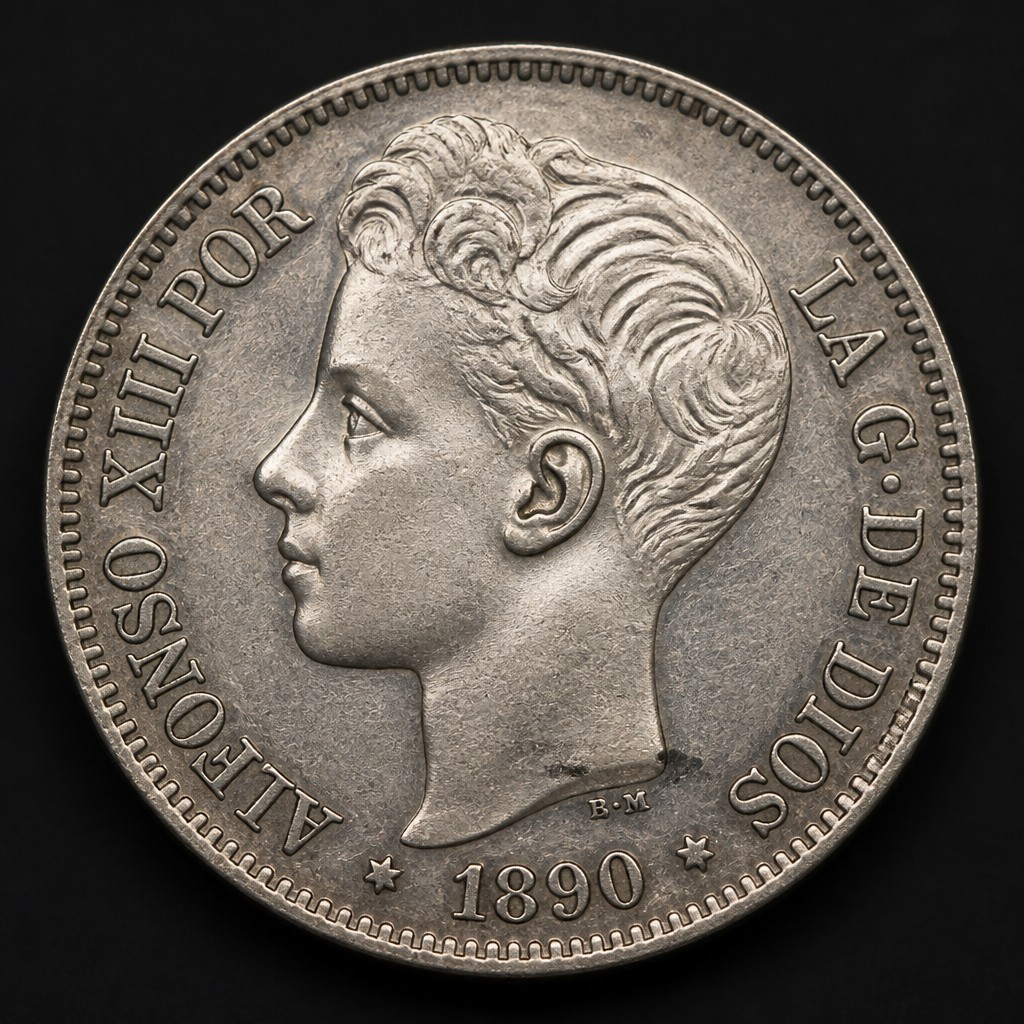
What It Is
The 5 pesetas silver coin, commonly called the "duro" in everyday Spanish usage (a name carried over from the earlier Spanish silver dollar-sized coin tradition), was issued from the 1870s through the 1930s under different Spanish governments, including the First Republic and the reigns of Alfonso XII and Alfonso XIII.
Obverse Design
The obverse generally shows a profile portrait of the reigning monarch, such as young Alfonso XIII (including the well-known "baby head" portrait from his childhood reign under a regency) or his father Alfonso XII, with the royal title and date in the surrounding legend. Republic-era issues instead show an allegorical figure representing Spain.
Reverse Design
The reverse displays the crowned Spanish coat of arms, featuring the quartered shield representing the historic kingdoms of Castile, León, Aragon, and Navarre, flanked by the Pillars of Hercules, along with the denomination "5 PESETAS" and date.
Size, Weight, and Metal
The 5 pesetas duro is a large silver crown, approximately 37 mm in diameter and weighing about 25 grams, struck in .900 fine silver, comparable in size to other major European silver crowns of the era such as the US Morgan dollar or French 5 francs.
Mint Marks and Where to Find Them
Look near the rim on the reverse for small mint identifying marks and assayer initials, typically located within or beside the stars flanking the date, which on many Spanish coins of this era also secretly encode the true year of striking (distinct from the visible engraved date) as an anti-counterfeiting measure.
Telling It Apart from Similar Coins
The Spanish 5 pesetas can resemble other large European silver crowns of similar size and weight, such as the French 5 francs or various German thalers, so checking the Spanish royal title, coat of arms with the Pillars of Hercules, and "PESETAS" denomination confirms its origin. Comparing the specific king's portrait and age also helps date the piece within its reign.
Judging Condition at a Glance
Examine the monarch's portrait details and the fine lines of the coat of arms and pillars for wear, along with the stars flanking the date for legibility. Well-preserved coins show sharp hair and facial detail, while circulated examples show these features smoothed and the coat of arms details softened.
Authenticity Red Flags
Because this coin's large silver content has made it a target for cast counterfeits, check for a seam around the edge, a grainy surface, and verify weight and diameter against the known .900 fine, 25-gram standard. Also check that the stars flanking the date show plausible, consistent digits, since altered or recut dates are a known issue on some Spanish crown-sized coins.
Frequently asked questions
Why is the 5 pesetas coin called a 'duro'?
The nickname carries over from Spain's older large silver dollar-sized coin tradition and became the everyday colloquial name for the 5 pesetas piece.
What are the small stars next to the date for?
Many Spanish coins of this era include stars flanking the date that encode the actual year of striking as a security feature, which can differ from the larger engraved date shown elsewhere on the coin.
What is the silver weight and purity of a duro?
It is struck in .900 fine silver, weighing about 25 grams total, roughly 37 mm in diameter.
What portraits appear on the 5 pesetas duro?
Depending on date, you may see Alfonso XII, a young Alfonso XIII (the 'baby head' type), or an allegorical figure of Spain used during the First Republic period.