
How to Identify the Spanish 4 Reales
A mid-denomination Spanish colonial or peninsular silver coin, part of the reales system used across Spain and its American territories before decimalization.
Read the full Spanish 4 Reales encyclopedia entry →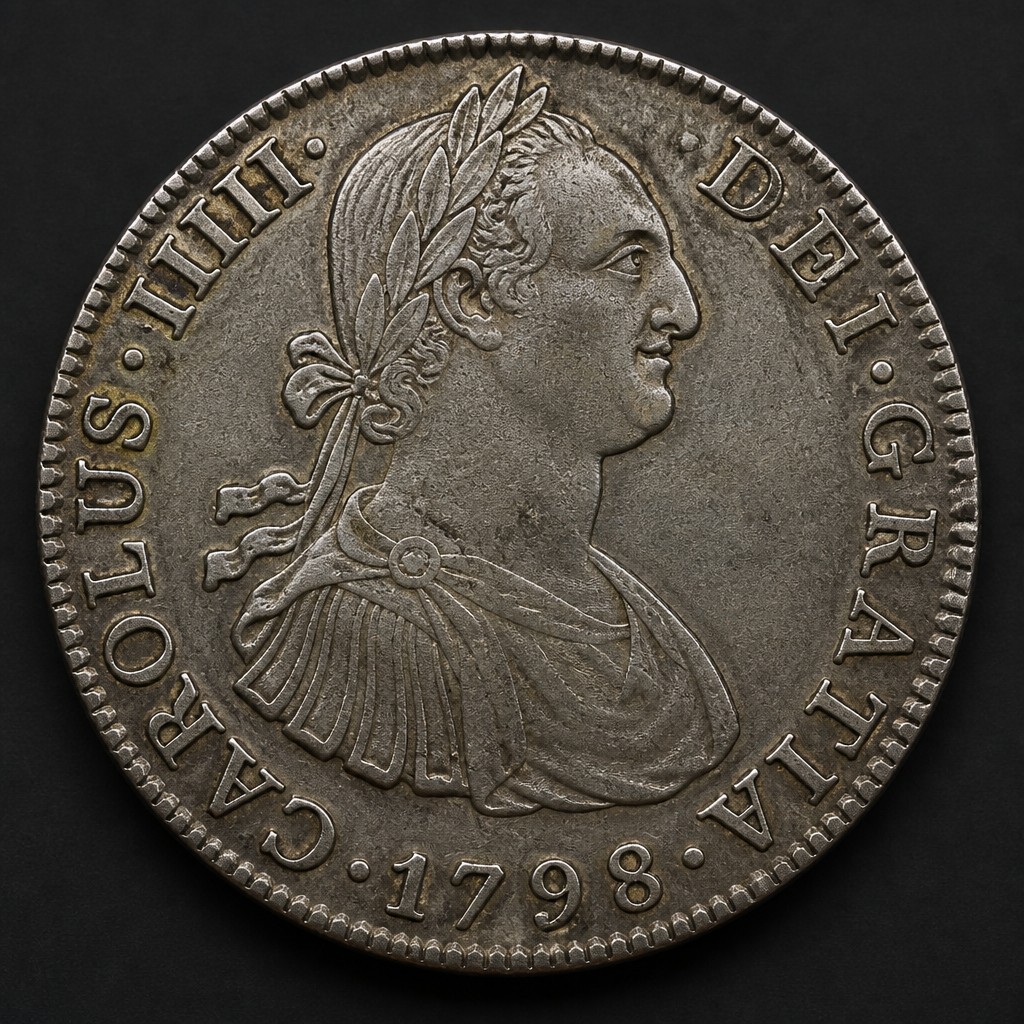
What It Is
The 4 reales was a silver denomination within the traditional Spanish monetary system based on the real, used both in Spain and throughout its colonial mints in the Americas for several centuries before Spain moved to a decimal peseta system in the 19th century. It sat between the smaller 2 reales and the larger 8 reales (the famous "piece of eight").
Obverse Design
Colonial-era pieces from the milled coinage period typically show a portrait bust of the reigning Spanish monarch, such as Charles III or Charles IV, in profile with a Latin legend naming him king. Earlier "cob" or pillar-type coinage instead shows crowned pillars representing the Pillars of Hercules with banners, or a shield design, depending on the specific period and mint.
Reverse Design
The reverse commonly displays the crowned Spanish coat of arms, quartered to represent Castile, León, and other territories, surrounded by the Order of the Golden Fleece collar on later royal portrait issues, along with the denomination "4R" and mint identifying letters.
Size, Weight, and Metal
The 4 reales is a smaller silver coin, generally under 30 mm in diameter and weighing roughly 13.5 grams in the milled portrait series, with silver fineness historically around .896 to .903 depending on the exact period and mint standard.
Mint Marks and Where to Find Them
Look near the base of the shield or portrait for one or two small letters identifying the mint, such as "Mo" for Mexico City, "P" for Potosí, "NG" for Guatemala, or "S" for Seville, alongside an assayer's initial confirming the official who verified the silver content.
Telling It Apart from Similar Coins
The 4 reales is easily confused with the more common 8 reales, which shares nearly identical design elements but is roughly twice the size and weight, and with the smaller 2 reales, which is proportionally smaller. Always compare diameter and weight rather than relying on design alone, since worn examples can look similar in low light or photographs.
Judging Condition at a Glance
Check the monarch's portrait or the pillars and shield details for wear, along with the legend lettering around the rim for legibility. Well-struck examples from hand-operated colonial presses often show some natural weakness in strike even when lightly worn, so judge overall detail retention rather than expecting a perfectly even strike.
Authenticity Red Flags
Colonial Spanish silver has long been a target for cast reproductions and later electrotype copies; look for a seam around the edge, a grainy surface, incorrect weight for the specific type, or blurred lettering that lacks the sharp edges typical of hand-struck coinage. Genuine assayer initials and mint marks should also match known combinations used at that mint during that reign.
Frequently asked questions
What territories minted Spanish 4 reales coins?
Both peninsular Spain and colonial mints across Spanish America, including Mexico City, Potosí, Lima, and Guatemala, produced 4 reales coins, each identified by its own mint mark.
How is the 4 reales different from an 8 reales?
The 8 reales, often called a piece of eight, is roughly double the size and weight of the 4 reales, though the design elements are very similar.
What does the assayer's initial on the coin mean?
It identifies the mint official who certified the coin's silver content and weight met official standards, and it appears alongside the mint mark.
Were all 4 reales coins the same design?
No, earlier cob-style and pillar-type coins looked quite different from later portrait-bust coins, since Spanish colonial coinage design changed significantly over the centuries of production.