
How to Identify the Spanish 100 Reales Gold (Isabel II)
A 19th-century Spanish gold coin bearing the portrait of Queen Isabel II, identified by its denomination in reales and crowned Spanish arms reverse.
Read the full Spanish 100 Reales Gold (Isabel II) encyclopedia entry →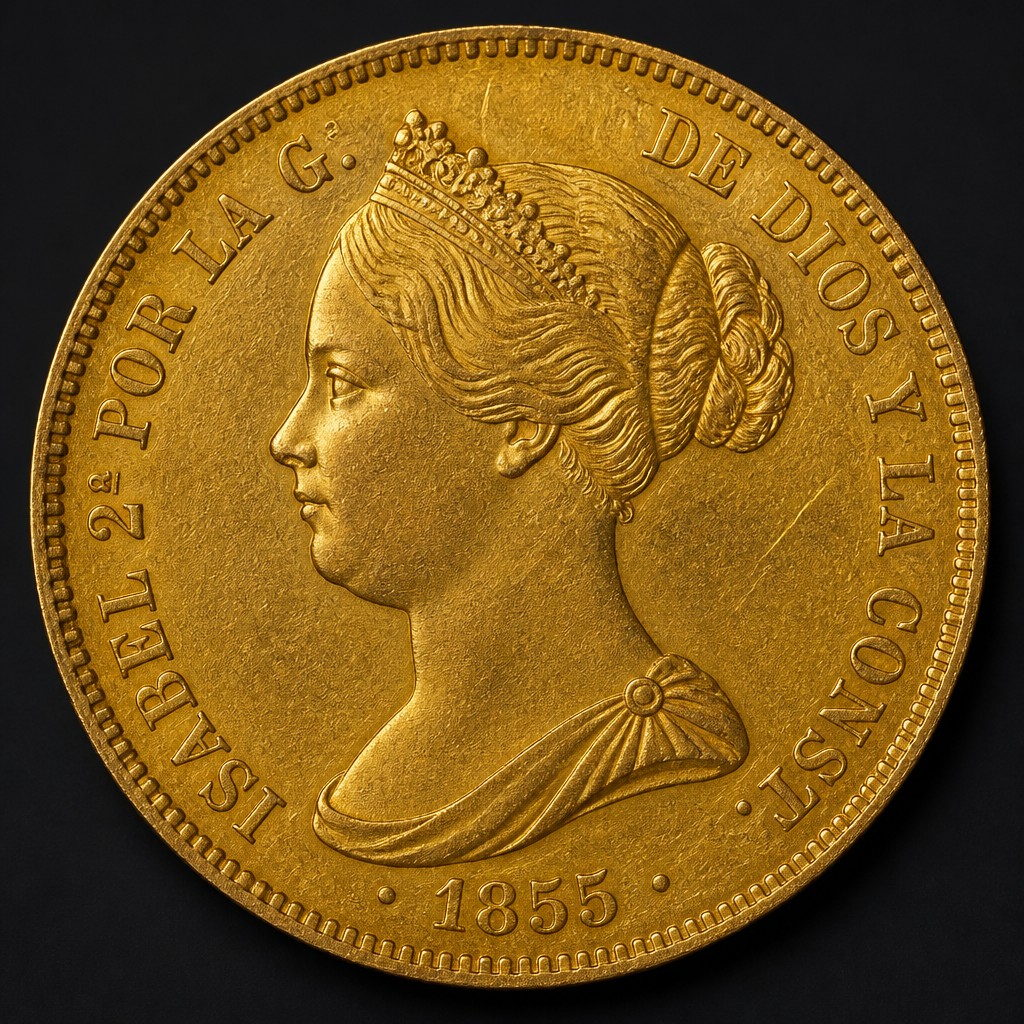
What Is the Spanish 100 Reales Gold (Isabel II)?
The 100 Reales gold coin was issued during the reign of Isabel II of Spain (1833–1868), part of the pre-decimal reales de vellón monetary system that Spain used before switching to the peseta in 1868. It represents one of the higher gold denominations of the period, alongside related issues like the 80 Reales and 40 Reales.
Obverse Design
The obverse shows a draped portrait bust of Queen Isabel II facing left, with her hair styled and adorned depending on the specific year of issue. The surrounding legend typically reads a variation of "ISABEL 2A POR LA G. DE DIOS Y LA CONST. REINA DE LAS ESPAÑAS" (Isabel II, by the grace of God and the Constitution, Queen of the Spains).
Reverse Design
The reverse displays the crowned Spanish coat of arms within a wreath, flanked by the Pillars of Hercules that traditionally appear on Spanish coinage. The mint city, assayer initials, and date are arranged around or below the arms in small lettering.
Size, Weight & Metal
The coin is struck in .900 fine gold, with a weight of roughly 8.4 grams and a diameter of approximately 24 millimeters, giving it a compact but noticeably dense feel typical of gold coinage from this era.
Mint Marks
Spanish coins of this period identify their mint of origin with a letter or small symbol near the date — Madrid issues are among the most commonly encountered. Assayer initials, representing the officials responsible for verifying metal purity, appear alongside the mint mark and are useful for pinpointing a specific striking.
Telling It Apart from Similar Coins
The 100 Reales is easily confused with the related 80 Reales and 40 Reales gold coins from the same reign, which share the same queen's portrait but differ in size, weight, and the numeral shown in the reverse legend. Always check the stated denomination and compare the coin's diameter against reference measurements to confirm which value you're holding. Later Isabel II gold coins from 1864 onward switched to the escudo denomination system, so a coin reading in escudos rather than reales belongs to a different, later series.
Judging Condition at a Glance
Examine the queen's hair detail and the fine lines of the crown atop the coat of arms — these are the first features to soften with circulation. A well-preserved coin shows crisp separation in the curls and sharp lettering around the rim, while a worn example shows a smoothed profile and shallow, hard-to-read legends.
Authenticity Red Flags
Because gold coins of this size and age are sometimes targeted by counterfeiters, verify the weight carefully against the expected figure, check that the assayer initials and mint mark are consistent with known genuine combinations for the date, and inspect the edge for correct reeding. A coin with a soft, indistinct strike or a color that looks unusually pale or brassy compared to typical .900 fine gold may warrant closer examination.
Frequently asked questions
Who is depicted on the Spanish 100 Reales gold coin?
Queen Isabel II of Spain, who reigned from 1833 to 1868, shown in profile on the obverse.
What is the coin's gold purity?
It is struck in .900 fine gold, with the remainder typically copper for durability.
How do I tell it apart from the 80 Reales or 40 Reales coins?
Compare the stated denomination in the reverse legend along with the coin's diameter and weight, since all three share the same queen's portrait.
Why did Spain stop using reales denominations?
Spain moved to the escudo system in 1864 and then to the peseta in 1868, so later Isabel II gold coins use different denominations entirely.
What should I check for authenticity?
Confirm the weight is close to 8.4 grams, check that mint and assayer marks match known genuine combinations, and look for sharp, well-defined lettering.