
How to Identify the Sovereign (Ottawa Mint, C Mintmark)
Canadian-struck British gold sovereigns carry a small "C" mintmark identifying the Ottawa Mint, produced in limited numbers between 1908 and 1919 alongside the standard British sovereign design.
Read the full Sovereign (Ottawa Mint, C Mintmark) encyclopedia entry →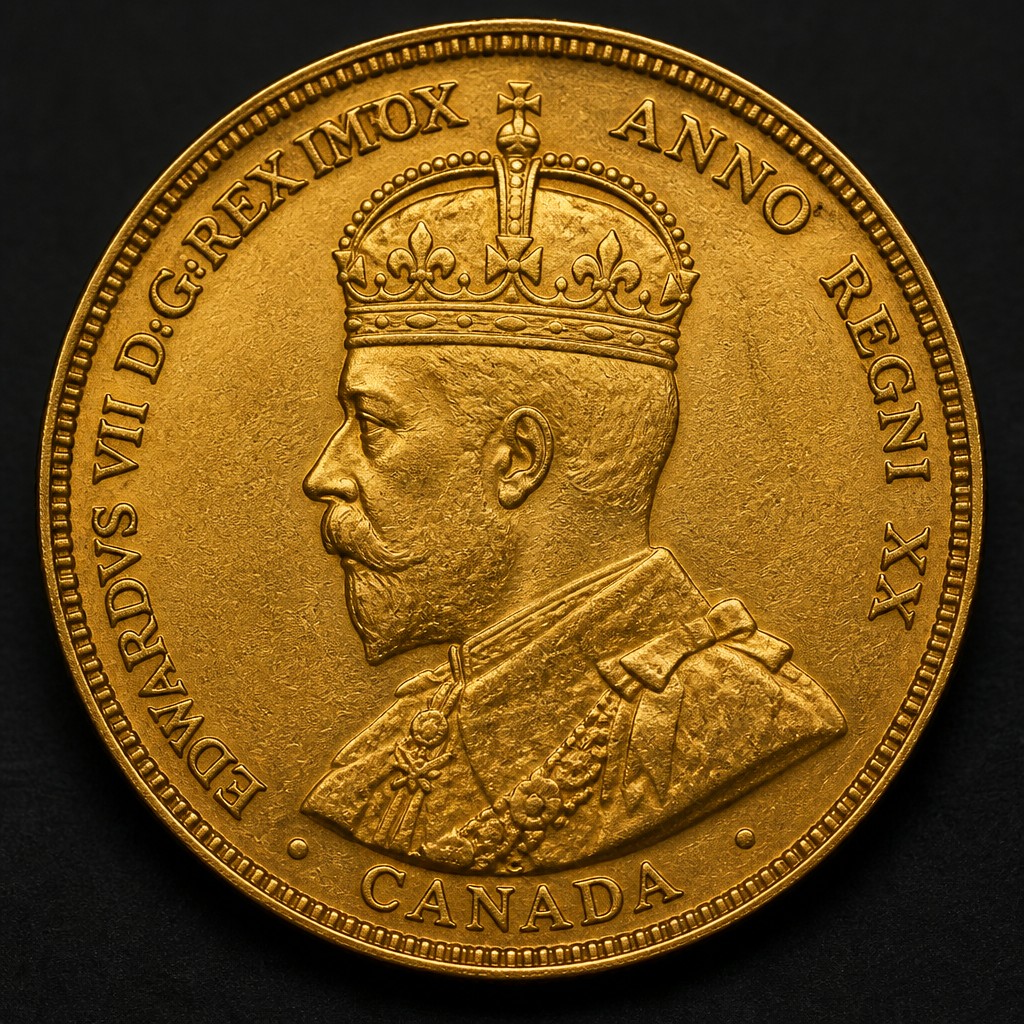
What It Is
The gold sovereign was Britain's standard gold pound coin, struck at the Royal Mint in London and at branch mints across the empire. The Ottawa branch mint (later the Royal Canadian Mint) struck sovereigns bearing its own "C" mintmark between 1908 and 1919, making these a distinct and collectible sub-type of the wider sovereign series.
Obverse Design
The obverse carries a portrait of the reigning British monarch: King Edward VII for early issues (1908-1910) and King George V for later dates (1911-1919). The legend reads "EDWARDVS VII DEI GRA" or "GEORGIVS V DEI GRA" along with "BRITT: OMN: REX F: D: IND: IMP:" abbreviations, standard on British sovereigns of the period.
Reverse Design
The reverse shows Benedetto Pistrucci's famous Saint George and the Dragon design: George on horseback, using a sword or broken lance to slay a dragon beneath the horse. This design was used across virtually all branch-mint sovereigns and is not unique to Ottawa strikes.
Size, Weight & Metal
Like all British sovereigns, the coin is struck in 22-karat (91.7%) gold, weighs 7.988 grams, and measures 22.05 mm in diameter, with a milled (reeded) edge.
Mint Marks & Where to Find Them
The defining feature of this coin is the small "C" mintmark, standing for Canada/Ottawa, positioned on the reverse just above the date, near the horse's hindquarters. It is small and easy to miss without magnification, so examine that specific spot closely; sovereigns without any mintmark were struck in London, while other letters ("S," "M," "P," "SA," "I") indicate Sydney, Melbourne, Perth, Pretoria, or Bombay respectively.
Telling It Apart from Similar Coins
Because the obverse and reverse designs match other branch-mint and London sovereigns of the same monarch and years, the mintmark is the single most important identifying feature. Collectors should also compare the coin's date to the Ottawa Mint's active sovereign-production years (1908-1919), since a "C" mintmark outside that range would be inconsistent and warrants scrutiny.
Why Collectors Value the Ottawa Issue
Branch-mint sovereigns are collected as a set distinct from London-struck pieces, and Ottawa's short production window combined with lower overall output for many individual dates makes several years within this run notably harder to find in higher grades than their London counterparts. This scarcity, rather than any design difference, is the main reason the "C" mintmark sovereign draws special attention from specialists in Canadian and Commonwealth coinage.
Judging Condition at a Glance
Wear shows first on Saint George's knee and the horse's shoulder on the reverse, and on the monarch's hair and cheek on the obverse. Because sovereigns saw heavy circulation and were often kept as bullion, well-preserved examples with sharp design details and strong luster are less common and more desirable to collectors.
Authenticity Red Flags
Given the coin's gold content and long history, check weight and diameter precisely, since underweight or oversized coins suggest a fake. Look closely at the mintmark's shape and placement, as fakes sometimes have a crudely added or incorrectly positioned "C." Soft or mushy lettering, an unusual metallic color, or a coin that doesn't pass a simple magnet test (gold is not magnetic) are additional signs to examine carefully.
Frequently asked questions
Where exactly is the "C" mintmark located?
On the reverse, just above the date near the horse's hind legs; it's small, so magnification helps confirm it.
What years did the Ottawa Mint produce sovereigns?
Ottawa struck sovereigns from 1908 through 1919, with the monarch portrait changing from Edward VII to George V partway through.
What is the gold purity and weight of a sovereign?
Sovereigns are 22-karat (91.7%) gold, weighing 7.988 grams with a diameter of 22.05 mm.
How is the Ottawa sovereign different in design from a London sovereign?
The design is identical apart from the mintmark; only the small "C" on the reverse distinguishes an Ottawa strike from an unmarked London sovereign.
Are Ottawa-mint sovereigns rarer than London ones?
Generally yes, since Ottawa's production runs were smaller and shorter-lived than London's, though specific mintage figures vary by year.