
How to Identify the Sovereign of William IV
A collector's guide to attributing William IV's gold sovereign by its bare-head portrait, crowned shield reverse, date, and gold fabric.
Read the full Sovereign of William IV encyclopedia entry →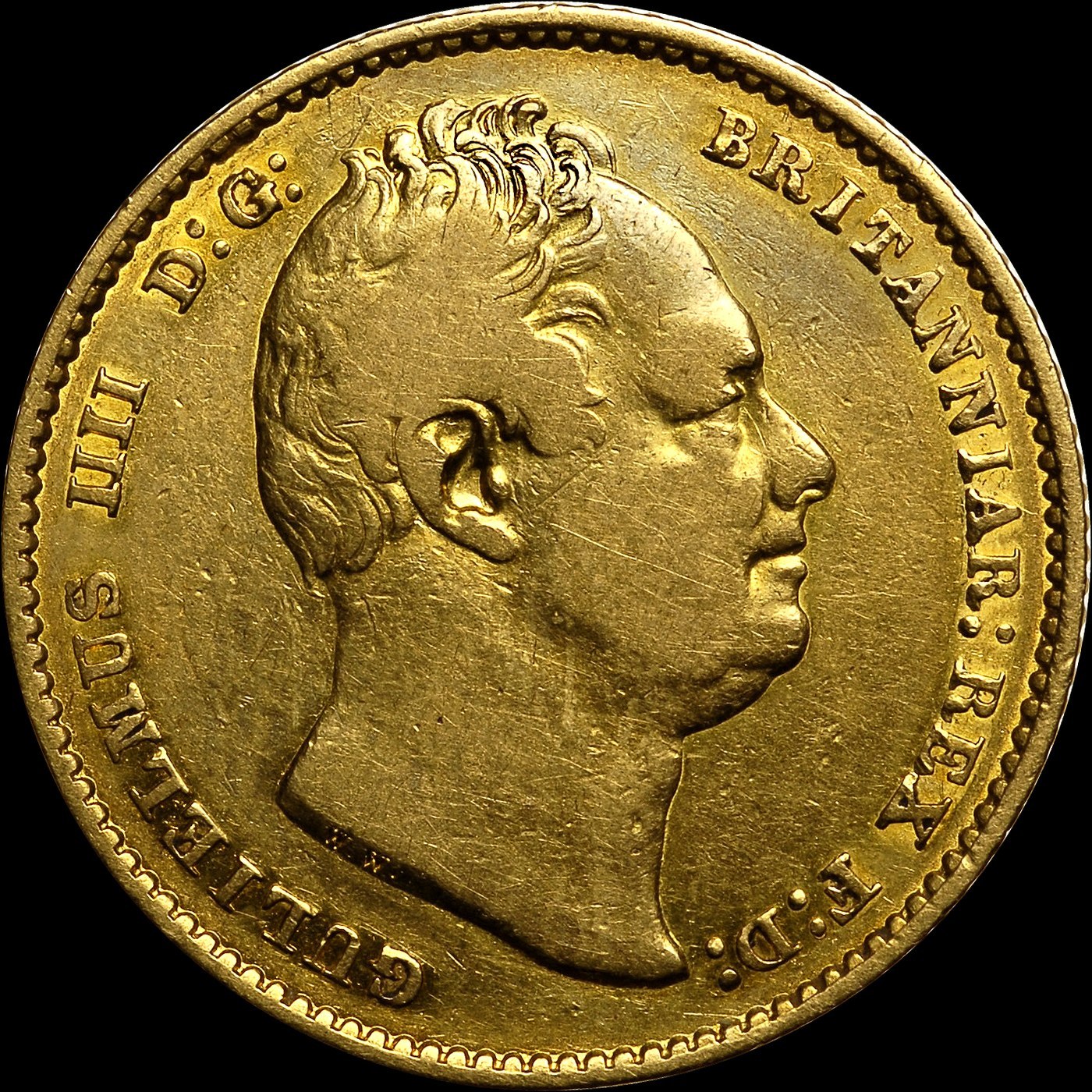
Start with the portrait. The obverse of a William IV sovereign shows the king bare-headed, facing right, surrounded by a Latin legend of his royal titles. The uncrowned, unlaureate head is an immediate diagnostic: it distinguishes this coin from monarchs shown with a laurel wreath or crown. Read the legend for the king's name and titles — the wording seen as D:G BRITT ANN REX identifies William IV rather than George IV or Victoria.
Check the reverse design. This type carries a crowned royal shield of arms within ornamental surrounds, not the mounted St George and dragon used on many other sovereigns. If your coin shows St George slaying a dragon, it is a different sovereign type or reign. Locate the date on the coin and confirm it falls within William IV's reign (the type was struck in the years 1831 to 1837); the example photographed here is dated 1832.
Confirm size, metal, and edge. A sovereign is a small gold coin of a standard weight and diameter, struck in 22-carat gold with a milled (reeded) edge and the crisp, uniform lettering of machine-struck coinage. Weigh and measure the coin against published sovereign specifications: a genuine piece should match closely on both weight and diameter. Underweight, oversized, or non-magnetic-but-wrong-density results are warning signs.
Rule out look-alikes and altered coins. Sovereigns of George IV and early Victoria can resemble this one at a glance, so always cross-check the bare-head portrait, the crowned-shield reverse, the legend, and the date together rather than relying on any single feature. Be wary of coins that have been mounted in jewellery, polished, or had details tooled, as these are common and reduce both authenticity confidence and value.
Be cautious with authentication. Gold sovereigns are among the most frequently forged coins, with cast copies and modern counterfeits in circulation. Look for casting seams, soft or mushy detail, incorrect weight or dimensions, wrong colour, or a poorly formed edge. For any coin of significant value, have it examined by a specialist in British gold or submitted to a reputable grading service before buying or selling.
Frequently asked questions
How do I tell a William IV sovereign from a George IV or Victoria one?
Read the obverse legend for the king's name and check the portrait. William IV is shown bare-headed facing right with his titles in Latin; George IV and Victoria use different portraits and legends. The date on the coin also narrows the reign.
My sovereign shows St George and a dragon — is it still William IV?
No. The William IV sovereign type uses a crowned royal shield of arms on the reverse. A St George and dragon reverse indicates a different sovereign type, so re-check the portrait, legend, and date.
How can I check it is genuine gold and not a fake?
Weigh and measure it against the standard sovereign specification, examine the milled edge and lettering, and look for casting seams or soft detail. Because sovereigns are widely faked, seek professional authentication for any valuable example.
Does a mount, polishing, or wear affect the coin?
Yes. Coins used in jewellery, polished, or heavily worn have reduced collector value and can be harder to authenticate. Original, unaltered examples are worth considerably more than damaged ones.