
How to Identify the South African Union Silver Crown (5 Shillings)
Issued by the Union of South Africa from the late 1940s, this silver five-shilling crown displays the national coat of arms and alternated English and Afrikaans legends by year of issue.
Read the full South African Union Silver Crown (5 Shillings) encyclopedia entry →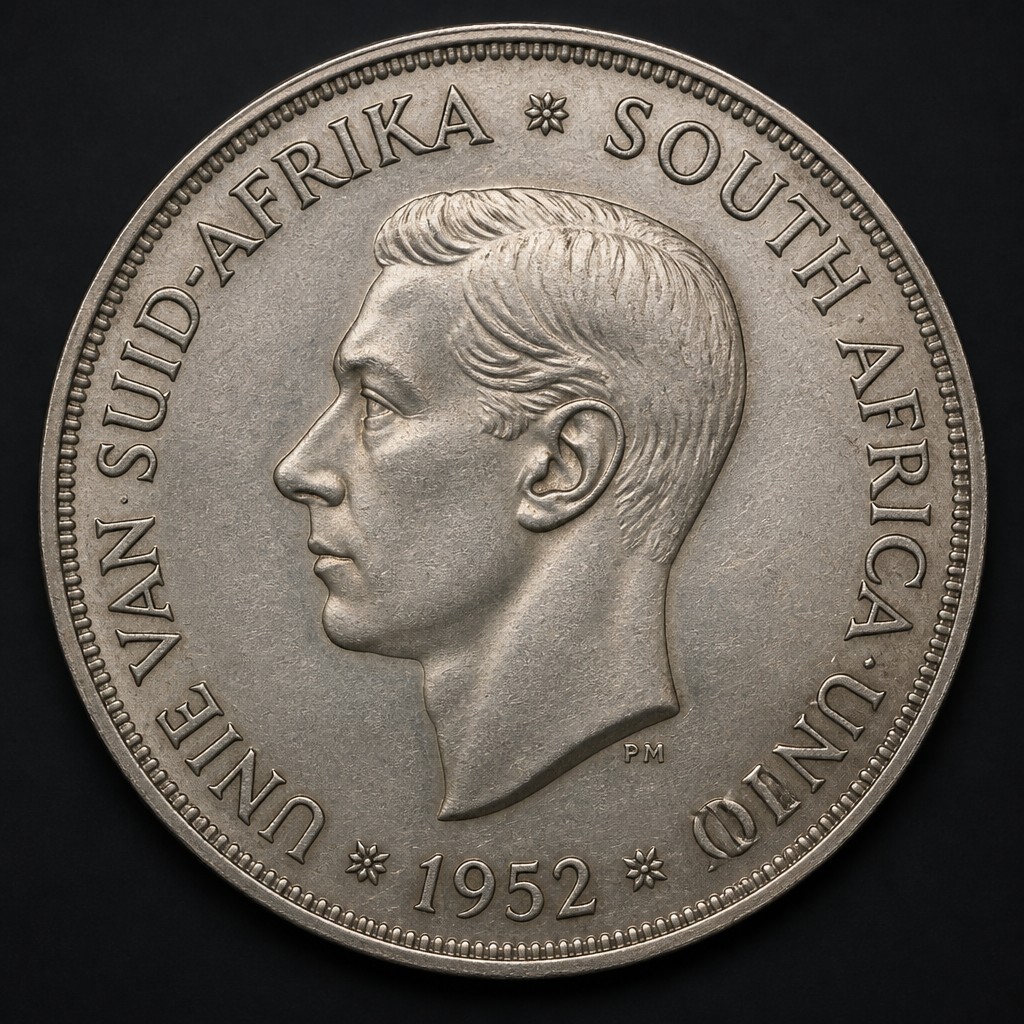
What This Coin Is
The five-shilling coin, commonly called a "crown," was the largest circulating silver denomination issued by the Union of South Africa in the years following the Second World War, continuing until South Africa transitioned to decimal currency (rand and cents) in 1961. It represented the top tier of the country's pre-decimal silver coinage.
Obverse Design & Inscriptions
The obverse carries the portrait of the reigning monarch at time of striking — King George VI or Queen Elizabeth II — along with the ruler's name and title, rendered in either English or Afrikaans wording depending on the specific year, since South African law of the period required the two languages to alternate on the coinage from year to year.
Reverse Design & Inscriptions
The reverse displays the Union of South Africa's coat of arms, featuring a shield with symbolic elements flanked by supporting figures (commonly depicted as a wildebeest and a springbok or similar antelope figures, depending on the specific rendering), together with the national motto and the denomination "5 SHILLINGS" or its Afrikaans equivalent, again alternating by year.
Size, Weight, Metal & Edge
The five-shilling crown is a large silver coin, following the traditional British-style crown format at roughly 38 mm in diameter, struck in .800 fine silver, with a reeded edge typical of large Commonwealth-era crown coins.
Mint Marks & Where to Find Them
South African coins of this period were struck primarily at the Pretoria Mint (South African Mint); some issues carry small mint marks or none at all, so the date and the specific English/Afrikaans legend variant for that year are the more practical identifiers to check.
Telling It Apart From Similar Coins
Because South African crowns alternated bilingual legends year by year, always note whether the wording is in English or Afrikaans and cross-check it against the correct pattern for that date, since a mismatch could indicate an error, a mule, or simply a misattributed date. Compare the coat-of-arms rendering and supporting figures carefully, as they can appear similar at a glance to other Commonwealth crowns featuring national arms.
Judging Condition at a Glance
Examine the fine details of the coat-of-arms figures and the monarch's portrait for wear, along with the surface luster in the coin's open fields; because these were large, heavy silver coins often set aside by savers rather than spent in daily transactions, a reasonable number of well-preserved examples survive compared to smaller circulating denominations of the same era.
Authenticity Red Flags
Given the coin's substantial silver content, verify weight and diameter against official specifications, and watch for lightweight, plated, or cast reproductions with softer design details or incorrect edge reeding. Cleaned or artificially toned surfaces are also a common concern, as they can mask actual wear and reduce both authenticity confidence and collector value.
Frequently asked questions
Why do some South African crowns have English text and others Afrikaans?
South African law of the era required the two official languages to alternate on the coinage from year to year, so legend wording changes by date.
What is the silver content of the five-shilling crown?
It was struck in .800 fine silver.
What does the reverse depict?
The Union of South Africa's coat of arms, with a shield and supporting figures, along with the denomination in English or Afrikaans depending on the year.
When did South Africa stop using the five-shilling crown?
Production ended around 1960 as the country transitioned to decimal currency (rand and cents) in 1961.