
How to Identify the Somali Elephant Gold
A gold bullion coin issued in the name of Somalia and struck at a European mint, featuring an African elephant on the reverse with a design that changes each year.
Read the full Somali Elephant Gold encyclopedia entry →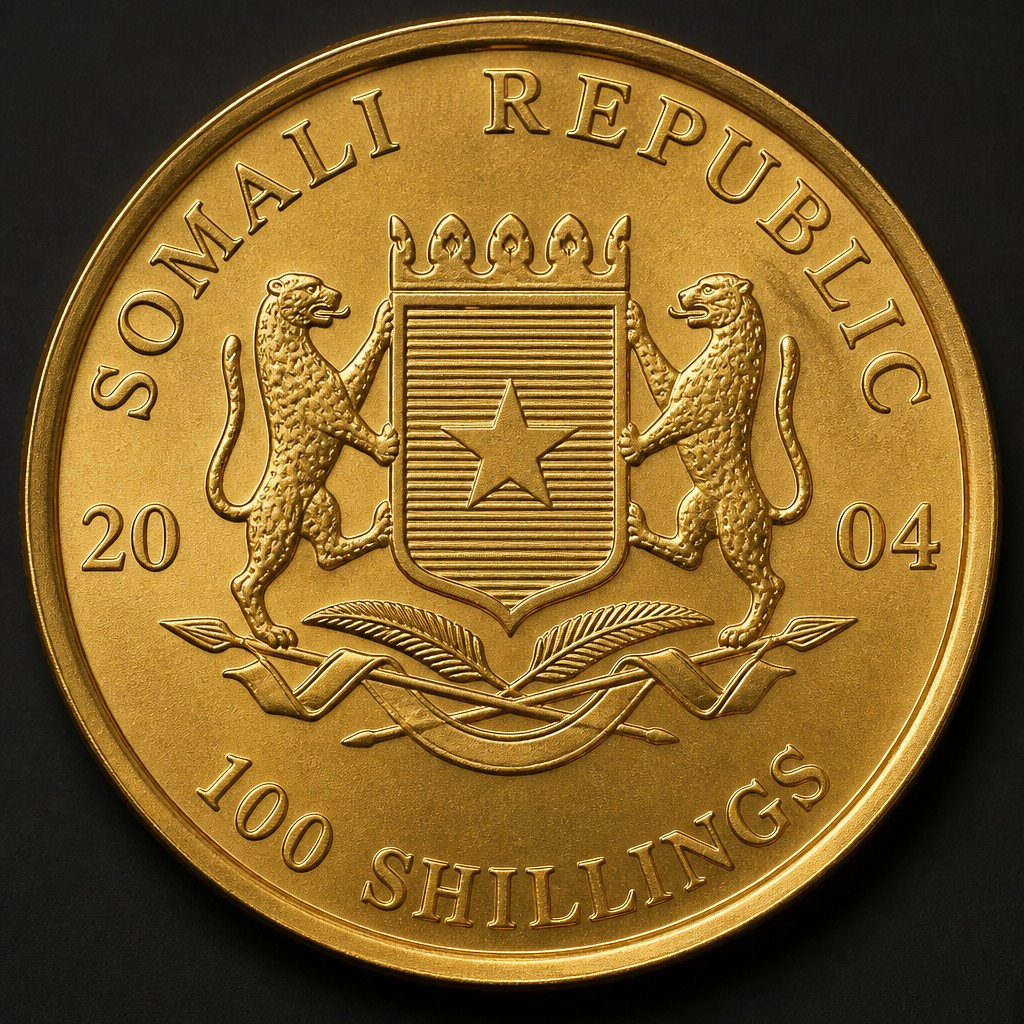
What This Coin Is
The Somali Elephant is a bullion coin series issued under the authority of the Central Bank of Somalia but actually struck by a contracted European mint. It carries a nominal Somali shilling denomination while its market value is driven by its gold content. The elephant design is refreshed annually, drawing a following similar to other African wildlife bullion coins.
Obverse Design & Inscriptions
The obverse typically displays the coat of arms or national emblem associated with Somalia, along with the country name "SOMALIA," the denomination in shillings, and the year of issue. Some releases also include the fineness statement directly on this side.
Reverse Design & Inscriptions
The reverse is dedicated to an African elephant, shown in a new pose or setting each year — walking, with calves, in silhouette against foliage, and so on. Inscriptions commonly include the metal content, such as "1 OZ FINE GOLD 999.9," along with any limited mintage or privy mark for that year's edition.
Size, Weight, Metal & Edge
Standard coins are struck in one troy ounce of .9999 fine gold, though fractional sizes such as 1/2, 1/4, 1/10, and 1/20 ounce, as well as larger sizes, have also been issued. Diameters and edge treatments vary by size and year, so weight and purity markings on the coin itself are the most reliable specifications to check.
Mint Marks & Where to Find Them
Because this series is struck at a single contracted mint rather than multiple national facilities, there is no traditional mint mark distinguishing different sources. The year date and any small privy mark added for special editions are the main identifying features to look for in the coin's design field.
Telling It Apart From Similar Coins
Other African-themed gold bullion series exist, such as gold coins featuring lions, rhinos, or other wildlife from different issuing countries, so confirm the country name "SOMALIA" and the elephant motif specifically. Comparing the year's elephant pose against a reliable reference helps confirm the date is genuine and matches known releases.
Judging Condition at a Glance
Gold bullion coins are valued primarily by weight and purity, but sharp, well-struck detail in the elephant's hide texture and background elements indicates a well-preserved example. Scratches, edge dings, or a dull, greasy-looking surface suggest handling wear or improper storage, which can matter to collectors even if it does not affect the gold content.
Authenticity Red Flags
Given gold's high value relative to size, this series is a target for counterfeiting. Always verify weight and dimensions against official specifications for the stated size, check that the fineness marking is present and correctly worded, and be suspicious of coins that feel unusually light, have soft or blurry design details, or are offered well under prevailing gold spot prices.
Frequently asked questions
Where is the Somali Elephant coin actually made?
It is issued in Somalia's name but struck by a contracted mint in Europe, a common arrangement for several African-themed bullion series.
Does the elephant design stay the same every year?
No, the reverse elephant artwork changes annually, so collectors often compare year-to-year designs as part of the series' appeal.
What gold purity should I expect?
Standard issues are struck in .9999 fine gold, typically stated directly on the reverse along with the weight.
How can I check if my coin is genuine?
Weigh and measure it against official specifications for its stated size, inspect for sharp design detail, and buy from an established dealer.