
How to Identify the Solidus of Justinian I
A collector's walkthrough for confirming a Justinian I gold solidus: the portrait, the Latin legend, size and weight, mint marks, look-alikes, and authentication cautions.
Read the full Solidus of Justinian I encyclopedia entry →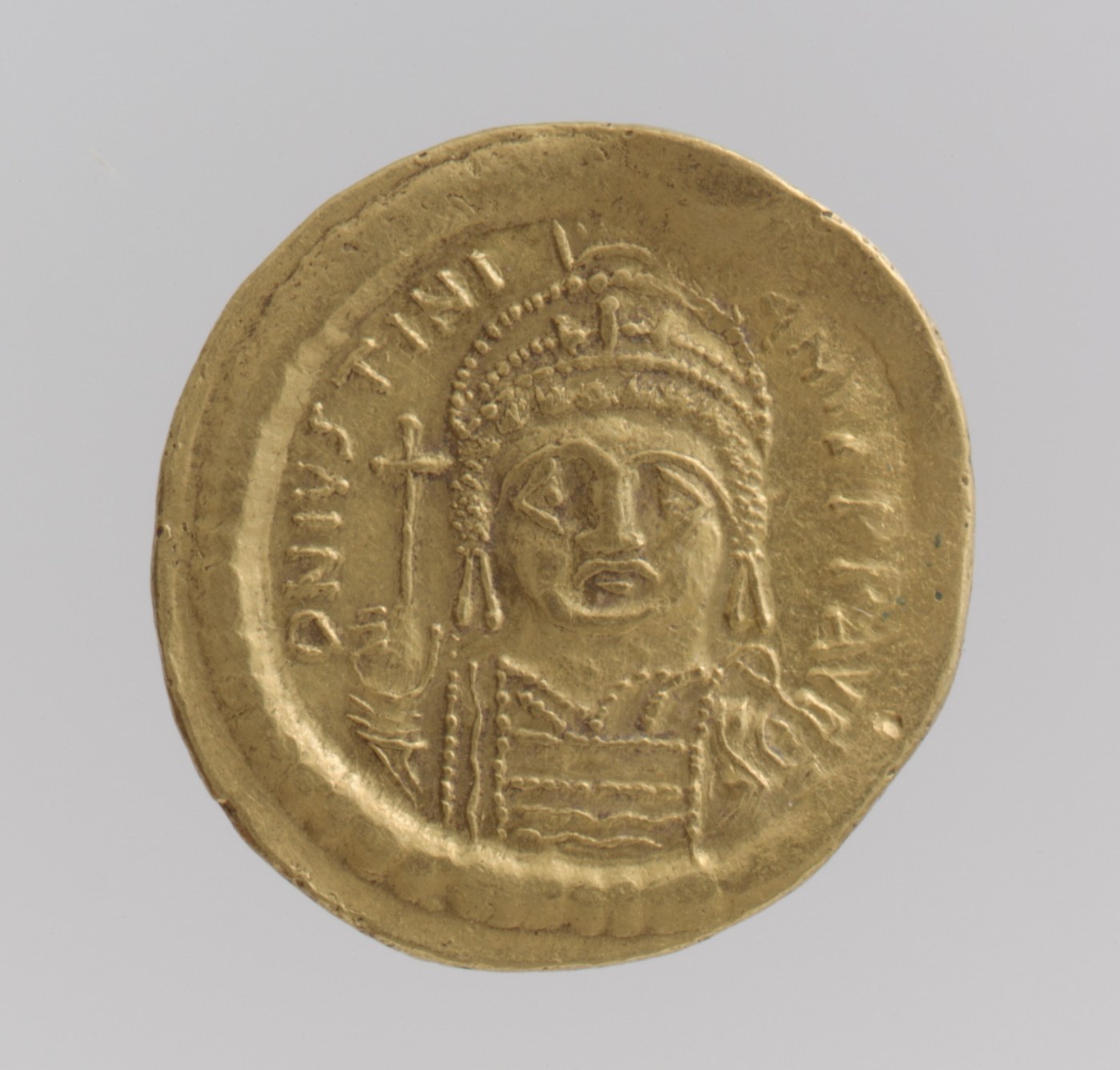
Begin with the obverse portrait. A solidus of Justinian I shows the emperor's crowned bust, either in profile facing right, as on this earlier type, or in the frontal helmeted and cuirassed style holding a globus cruciger that became standard from roughly the 530s onward. Identifying which of these two portrait styles is present is the first step in dating the coin, since the profile bust belongs to the opening years of the reign. Compare the crown, drapery, and facial style against trusted reference plates before drawing conclusions.
Read the legend around the portrait. It is Latin and names the emperor, appearing in forms such as D N IVSTINIANVS P P AVG. Note the letter forms, spacing, and abbreviations carefully, because inscription details are among the first things a modern forger gets wrong, and small variations in wording and titles help match the coin to a catalogued issue.
Check size, weight, and metal against the standard. The solidus is a thin gold disc about 20 to 22 mm in diameter and close to 4.5 grams in weight when full, struck at high purity. A piece that is markedly light, undersized, or of visibly base color for its type deserves suspicion. Remember that the coin was hand-struck, so a slightly irregular flan, an off-center design, or minor edge unevenness are normal and are not by themselves signs of a fake.
Examine the reverse and its marks. Justinian's gold typically shows a standing or seated figure such as Victory or an angel holding a long cross or staff, often with a star in the field, and a mint signature in the exergue. A mark such as CONOB indicates Constantinople gold of standard fineness, while an officina letter and other symbols identify the workshop and issue. These exergual details, read together with the portrait and legend, are what pin the coin to a mint and phase of the reign.
Finally, treat authentication and provenance as essential rather than optional. Byzantine gold is heavily counterfeited by both cast and struck copies, and the ownership and sale of ancient coins are regulated by cultural-property laws in many countries. Watch for casting seams on the edge, bubbled or grainy surfaces, mushy lettering, or a soapy, too-uniform look that differs from the crisp relief of a struck coin. For any coin of real value, seek certification from a recognized ancient-coin grading or authentication service and insist on documented collection history before relying on an attribution.
Frequently asked questions
What is the quickest way to confirm it is Justinian I?
Match the crowned imperial bust to the Latin legend naming IVSTINIANVS, then note whether the portrait is the earlier right-facing profile or the later frontal helmeted type. The named legend combined with the portrait is more reliable than either alone.
What size and weight should a genuine example be?
About 20 to 22 mm in diameter and close to 4.5 grams when full, struck in high-purity gold. A coin far outside this range, or one of visibly base color for its type, is suspect and warrants closer examination.
What do the reverse marks like CONOB tell me?
CONOB in the exergue indicates gold struck at Constantinople of standard fineness, while an officina letter and field symbols identify the workshop and issue. These marks help confirm an official imperial coin and assign it to a mint.
How do I spot a fake or cast copy?
Look for a casting seam on the edge, bubbled or grainy surfaces, soft or misshapen lettering, and incorrect weight or diameter. Struck originals show crisp relief and sharp inscriptions. Given the value, professional authentication is strongly advised.