
How to Identify the Sixpence
A visual guide to the British Sixpence, nicknamed the 'tanner', identified by its small size, interlocking floral emblem or crossed-scepters reverse, and reeded edge.
Read the full Sixpence encyclopedia entry →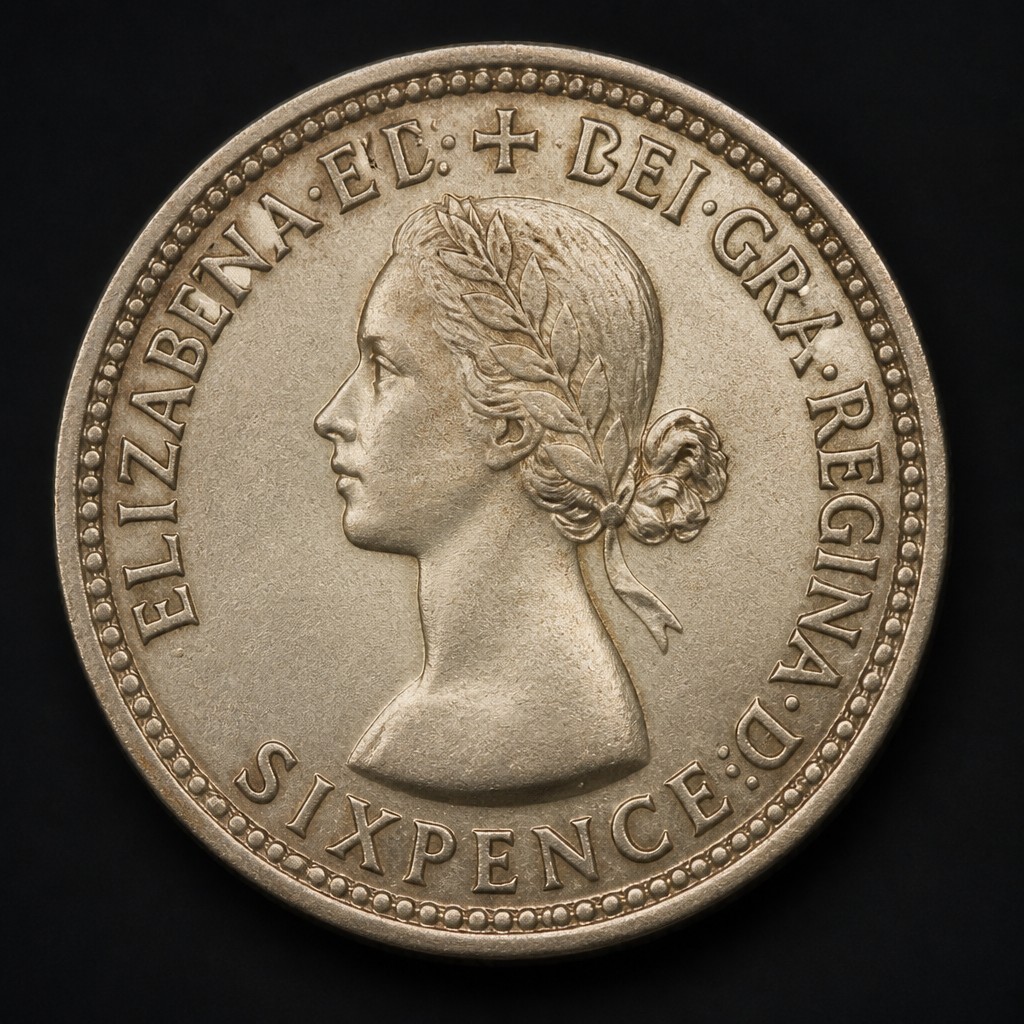
What It Is
The Sixpence, worth six pence or half a shilling, was a small, well-loved British coin nicknamed the "tanner." It circulated for centuries and remained legal tender even after decimalisation in 1971, valued at two and a half new pence, until it was finally withdrawn in 1980. Sixpences were also a traditional lucky charm, often tucked into Christmas puddings or slipped into a bride's shoe for good fortune, which helped keep the coin culturally significant even as its purchasing power declined.
Obverse Design and Inscriptions
The obverse carries the monarch's portrait in profile with the customary Latin title and date, matching the style of other coins from the same reign.
Reverse Design and Inscriptions
Reverse designs varied by era. Victorian and Edwardian sixpences typically show a simple crowned numeral "6" within a wreath. George VI sixpences (1937-1952) show crossed scepters over an interlaced "GRI" or ornamental design topped by a crown. Elizabeth II sixpences show an interlocking arrangement of a rose, thistle, shamrock, and leek beneath a crown, symbolizing the constituent nations of the United Kingdom.
Size, Weight, Metal, and Edge
The sixpence is small, measuring about 19.4 mm in diameter and weighing roughly 2.83 grams. It follows the standard silver-content timeline: 92.5% silver before 1920, 50% silver from 1920 to 1946, and cupro-nickel from 1947 onward. The edge is reeded.
Mint Marks and Where to Find Them
Domestic London-struck sixpences carry no mint mark. As with other denominations, only certain colonial strikes carry small identifying letters, typically near the date.
Telling It Apart From Similar Coins
Because of its small size, the sixpence is sometimes confused with the threepence or with foreign coins of similar diameter. The floral or scepter reverse design is distinctive and should be compared closely, and the sixpence is noticeably thicker and heavier than the twelve-sided brass threepence despite its smaller diameter. Its round shape and silvery or white-metal appearance also separate it immediately from the golden, twelve-sided brass threepence, which cannot be mistaken for a sixpence once placed side by side.
Judging Condition at a Glance
Look at the crown's detail and the individual petals or leaves in the floral emblem, since these fine elements wear smooth quickly on circulated coins. A well-struck rim and clearly separated design elements indicate a higher-grade example.
Authenticity Red Flags
Suspect coins that feel unusually light or have a dull, grainy surface texture, which can indicate a cast fake rather than a genuine struck coin. Also check that the reverse design style matches the stated date range, since a mismatched design and date combination is a common sign of an altered or fantasy piece. A date that has been re-engraved or polished smooth around the numerals is another warning sign worth checking under magnification.
Frequently asked questions
Why is the sixpence called a tanner?
"Tanner" was a long-standing British slang nickname for the sixpence coin, though the exact origin of the term is uncertain.
How much was a sixpence worth after decimalisation?
It was fixed at two and a half new pence and remained legal tender until it was withdrawn from circulation in 1980.
Is a sixpence made of silver?
Only sixpences dated 1946 and earlier contain silver; those from 1947 onward are cupro-nickel.
What is on the back of an Elizabeth II sixpence?
It shows an interlocking rose, thistle, shamrock, and leek design beneath a crown, representing England, Scotland, Northern Ireland, and Wales.