
How to Identify the Sixpence of Elizabeth I
A collector's guide to attributing Elizabeth I's hammered silver sixpence by its rose-backed bust, quartered shield, date and mint mark.
Read the full Sixpence of Elizabeth I encyclopedia entry →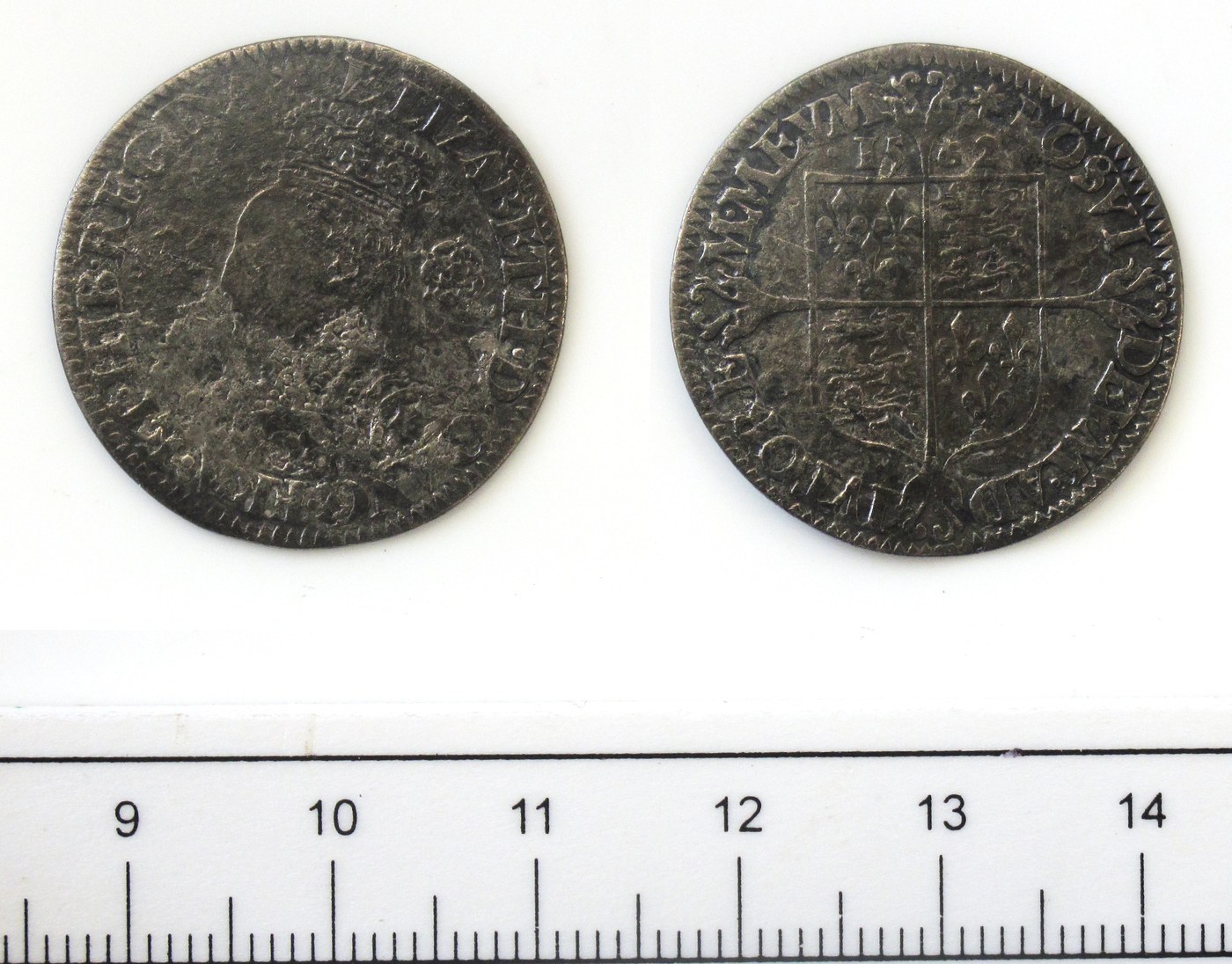
Begin with the two main devices. The obverse shows Elizabeth I crowned and facing right in a ruff collar; the reverse shows a heraldic shield with the field divided into quarters bearing the lions of England and the fleurs-de-lis of France, set over a long cross. If your coin shows a right-facing crowned queen in a ruff on one side and a quartered royal shield on the other, as in the photographed example, you are on the right type. Read the Latin legend to confirm it names Elizabeth as queen.
Look for the rose behind the bust. A small rose placed behind the queen's head is the key denomination marker that separates the sixpence and threepence from the shilling and larger pieces, which do not carry it. Combined with the coin's size, the rose is the quickest way to confirm you have a sixpence rather than a similar-looking Elizabethan silver coin.
Find the date and mint mark. Most sixpences carry a date at the top of the reverse, and a small symbol, the initial mark, sits at the start of the legend. These two together attribute the coin to a specific year and issuing period, so read them carefully and cross-reference against a standard catalogue of Elizabethan hammered silver. Faint or off-flan dates are common on worn or poorly centered strikes.
Check fabric, size and weight. This is a small, thin, hand-hammered silver coin, so expect a slightly irregular flan, hand-cut lettering, and the soft or lightly doubled relief typical of hammered work rather than the sharp uniform edges of milled coins. Weigh and measure the piece against published specifications; a markedly underweight or visibly trimmed edge suggests clipping, which was common on circulating hammered silver and reduces value.
Watch for look-alikes and fakes. Elizabethan shillings, groats and the milled sixpences of the reign can resemble the standard hammered sixpence at a glance, so use the rose, size and legend to separate them. Be alert to cast copies and tooled surfaces: look for casting seams, bubbles, unnaturally smooth fields, or lettering that lacks hand-cut variation, and seek specialist opinion or professional grading for any higher-grade or costly example.
Frequently asked questions
How do I tell a sixpence from an Elizabethan shilling?
Size and the rose. The shilling is larger and heavier and has no rose behind the bust, while the sixpence is smaller and carries the rose. Checking the diameter and looking for the rose settles most cases quickly.
Where is the date on the coin?
On most sixpences the date appears at the top of the reverse, in the legend above the shield. On worn or off-center strikes it can be weak or partly off the flan, so examine that area closely under good light.
How can I be sure it isn't a fake?
Genuine sixpences are hand-struck, with slightly uneven flans and hand-cut lettering. Watch for casting seams, air bubbles, mushy detail, or incorrect weight. For a valuable example, professional authentication is advisable.