
How to Identify the Silver Three-Cent Piece (Trime)
A visual guide to the tiny silver trime (1851-1873), covering its star-and-shield obverse, Roman numeral III reverse, three design types, and how it differs from other small silver and nickel coins.
Read the full Silver Three-Cent Piece (Trime) encyclopedia entry →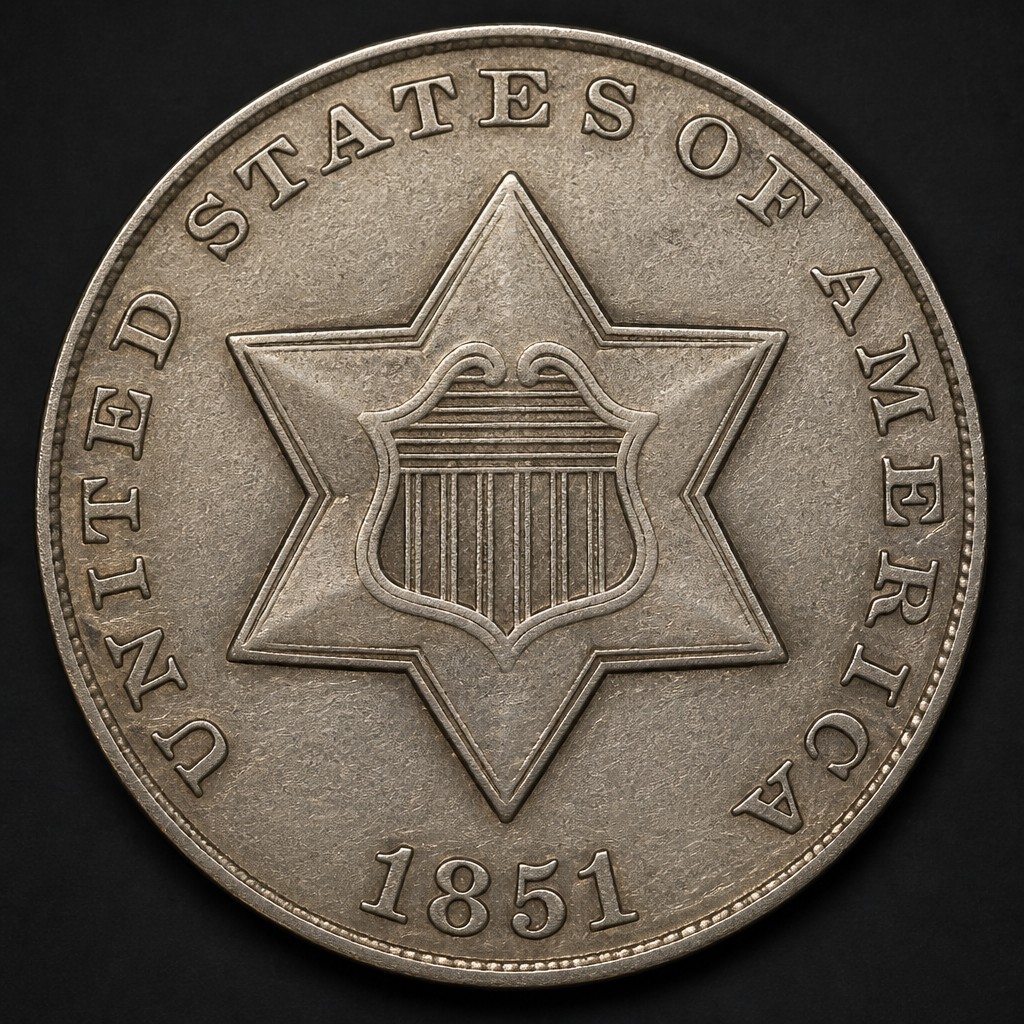
What It Is
The silver three-cent piece, nicknamed the "trime," was struck from 1851 to 1873 to make it easier to buy postage stamps and small goods after postage dropped to three cents. It is the smallest-diameter coin the U.S. Mint has ever issued.
Obverse Design
The obverse shows a six-pointed star with a shield superimposed at its center. "UNITED STATES OF AMERICA" wraps around the border, and the date sits at the bottom. There is no portrait or seated figure on this coin, which makes it easy to distinguish from other silver denominations of the era.
Reverse Design
The reverse features a large ornamental letter "C" with the Roman numeral "III" inside it, indicating the three-cent value. Type 1 coins (1851-1853) surround the C with thirteen small stars. Beginning in 1854, an olive branch above and a bundle of arrows below were added around the C, and this basic layout continued through 1873 with only minor line-work changes.
Three Design Types
There are three subtypes, distinguished mainly by the border around the obverse star: Type 1 (1851-1853) has a plain, unbordered star; Type 2 (1854-1858) has three parallel outlines bordering the star and is struck in higher-purity silver; Type 3 (1859-1873) has only two outlines around the star. Knowing which type you have narrows the date range quickly.
Size, Weight, Metal, and Edge
The trime is tiny, about 14mm across, smaller than a modern dime. Type 1 coins weigh about 0.80 grams and are struck in 75% silver, 25% copper. Types 2 and 3 were reduced slightly to about 0.75 grams and raised to 90% silver to match other U.S. silver coinage. The edge is plain on all types.
Mint Marks
No mint mark appears on any silver three-cent piece; every one was struck at the Philadelphia Mint, so you will not find a letter near the date or on the reverse.
Telling It Apart From Similar Coins
The trime is easily confused with the copper-nickel three-cent piece (1865-1889), which is larger, thicker, and shows a Liberty head profile rather than a star and shield. It can also be mistaken for a half dime at a glance because both are small silver coins, but the half dime carries a seated Liberty figure and is noticeably larger at about 15.5mm.
Judging Condition
Because the design sits low and the coin is so small, check the star's center shield lines and the numeral "III" for wear; on well-worn examples these details flatten first. High-grade pieces show sharp horizontal shield lines and crisp lettering in "UNITED STATES OF AMERICA."
Authenticity Notes
Given the coin's tiny size and light weight, altered or cast counterfeits are less common than with larger silver coins, but examples with soft, mushy lettering or an off-weight feel compared to a known-genuine piece should be examined more closely before assuming they are original mint products.
Frequently asked questions
How can I tell a Type 1, 2, or 3 trime apart quickly?
Look at the border around the obverse star: no outline is Type 1, three outlines is Type 2, and two outlines is Type 3.
Does the silver three-cent piece have a mint mark?
No. All silver three-cent pieces were struck at Philadelphia and carry no mint mark.
What is the easiest way to tell a trime from a copper-nickel three-cent piece?
The trime shows a star and shield with a Roman numeral III in a C; the copper-nickel version shows a Liberty head portrait and is larger and thicker.
Why is the trime so small?
It was designed to be a convenient, low-value coin for buying postage stamps, so the Mint kept it compact and light.