
How to Identify the Siamese Rama V Silver Baht
A flat, machine-struck silver baht from the reign of King Chulalongkorn (Rama V), identified by his portrait on the obverse and the royal Siamese emblem on the reverse.
Read the full Siamese Rama V Silver Baht encyclopedia entry →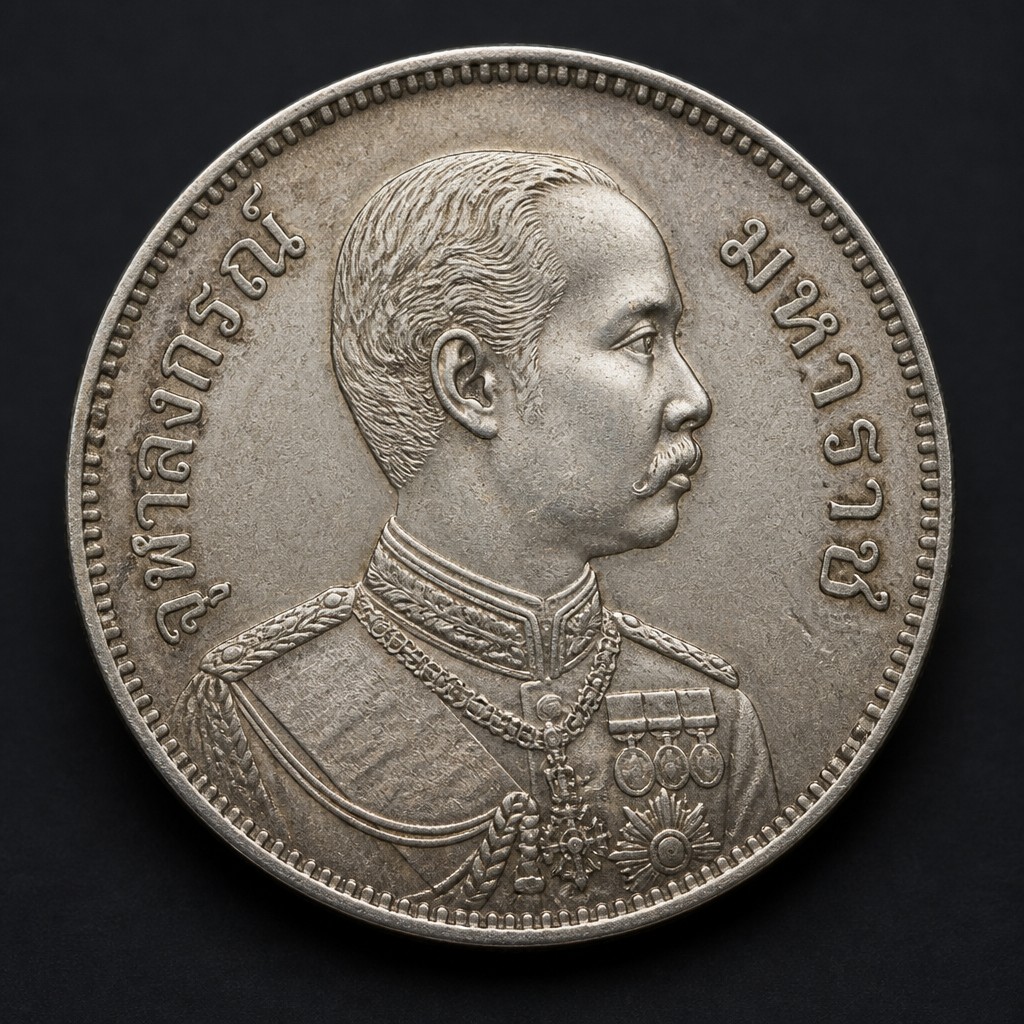
What This Coin Is
The Rama V silver baht represents Siam's shift from traditional bullet money to modern, Western-style flat coinage, introduced under King Chulalongkorn (reigned 1868-1910). These coins were struck using imported minting technology and mark the beginning of Thailand's coinage looking much like other world coins of the era, with a royal portrait and denomination clearly displayed.
Obverse Design
The obverse shows a right- or left-facing portrait of King Chulalongkorn (Rama V) in formal dress, sometimes wearing a crown or royal regalia depending on the specific type and year within his long reign. Thai script identifying the king typically frames the portrait.
Reverse Design
The reverse displays the royal Siamese emblem of the period, often featuring the multi-tiered white elephant or the royal chakra-and-trident insignia associated with the Chakri dynasty, along with the denomination "baht" and the issue date recorded in the Thai (Rattanakosin or Buddhist) era calendar.
Size, Weight, Metal, and Edge
The silver baht is struck in sterling-grade silver, roughly comparable in size to other contemporary world crown-sized or minor silver coins depending on the specific denomination (baht, salung, or fuang fractions also exist in this series), and has a reeded edge typical of machine-struck coinage.
Mint Marks and Where to Find Them
Because Siam's mint operated as a single central royal facility in Bangkok during this period, these coins generally do not carry separate branch mintmarks; instead, dating relies on reading the Thai-numeral year on the reverse, which uses the Thai Buddhist or Rattanakosin era rather than the Gregorian calendar.
Telling It Apart from Similar Coins
Rama V baht coins are distinguished from the earlier bullet money by their flat, struck form, and from later Rama VI or Rama VII coinage by the specific portrait style and inscriptions unique to Chulalongkorn's reign. Collectors should also watch for the various sub-types issued across his long reign, which show differences in portrait style and reverse emblem as designs were updated over time.
Grading at a Glance
On well-preserved coins, the king's facial features and hair or headwear detail remain sharp, and the elephant or emblem on the reverse shows full detail down to fine linework. Circulated examples show wear first on the high points of the portrait's cheek and brow, with the reverse emblem's finer details softening with handling.
Authenticity Red Flags
Genuine pieces should show crisp, evenly struck lettering and a portrait with natural, well-proportioned features; reproductions often show soft or slightly distorted facial features, inconsistent letter spacing in the Thai script, or a surface texture that looks grainy or cast rather than cleanly struck. Unusual weight or a magnetic response are also signs of a non-genuine piece, since true silver coins are not magnetic.
Frequently asked questions
Who is depicted on this coin?
King Chulalongkorn, known as Rama V, who reigned over Siam from 1868 to 1910 and modernized the country's coinage.
What calendar is used for the date?
The Thai Buddhist or Rattanakosin era calendar is used rather than the Gregorian calendar, so the numeral date must be converted.
How is this different from bullet money?
This is a flat, machine-struck coin with a portrait and inscriptions, replacing the older curled, punch-marked bullet money form.
Does the design change across Rama V's reign?
Yes, portrait style and reverse emblem details were updated at different points during his long reign, creating several recognizable sub-types.