
How to Identify the Shilling
A visual guide to the British Shilling, a twelve-pence coin identified by its English lion-on-crown or Scottish seated-lion reverse and modest silver or cupro-nickel content.
Read the full Shilling encyclopedia entry →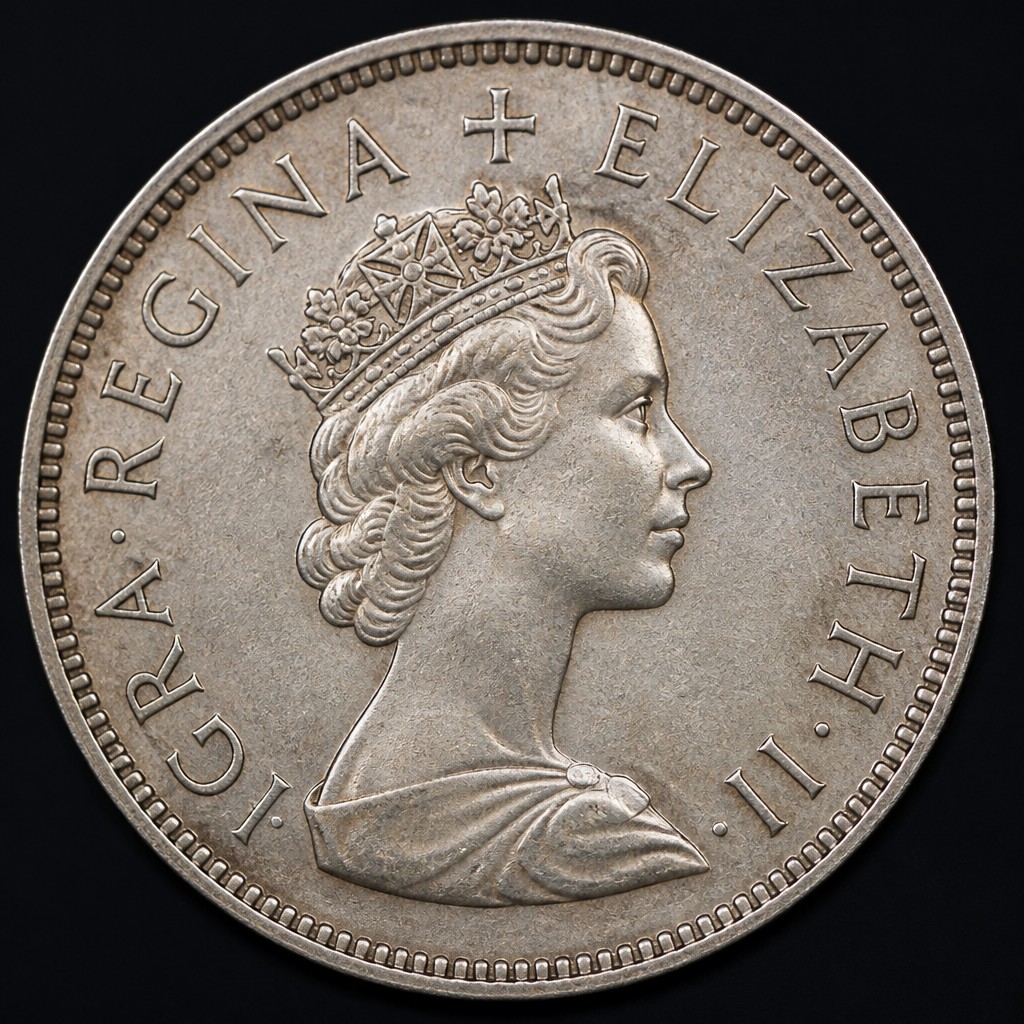
What It Is
The Shilling was worth twelve pence, or one-twentieth of a pound, and circulated in Britain for centuries until decimalisation. Its final circulating design ended in 1966, and it remained usable alongside the new five-pence coin (equal in value) for some years after 1971. Long before the paired lion designs of the mid-20th century, Victorian, Edwardian, and George V shillings carried their own reverse artwork, most commonly a crowned shield of the royal arms within a wreath, so the appearance of a shilling changes quite a bit depending on its era.
Obverse Design and Inscriptions
The obverse bears the monarch's profile portrait and Latin title, following the same conventions as other British silver-era coinage of the same reign. The date sits below the portrait, and the legend wraps around the rim.
Reverse Design and Inscriptions
From 1937, the shilling was struck with two different reverse designs used side by side: an "English" version showing a lion standing on top of a crown, and a "Scottish" version showing a lion seated facing forward, holding a sword and scepter, above a shield with a saltire and thistles. Both versions circulated together, so finding either is normal, not an error.
Size, Weight, Metal, and Edge
The shilling measures about 23.6 mm in diameter and weighs roughly 5.66 grams. It follows the standard fineness pattern: 92.5% silver before 1920, 50% silver from 1920 to 1946, and cupro-nickel from 1947 onward. The edge is reeded.
Mint Marks and Where to Find Them
London-struck shillings for domestic circulation carry no mint mark. Coins struck for colonial or Commonwealth use sometimes carry small identifying marks; compare against dedicated references if one is present near the date.
Telling It Apart From Similar Coins
The shilling is close in size to the modern decimal five-pence coin, which is intentional since the two were interchangeable for a period. Distinguish it from the smaller sixpence and the larger florin by measuring diameter and comparing the reverse motif, since the shilling's lion designs are unique to this denomination.
Judging Condition at a Glance
On the English lion-and-crown reverse, check the definition of the crown's arches and the lion's mane for wear. On the Scottish lion reverse, the sword, scepter, and shield details are the first to soften with circulation. A sharp, fully struck rim on both sides is a good sign of a higher grade.
Authenticity Red Flags
Be wary of coins with an unnaturally grainy or pitted surface suggesting a cast copy, incorrect diameter or weight for the era, or a mismatched combination of an early portrait style with a later reverse design. Genuine shillings show crisp, die-struck details rather than soft, rounded relief. If the coin's edge reeding looks blurred or inconsistent compared to the sharpness of the central design, that mismatch can also point to a cast reproduction rather than an original struck coin.
Frequently asked questions
What is the difference between an English and Scottish shilling?
The English reverse shows a lion standing on a crown, while the Scottish reverse shows a lion seated holding a sword and scepter above a shield; both were struck and circulated at the same time from 1937 onward.
Is a shilling worth the same as five pence?
Yes, at decimalisation in 1971 the shilling's value was set equal to five new pence, and both coins circulated together for a time.
Are shillings silver?
Only shillings dated 1946 and earlier contain silver; those from 1947 onward are cupro-nickel.
How big is a British shilling?
It measures about 23.6 mm in diameter, noticeably smaller than a florin or half crown but larger than a sixpence.