
How to Identify the Shilling of Victoria
A collector's walkthrough for confirming a milled Victorian silver shilling by size, metal, the 'ONE SHILLING' reverse, portrait type and date.
Read the full Shilling of Victoria encyclopedia entry →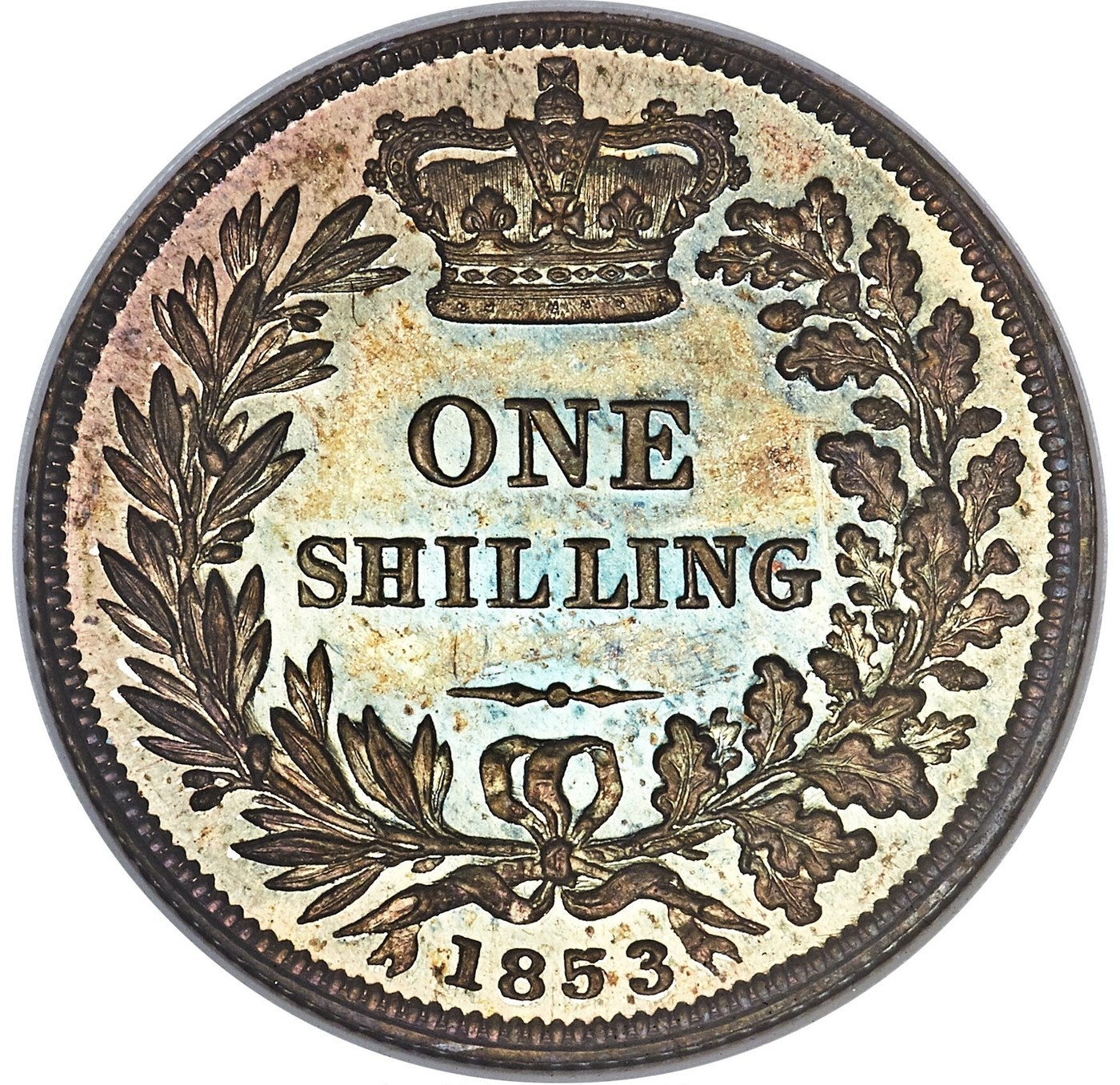
Begin with the physical coin. A Victorian shilling is a small milled coin of sterling silver, about 23 to 24 millimetres in diameter and around five and a half grams in weight, with a reeded (milled) edge. It should have the cool grey tone and modest heft of silver, a fully round flan and a clean raised rim. If a coin is far heavier, lighter or larger, it is likely a different denomination, a florin is bigger, a sixpence smaller, or not a genuine Victorian shilling at all.
Confirm the denomination from the reverse. A Victorian shilling states its value in words, ONE SHILLING, with the date beneath it; on this coin the date reads 1853. On the Young Head issues of this period the inscription sits within a wreath below a crown. Seeing the value written out in full, rather than a figure or a heraldic device alone, is the surest single check that you have a shilling and not another coin of similar size.
Read the portrait to place the coin within the reign. The obverse shows Queen Victoria's head facing left with a Latin legend naming her. The Young Head (used for an 1853 coin) depicts her as a young woman with hair tied back; the Jubilee Head from 1887 shows her crowned and veiled bust; and the Veiled or Old Head from 1893 shows her older and draped. Matching the portrait to the date is central to attribution, and there is no mint mark to look for, as these were struck in London.
Watch for look-alikes and cautions. Do not confuse the shilling with the larger florin (two shillings), which carries a heraldic shield reverse, or with the smaller sixpence. Because Victorian shillings are milled, the lettering should be crisp and upright and the strike even; weak, irregular or off-centre lettering points to an earlier hammered coin, not a Victorian issue. Be wary of polished, cleaned or tooled surfaces, of gilded or plated pieces sold as something rarer, and of any coin whose weight is wrong for silver.
For an ordinary worn example, the checks above are usually enough. For a coin you believe is a scarce date or in high grade, compare the exact date and portrait against a standard catalogue of Victorian silver and, before paying a premium, seek confirmation from a specialist dealer or a reputable auction record.
Frequently asked questions
How do I tell a Victorian shilling from a florin?
The shilling is smaller, about 23 to 24 millimetres, and its reverse spells out ONE SHILLING. The florin (two shillings) is larger and carries a heraldic shield design. Size and the written value are the quickest distinctions.
Where is the date on a Shilling of Victoria?
The date appears on the reverse, beneath the ONE SHILLING inscription. On this example it reads 1853, which identifies it as a Young Head issue.
Does a Victorian shilling have a mint mark?
No. These shillings were struck at the Royal Mint in London and carry no mint mark. The coin is identified by its portrait type and date rather than by a mint letter.
How can I check that mine is genuine silver?
Genuine coins have the correct weight (around five and a half grams) and diameter for the denomination, a reeded edge, and the grey tone of sterling silver. Wrong weight, a plain edge, a magnetic response or plating are warning signs; have doubtful or valuable pieces checked by a specialist.